The Journal Of Antiquities

Ancient Sites In Great Britain & Southern Ireland


Kent’s Cavern, Near Torquay, Devon.

Kent’s Cavern, Torquay, Devon.

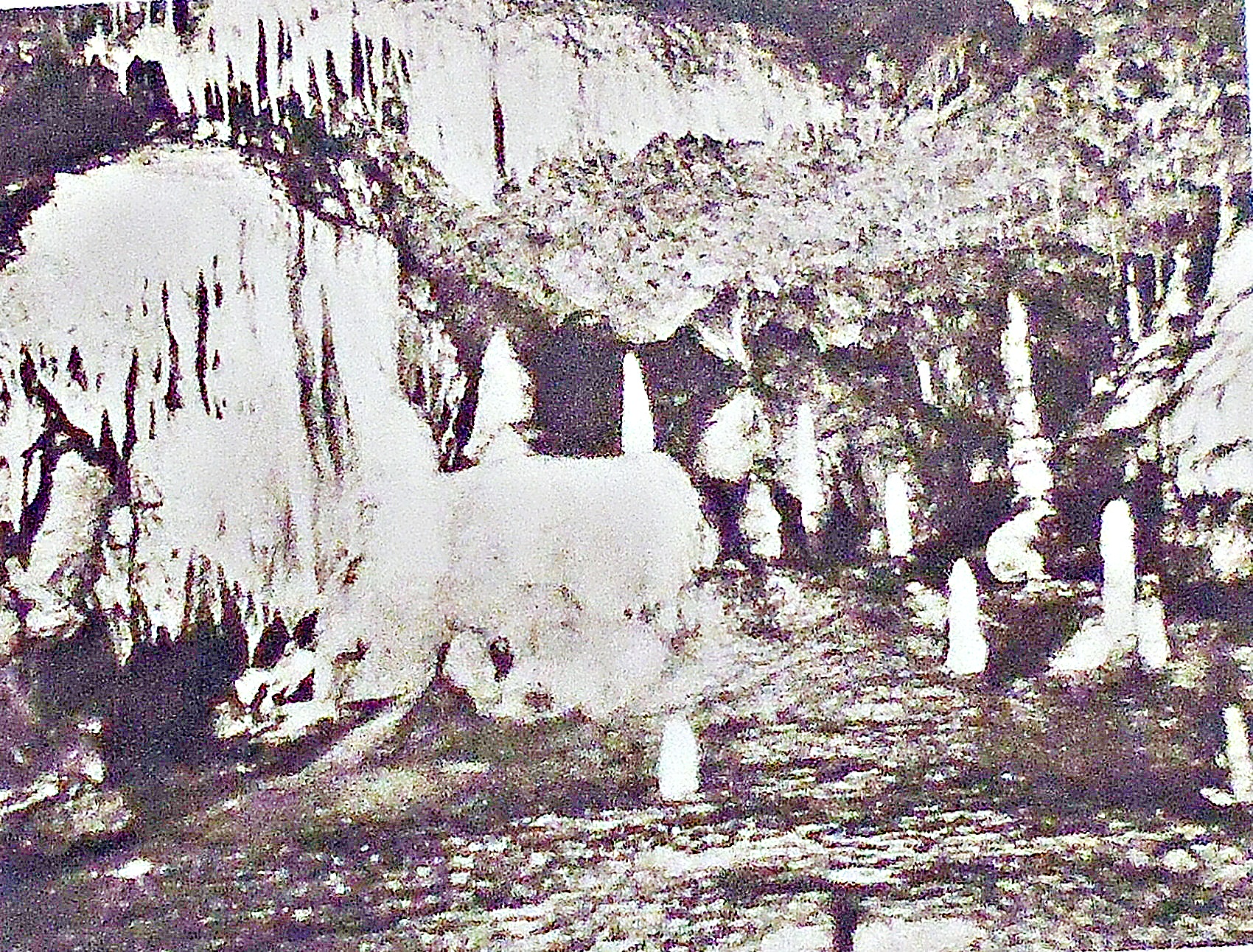
NGR: SX 9345 6418. Kent’s Cavern Prehistoric Caves are located on Ilsham Road at Wells-wood, 1 mile east of Torquay in Devon. During excavations back in 1860, finds from as far back as the Old Stone Age or Palaeolithic were found in the cave system by Cornish Geologist and antiquarian William Pengelly (1812-1894), who is still fondly remembered in Torquay for his archaeological discoveries. Pengelly went on to found a Natural History Society in the town. Pengelly excavated the remains of animals that roamed the area many thousands of years ago, which are long extinct in the West Country and in the rest of Britain too. He also dis-covered the remains of prehistoric man, including the remains of Mousterian men and Magdalenian culture, as well as finds from the Ice Age, the Bronze Age, and the more recent Medieval period. Earlier, however, in 1823, a local priest had apparently discovered ancient remains in Kent’s Cavern. The finds excavated by Pengelly are now housed in the Torquay Museum in Babbacombe Road, where you can also see displays of local and surrounding history and social heritage. Entrance to Kent’s Cavern is through the visitor centre, where there are numerous displays and exhibitions.

James Dyer wrote in 1973 that:  Although occupied for much of the Palaeolithic period, little has been done to make this show-cave of interest to archaeologically minded visitors. Two main chambers and a series of galleries have produced material ranging in date from 100,000 to 8000 B.C., including a wide range of flint implements, antler and bone tools, including three harpoons, one double barbed, a sewing needle and an ivory rod. Digging has been carried on spasmodically since about 1824, also producing evidence of prehistoric fauna, including mammoth, woolly rhinoceros, cave-hyena, cave-bear and cave-lion. Visitors will probably gain more from the cave material displayed in the Museum of the Torquay Natural History Society, Babbacombe Road…… and the Natural History Museum in South Kensington, London, than from the site itself.”

Arthur Mee, in his great tome of 1961, describes the history of Kent’s Cavern and the man who explored it back in the 1860s, and tells us: “……… Another remarkable man of Torquay is remembered in a thousand books for a great adventure of knowledge which has carried the name of Torquay to the ends of the earth. He is William Pengelly, whose bust is in the Natural History Museum in Babbacombe Road, where we may see the relics of the Ice Age and evidence of the existence of prehistoric man from the famous Kent’s Cavern, which he explored. In this now famous place fossils had been found as early as 1823, but not until 40 years later did Pengelly receive from the British Association the help he needed to convince the world that this cavern was one of its rich treasure houses. 
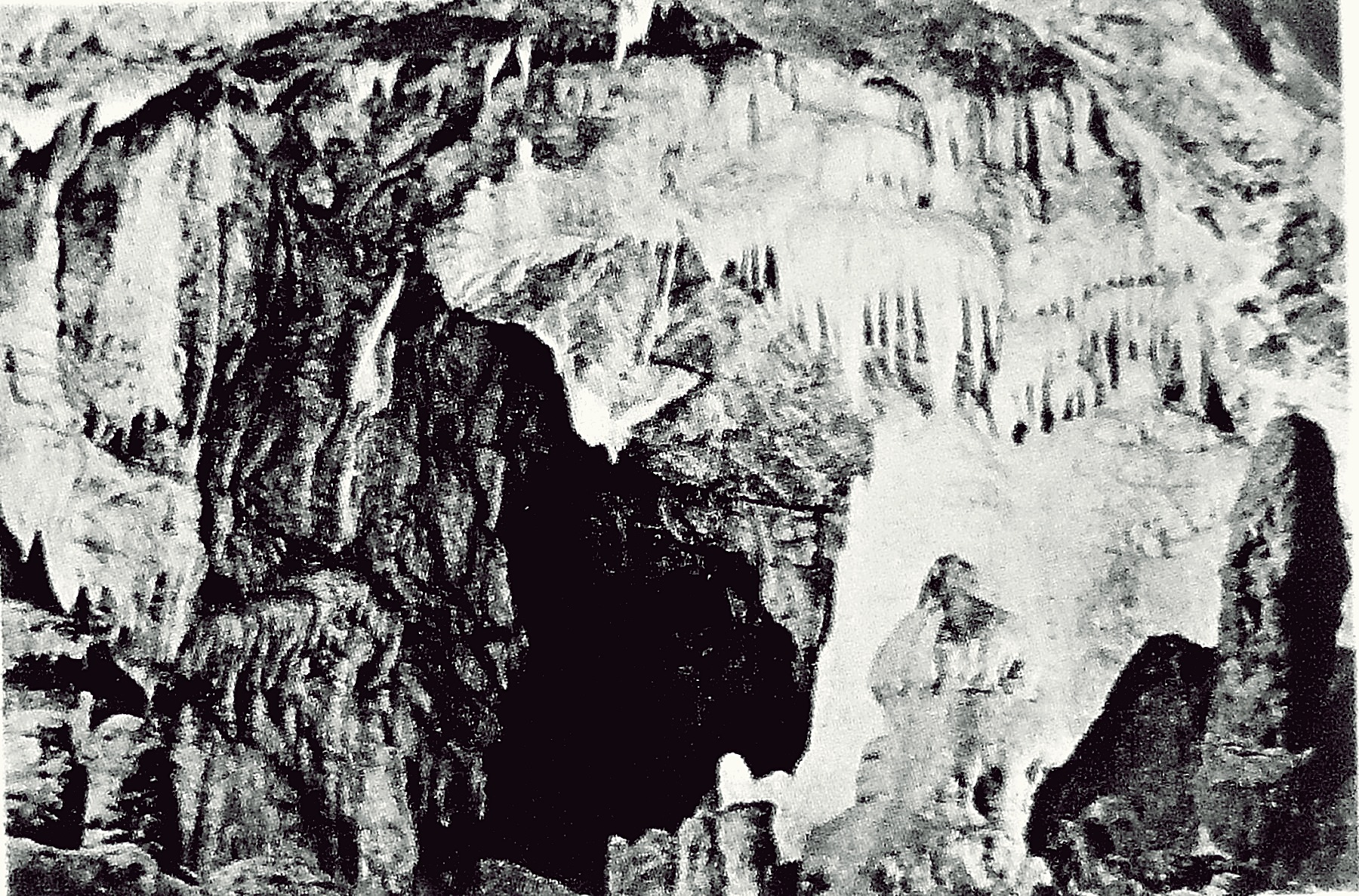
Kent’s Cavern, near Torquay, Devon.

“Kent’s Cavern was hollowed out of the limestone in the side of a small valley thousands of years ago by the chemical action of water. It came to be used in prehistoric times, like all other caves, by men and animals, and it happened at the beginning of last century that a Roman Catholic priest started investigations and found in the cave flint implements and fossil bones dating back to a world of long ago. He was convinced that here was evidence that man had lived in very ancient times in associ-ation with animals now extinct. But that was in 1823, and the mind of the world was not prepared for a thought so revolutionary. The priest dare not make public his conclusions, and it was a long time before the facts were published. 

“But men continued to make discoveries, and the time came when William Pengelly, a Cornishman born at Looe, came to Torquay and opened a school. He founded the Torquay Natural History Society and began lecturing on geology and archaeology. He searched Brixham Cave and Kent’s Cavern, and he gave 15 years of his life on this cave at Torquat in which he found stone instruments and weapons fashioned by human hands, together with a huge accumulation of the bones of the cave-bear, the sabre-toothed tiger, the cave-lion, the woolly rhinoceros, the mammoth, and other prehistoric beasts. Since his day an examination of the cavern has shown that the deposits of the remains of prehistoric life are about eleven feet thick. The implements found here, in the lowest layer of the deposits, were made when the English climate was very warm, and when the cave was inhabited by huge bears whose bones have been found in great quantity. In one case a complete skeleton was found. The deposit containing these ancient remains is sealed by a floor of stalagmite material, and above it is a deposit of red clay in which flint implements and the fossil bones of the rhinoceros have been found. The discoveries in the clay are later than those in the lower layer, and represent a period when our climate was very cold. After that the cavern appears to have been uninhabited for a long time, and another floor of stalagmite was laid down. Above thisis a deposit of black earth in which have been found objects of the Bronze Age as well as remains of modern times.

“So in this small cave have come to light witnesses of the life of man reaching back perhaps half a million years, and between the oldest and the newest of these layers of life would come the Great Ice Age.

“The museum in which we find these treasures from the chambers and galleries of Kent’s Cavern has an immense variety of exhibits from all parts of Devon. In the entrance hall are four granite blocks with a cover-stone over them: they are a tomb 3000 years old found on Dartmoor near Chagford. Also in the hall are 17 curious oak figures of the 16th century brought from the dining-room of an old house on the River Dart. There are prehistoric, geological, and botanical collections, fine examples of bird life in the county, and many specimens of animal life; but the museum will appeal to the traveller chiefly for the Kent’s Cavern exhibits and the valuable things it has collected from homes and farms in the West Country.”

Jacquetta Hawkes, writing in 1975, tells us more about Kent’s Cavern. She says: “Careful excavation was begun at Kent’s Cavern as early as 1825, when the Roman Catholic priest, Father MacEnery, was able to satisfy himself that humanly-worked flints were contemporary with the bones of an extinct species of rhinoceros and other long vanished beasts. But society and the intellectual climate were not yet ready for this discovery: it was still almost universally accepted that man had enjoyed a special creation some six thousand years before. These new horizons were too wide for the human eyes of their day. Excavation under various hands went on at Kent’s Cavern during the second quarter of the century, but its evidence was steadily denied; it was declared that the deposits had been disturbed and that the implements were not of the same age as the extinct animals. Then in 1858 quarrymen working above Brixham Harbour discovered new caves, and a powerful committee, including the geologists Ramsay, Prestwich and Lyell was set up to direct their excavation. Here, in the Windmill Hill Cave, the close association of tools and bones under a sealing layer of stalagmite could not reasonably be contradicted. Nevertheless, the evidence was not really much better than it had been at Kent’s Cavern, its acceptance was due to the development of scientific thought in the intervening years. Lyell and Prestwich were declaring their belief in the Brixham discoveries in 1859, the very year of the publication of the Origin of Species. In 1858, the Neanderthal skull had been found. So knowledge and discovery gathered to a point in the strange way that they will when the moment for their comprehension has arrived. From that time, forbetter or for worse, thinking men were bound to accept the immense antiquity of their species and to accept in some form or other the doctrines of evolution.

“At Brixham the flint implements and other remains of the human inhabitants of the caves were few and poor, but at Kent’s Cavern there is one of the best series of Old Stone Age finds in the country. Human occupation of the caves began much earlier than in any of those on Mendip; it began in that part of the Old Stone Age once known as the Middle Palaeolithic, when the Neanderthal type of man was dominant in Europe. In other layers and other parts of the cavern flints dating from at least two periods of the succeeding Upper Palaeolithic were recovered—enough to show that hunters were living here on the Devon shore at roughly the time when related tribes hunted on the Mendip Hills.

“Visitors to Brixham, to Torquay, this old fishing town and this modern seaside resort, may like to let their minds wander round the caverns thinking alike of the revolutions in human thought which they helped to bring about, and of the ancient hunters who left the materials for such a revolution in the squalid litter of their cave dwellings.”

Sources of information & related websites:-

Dyer, James, Southern England —An Archaeological Guide, Faber and Faber Limited, London, 1973.

Hawkes, Jacquetta, A Guide To The Prehistoric And Roman Monuments In England And Wales, Cardinal, London, 1975.

Mee, Arthur, The King’s England — Devon, Hodder And Stoughton Limited, London, 1961.

https://en.wikipedia.org/wiki/Kents_Cavern

https://www.kents-cavern.co.uk/https://www.kents-cavern.co.uk/

More info here: https://www.bgs.ac.uk/discovering-geology/maps-and-resources/office-geology/kents-cavern-torquay-devon/

https://explorebritain.uk/attractions/kents-cavern/

Copyright © Ray Spencer, 2026.

3 Comments

St Robert’s Cave-Chapel And Holy Well, Knaresborough, North Yorkshire

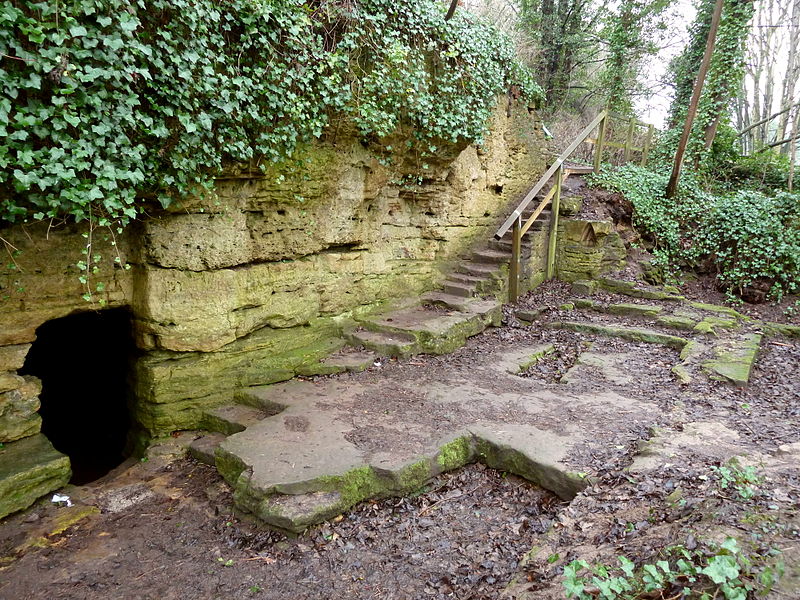
St Robert’s Cave by Storye book (Wikimedia Commons).

OS Grid Reference: SE 36083 56059. In a secluded wooded area near Grimbald Bridge between Abbey Road and the River Nidd at Knaresborough, North Yorkshire, is St Robert’s Cave & Holy Cross Chapel. Nearby, another chapel, but a 15th century wayside chapel and shrine, hewn out of the rock, which is today dedicated to Our Lady of The Crag. This particular chapel is not how-ever associated with St Robert. About 470m to the north is St Robert’s holy well, a healing spring resorted to by the faithful in times past. Robert Flower (1160-1218) was a hermit who spent many years here – more especially his latter years – but also at a number of other monastic sites across Yorkshire. He was said to have performed some miracles and devoted much of his time to the poor, though he was never canonised by the Church.  You can reach St Robert’s Cave from the newer bridge on Wetherby Road (B 6164). Go down the steps onto Abbey Road and a bit further south beside the river is the cave. The medieval Chapel of ‘Our Lady of the Crag’ is ½ a mile to the west at the other end of Abbey Road. St Robert’s Well was located on Monkswell Park Road about a ¼ of a mile north of town.

David Hugh Farmer (1982) says that St Robert was: “The son of an important townsman of York and became a cleric early in life. As a subdeacon he was a novice at the Cistercian abbey of Newminster, but stayed only a few months. He then chose to live as a herm at Knaresborough in a cave where another hermit, also in residence, was a knight in hiding from Richard I, on whose death (1199) he returned to his wife. Robert continued there for some years, until a wealthy widow offered him a cell and chapel at Rudfarlington, near by. A year later this hermitage was destroyed by bandits, so Robert lived at Spofforth under the church wall for a few months, then at Hedley near Tadcaster, where he found the monks to easy-going, before returning to Rudfarlington. Here he had four servants and kept livestock, but was soon in trouble with William de Stuteville, constable of Knaresborough Castle, for harbouring thieves and outlaws. The charge may have been true, for Robert was well known for charity to the destitute. The hermitage was destroyed by William; Robert returned to his cave at Knaresborough, where he lived for the rest of his life.

Farmer goes on to say of St Robert: “His benefactors included King John who gave him forty acres of land in 1216, which he eventually accepted for the poor  and so refused to pay tithes on it. William de Stuteville also gave him land and cows. Robert had a companion called Yves, who  remained with him for the rest of his life.

Farmer also adds that: “Robert’s death, like much of his life, was controversial. Cistercian monks from Fountains tried unsuccessfully to aggregate him to their Order on his death-bed and, after his death on 24th September, to bury his body in their church. But he refused the first and foiled the second by arranging for his burial at the chapel beside his cave. Later the Trinitarian house at Knaresborough acquired the hermitage: papal records for 1252 offered  an indulgence for ‘Building the monastery of St. Robert at Gnaresbur, where the saint’s body is buried’. This document followed his translation, but preceded any official process of canonization, for which a book of Lives and prayers was prepared. Official canonization never took place, but implicit approval was given to the cult. The chapel became a place of pilgri-mage, where oil flowed from the tomb. Matthew Paris regarded Edmund of Canterbury, Elizabeth of Hungary and Robert of Knaresborough as outstanding saints of the early 13th century.”

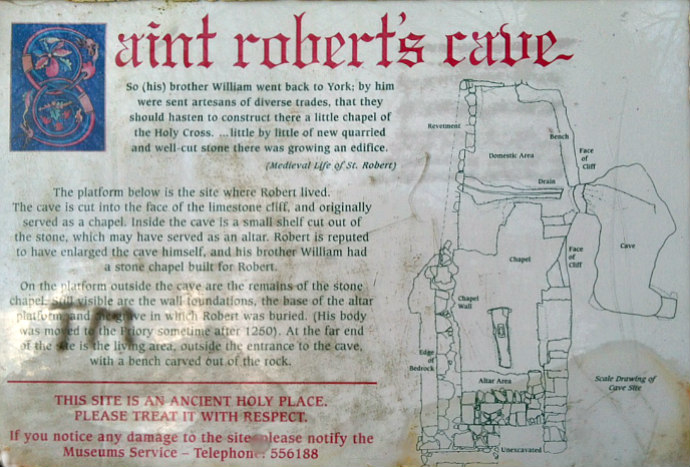
Sign at St Robert’s  Cave by Caruso 308 (Wikipedia)

St Robert’s Cave on Abbey Road, with its connecting chambers and the grotto-like inner chapel, were carved out of the solid Limestone cliff beside the river Nidd. It’s thought the saint himself enlarged the chapel and hermitage which has a stone altar, stone seat, two alcoves, medieval carved cross and more recent graffiti; building this structure must have taken a considerable amount of both energy and time. The chapel was dedicated in honour of the Holy Cross and maybe also St Giles? Pilgrims visited the hermit-saint knowing him to be a miracle worker, and even some eminent local people were known to seek his good council. However, the cave and chapel were frequently flooded by the river Nidd and for long periods remained uninhabited and cut off – this more so in recent times. After the death of St Robert in 1218 his body lay in a tomb that was located in the cave-chapel. There is a church dedicated to him at Knaresborough and another at Pannall, north Yorkshire. Morley church, Derby-shire, has some very nice stained-glass windows depicting the Life of St Robert of Knaresborough. His feast-day is 24th September.

There used to be a holy well named for St Robert 470m to the north of the saint’s cave (at SE 3629 5650), but today that holy spot is the Monkswell Business Park, Manse Lane. However, the last vestiges of the said well/spring can still be seen although today it is a ‘wishing well’ into which locals throw coins! Robert Charles Hope (1893) said of this well that: “A short distance above Grimbald’s Bridge, in a field called Halykeld Sykes, on the north side of the river Nidd, is “”St Robert’s Well.”” There is also a chapel of St. Robert of Knaresborough, which was confirmed by charter to the Brethren of the Order of the Holy Trinity at Knaresborough by Richard, Earl of Cornwall.” Another holy well, said to be named after St Robert, can still be seen just to the southeast of Levisham, north Yorkshire.

Our Lady of The Crag, Knaresborough. (Drawing)

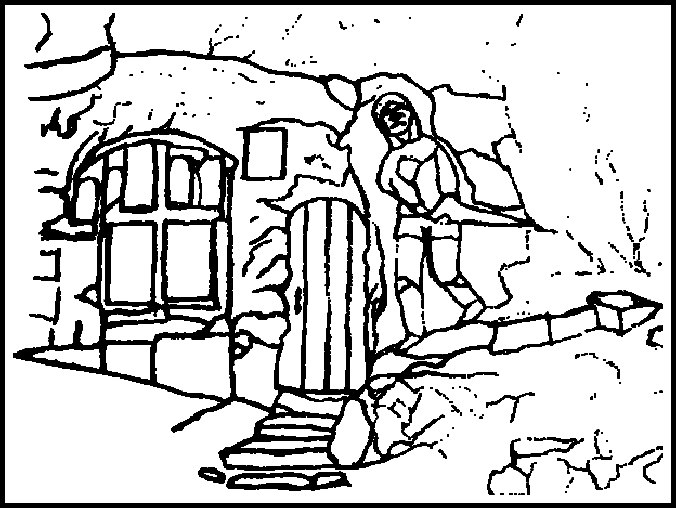
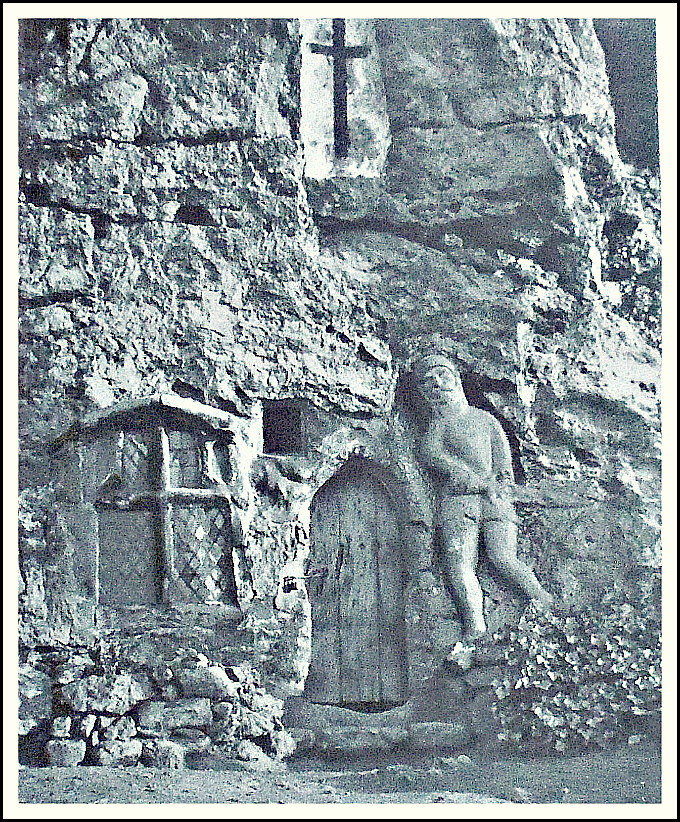
About ½ a mile to the west, at the other end of Abbey Road, is the medieval chapel of  ‘Our-Lady-of-the Crag’, which has sometimes mistakenly been called St Robert’s Chapel, but this folly-like structure was built 200 years after the saint. The chapel, with its tiny inner shrine, was carved out of the sandstone rock-face in c1408 by a local mason by the name of John, whose son was almost killed in a rock fall. John prayed to Our Lady for a miracle. His son survived, and to thank Our Lady for the miracle he built the Chapel in thanks. The inside of the chapel is very tiny but there is an altar and a lovely modern statue of Mary. It has a carved vaulted ceiling with bosses and gargoyles. Church services do still occasionally take place at the chapel and groups of pilgrims come on visits (see the St Mary of Knaresborough website, below, for more informa-tion). By the chapel’s entrance and ‘standing guard’ is an 18th century carved statue of a very life-like knight in armour holding his sword. The chapel is Grade I Listed.

Our Lady Of The Crag Chapel.

Headley & Meulenkamp (1999) add with regard to this chapel and saying that: “………it is a wayside shrine with beautiful Gothic decoration, immediately above it is Fort Montague, an 18th century folly.” They say of Knaresborough that: “it resembles parts of Derbyshire, not least because of the large number of hermits caves.” Fisher & Pennington (1953) say that: “It was originally a wayside chapel, founded at the beginning of the fifteenth century. It won its unenviable place in the annals of notoriety when Eugene Aram hid in it the body of his victim. Aram was convicted of murder and executed in 1759 many years after his crime, which was given a romantic interest quite undeser-ved by a novel of Bulwer Lytton. The figure is of a knight drawing his sword.”  

Sources and related websites:-

Farmer, David Hugh, The Oxford Dictionary of Saints, Oxford University Press, 1982.

Fisher, Graham & Pennington, John, Historic Britain, Odhams Books, Feltham, Middlesex, 1953.

Headley, Gwyn & Meulenkamp, Wim, Follies Grottoes And Garden Buildings, Aurum Press Ltd., London, 1999.

Hope, Robert Charles, The Legendary Lore Of The Holy Wells Of England, Forgotten Books, 2012 (originally published 1893)

https://commons.wikimedia.org/wiki/File:St_Roberts_Cave_008

https://en.wikipedia.org/wiki/Robert_of_Knaresborough

http://www.stmarysknaresborough.org/shrine.html

https://www.visitharrogate.co.uk/things-to-do/st-roberts-cave-p1203201

http://www.crsbi.ac.uk/site/1970/

http://www.halikeld.f9.co.uk/holywells/north/robert1.htm

http://www.megalithic.co.uk/article.php?sid=26391

© Ray Spencer, The Journal Of Antiquities, 2017.


The Dropping Well, Knaresborough, North Yorkshire

OS grid reference SE 3475 5698. The famous petrifying well that turns anything to stone, eventually, is located within the Historic Theme Park known as ‘Mother Shipton’s Cave’, a visitor attraction just off the Harrogate road (A59) and on Long Walk, which runs alongside the gorge of the river Nidd, just half a mile south of the towncentre. At the side of the well is the equally famous Mother Shipton’s Cave, where the Yorkshire prophetess, fortune-teller and mystic lived for much of her life during the 16th century. The spa town of Harrogate is a few miles to the west.

The Dropping Well at Knaresborough, North Yorkshire.

The Dropping Well, Knaresborough, North Yorkshire.

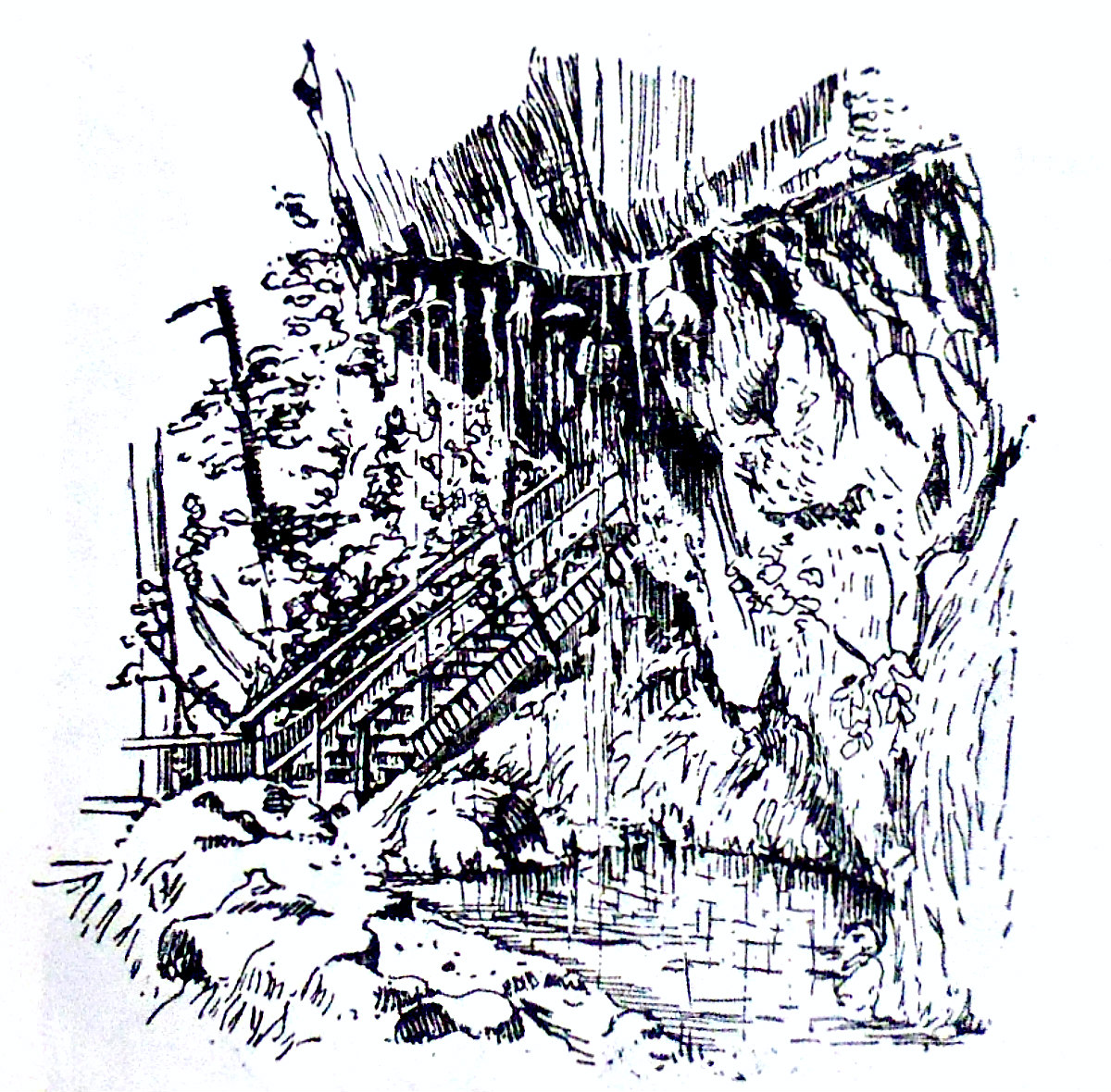
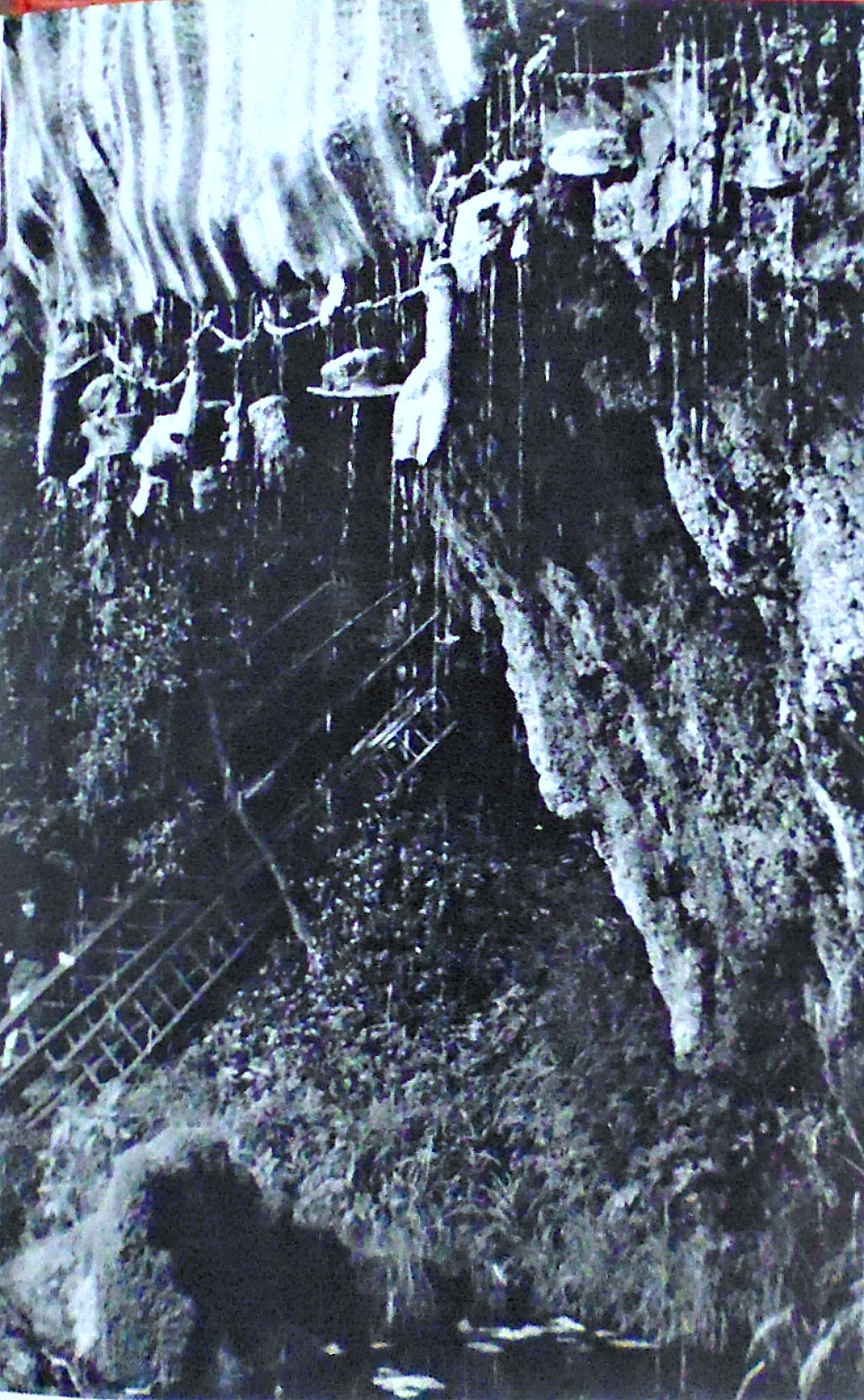
The dropping well was undoubtedly known to our prehistoric ancestors, to the Romans, the Anglo-Saxons and also our medieval forefathers.  It was first recorded in 1538 and from that time onwards it has been visited for its rich mineral content and healing properties. But the place is geologically quite unusual in that the water that flows over the smooth limestone cliff and into a large rocky pool below is highly calcified, coming up from a deep pool or lake in the limestone above, so much so, that it leaves calcified deposits on anything that is placed beneath – indeed many curious objects have been left here over the centuries by thankful pilgrims; some quite notable visitors have left toys, hats, boots, stuffed birds and kitchen items belonging to them, but just about anything and everything is suspended below the overhanging cliff to collect the constant, fast-flowing drops of lime-rich water which eventually turns these items into stone – the very same thing that causes stalactites and stalagmites in deep underground cave systems. The well was visited in 1534 by English antiquarian John Leland (1506-52), who gave a very reasonable description of it for the time and was apparently very taken with the well.

Garry Hogg (1968) says of this petrifying well that: “Water flows over a limestone mass to fall into a natural pool below. A century and more ago a number of oddments such as hats, caps, shoes, gloves, were hung on a line beneath the dripping water. The lime in it has petrified—literally ‘turned to stone’—these objects. Visitors today leave oddments such as children’s toys, sock, scarves and so forth, to be naturally treated by the iron, lime, magnesia and sulphur; returning after some months, they see the early stages of a process that will be complete in perhaps a year or less.”

Close by the well, in the side of the hill, is Mother Shipton’s cave. Ursula Southill or Southell was born near the cave in 1486 or 1488? and died there in 1561. She lived in the cave as a sort of recluse and came to be known in later years as Mother Shipton the Yorkshire prophetess, fortune-teller, mystic and, to some a witch! This was probably because she always wore a pointed hat and had ugly, facial features, such as a crooked nose and a protruding chin. But Mother Shipton was not a witch in that sense.

Many local people, including the nobility and an abbot, came to seek her advice on medical problems and other issues that they were unable to resolve themselves. And Mother Shipton became famous for her prophecies with regard to many future events including: the plague, the civil war, the great fire of London, wheeled transportation, iron roadways (railways) and stone constructions carrying water such as viaducts. All these prophecies were to be published in pamphlet form for the first time in 1641 and reprinted in 1645 by William Lilly the prominent astrologist, and even Samuel Pepys mentions her in his diary wrote during the great fire of London in 1666, and in 1667 yet another pamphlet mentioned the Yorkshire prophetess, although these works were quite often embellished. Two of Mother Shipton’s prophetic verses fortell of the end of the world at some point in the future! And she foretold of royal marriages and deaths ie Henry VIII and Ann Boleyn, and of Mary, Queen of Scots, tragic execution.

Sources & References:-

Hogg, Garry, Odd Aspects of England, David & Charles, Newton Abbot, Devon, 1968.

Robinson-Walsh, Dawn (Edited), Stories & Tales Of Old Yorkshire, Printwise Publications, Tottington, Bury, 1993.

Woodhouse, Robert., North Yorkshire – Strange but True, Sutton Publishing Ltd., Stroud, Gloucestershire

Mother Shipton’s Cave – Wikipedia

Copyright © Ray Spencer, The Journal of Antiquities, Up-dated 2021.


The Shrine Of Rocamadour, Perigueux, Midi-Pyrenees, France

English: Rocamadour Deutsch: Rocamadour

Cave of St Amadour at Rocamadour, France (Photo credit: Wikipedia)

Latitude 44.799682. Longitude 1.617066. Located at over 1,600 feet up in the foothills of the Pyrenees, Causse de Gramat, Dordogne, in south-west France is The Shrine of Rocamadour, a place of pilgrimage since medieval times, if not before that. Roc means ‘Cliffe’ and Amadour (meaning ‘pure’) is the name of a Biblical saint of the 1st century AD who is otherwise known as Zacchaeus. In the steep-sided gorge above the river Alzou (on the right bank) stands ‘The Sanctuary of The Blessed Virgin Mary’ with a 12th century cave-church dedicated to St. Amadour and, on the hilltop above stands the pilgrimage church of Notre Dame, which houses the famous and much venerated cult figure of the ‘Black Madonna’ and another church of St. Sauveur that has numerous paintings and inscriptions recalling pilgrimages over the centuries. The town of Perigueux is 12 miles to the north-west and Cahors is 10 miles to the south on the E9 highway.

According to tradition and legend, Amadour or Zacchaeus was a native of Galilee or Jericho in the Holy Land and some scholars think he was the husband of St. Veronica. It was St. Veronica who wiped Christ’s face in a cloth when he was being taken to his crucifixion on Golgotha. Earlier, Zacchaeus had climbed a sycamore tree in Jericho in order to see and hear Christ preaching. After the crucifixion he accompanied other members of Christ’s family, including the three Marys, and other close relations to Gaul bringing with him a sacred wooden image of the Blessed Virgin Mary made from wallnut that was, perhaps, carved by St. Luke the Apostle, or maybe by Zacchaeus (Amadour) himself? Though it is claimed by some authorities that the image dates from the 8th or 9th century AD. He also brought with him some drops of the Virgin Mary’s breast milk.

The Black Madonna, Rocamadour, France.

The Black Madonna, Rocamadour, France.

Amadour lived the life of a hermit in a cave at Rocamadour and placed the wooden image in there. Today the cave in the Alzou gorge houses a church that is dedicated to the hermit saint and contains his relics which were placed here by Benedictine monks in 1166, after they had found his body to be still incorrupt. St. Amadour’s feast-day was placed on the 1st May, and he or another saint called Amadour is venerated at Lucca in Italy where is kept the so-called ‘Holy Face’ – the famous cloth belonging to St. Veronica. Amadour according to legend, visited Rome at the time of St Peter’s martyrdom there and also, perhaps, Constantinople. He died about 70 AD. Today the wooden image of the Black Madonna with the Christ child seated on her knee is safely housed in The Chapelle Miraculeuse inside The Church of Notre Dame on the hilltop above the cave-church, which has been a place of veneration and pilgrimage since the middle-ages and remains so today. There is also a chapel dedicated to St. Michael the Archangel and what is said to be a miraculous bell.

Also in the this Pyrenean town near the Church of Notre Dame is the 11th-13th century Basilica of St. Sauveur (Saviour), another place of pilgrimage down the centuries and, to which many kings, princes, saints and noblemen have payed homage. St. Bernard and St. Dominic are said to have come on pilgrimage here, as did Emperor Charlemagne. Many of these rich pilgrims have left inscriptions upon the walls and arranged for wall paintings to be initiated as a sign of their benevolence to the Blessed Virgin Mary and Christ the Saviour.

Sources:-

The Shrine of Rocamadour – [The Black Madonna copyright image].

Begg, Ean., The Cult Of The Black Virgin, Arkana, London, 1985.


Underground City of Naours, Picardie, Somme, France

Français : La chapelle (nef centrale) - Grotte...

Chapel & Grottes de Naours (Photo credit: Wikipedia)

Longitude 50.034296. Latitude 2.280462. Located at the eastern side of the town is the famous site known as the Underground City of Naours with its entrance in the side of a tree-covered plateau of land near the D60 Rue de ‘l’Abba Danucourt highway and a little way along the Rue de Carreres road. There is an admission fee to pay but guided tours are available. The underground caves, grottos, passageways and chapels that make up this ancient settlement are 33 metres 106 feet below ground and the pathways linking these run for between 1-2 miles in a westerly direction and under the streets of Naours itself. It is thought the underground settlement, also called a souterraine, dates from the 3rd century AD. The town of Naours is in the far north-east corner of France not far from the border with Belgium. Amiens is 10 miles to the south.

The Romans were the first people to dig into the plateau back in the 3rd century and, in subsequent centuries local people continued digging out the caves and grottos. Maybe early Christians hid below the ground in order to escape their persecutors – they would certainly have had plenty of places to hide and set up little chapels. Then in the 9th century AD Viking invaders lived in these underground caves. In more recent times local peasants made their homes in the vast network of caves turning the place into a large underground settlement, complete with extensive passageways and more chapels, shelters and wells, in fact, everything to allow them to live below ground without the need to venture out into the town of Naours, something akin to being almost completely self-sufficient. It is said that up to 3,000 peasants lived in the underground settlement, and even farm animals were kept underground!

Rotonde de la Sainte Vierge, Underground City of Naours, France.

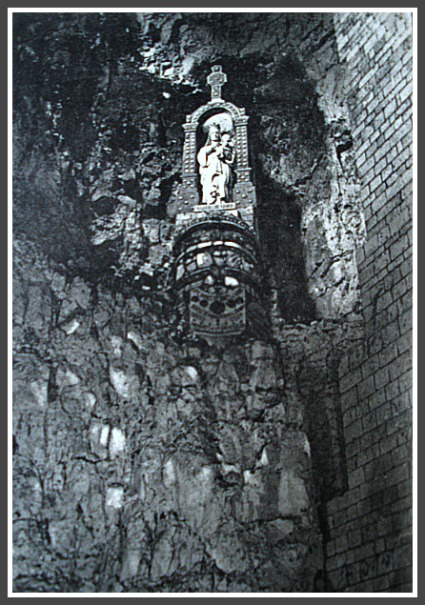
There are three chapels, one of the best is called Rotonde de la Sainte Vierge (Chapel of the Virgin) where high up on a rocky ledge stands a statue of the blessed Virgin Mary holding baby Jesus. The other chapels also house similar statues. The entrance to the underground city was rediscovered by a local parish priest, Abba Danicourt, in 1887. In total there are 28 galleries and 300 chambers or rooms. During the Great War (1914-18) soldiers fighting on the battlefields of the Somme are said to have lived in the caves and, later during the 2nd World War (1939-45) the German high command apparently used the cave system for their headquarters. You can still see the graffiti that soldiers have left behind on the walls. Truly this is an interesting place to visit and although it is now a tourist site it is well worth taking a guided tour of this vast underground complex, and be amazed at what actually lies beneath the streets of the town of Naours – and yes it is an underground city!

Click on the following link  http://geoffspages.wordpress.com/2012/05/22/the-underground-city/

https://en.wikipedia.org/wiki/Naours

Copyright © Ray Spencer, The Journal of Antiquities, 2012 (updated 2024).


Cave of Altamira, Santillana Del Mar, Cantabria, Northern Spain

Great hall of policromes of Altamira, publishe...

Great hall of policromes of Altamira, published by M. Sanz de Sautuola in 1880. (Photo credit: Wikipedia)

Latitude 43.382500. Longitude 4.116200. This famous cave can be found in the countryside about 1 mile to the south-west of the Cantabrian village of Santillana del Mar close to the Barrio de Herran road. The nearest town, Torrelavega, is 5 miles to the south-east, while Santander is 19 miles to the west. The cave of Altamira, close to the northern Spanish coast, is famous the world over for its rock-art, prehistoric paintings and drawings, which date back many thousands of years to the Stone-Age.

At the present time the cave of Altamira is not accessible to visitors but a reproduction site has been built in the museum’s neo-cave section which is located close by, and a pretty good job they have done of it. But to return to the original cave: once through the entrance hall you arrive in a series of odd-shaped chambers and galleries that are 270 metres or 970 feet in total length and, between 2-6 metres in height. One of the chambers is called ‘the lateral’ at 30-60 feet and 8 feet in height, while the main chamber (known as The Sistine Chapel) with the ‘great ceiling’ is 6 metres or 19 feet high, but there are other chambers that are just equally as impresive.

English: Weird Painting of a very big bithon i...

Painting of a very big bison in the cave of Altamira (Photo credit: Wikipedia)

The prehistoric cave paintings and drawings or rock-art are quite astounding in that they date back thousands of years to the Paleolithic Age (The Stone Age) around 18,000-16,000 BC. The prehistoric paintings and drawings were first initiated in the Late Magdalenean period about 12,000 BC and these were added to during the Solutrean period of the Paleolithic Age approx 12,000-5,000 BC. It is believed that the cave was occupied between 14,000-12,000 BC, but at shorter periods too between 18,000-13,000 BC when the cave’s rock paintings first began to appear.

On the ceiling of the great hall are the famous ‘polychrome bisons’ painted in vivid red ochre and outlined with black charcoal. In the other chambers there are many more paintings and, also drawings. More wild bison are to be seen as well as wild boar, bulls, horses and a deer that is 7 foot long, and also some quite remarkable hand paintings that were stenciled and, not forgetting the strange masked faces, that look human in appearence. In two of the chambes there are strange lines carved into the rock and some mysterious sign drawings.

The cave of Altamira was first discovered in 1868 and, later in 1875 archaeologist Marcelino Sanz de Sautuola started to investigate and the paintings were identified and authenticated in 1879 after his daughter, Maria, alerted her father to them. During excavations a number of animal bones and stone axes were found. In 1985 the cave was made a World Heritage Site.


← Back

Thank you for your response. ✨