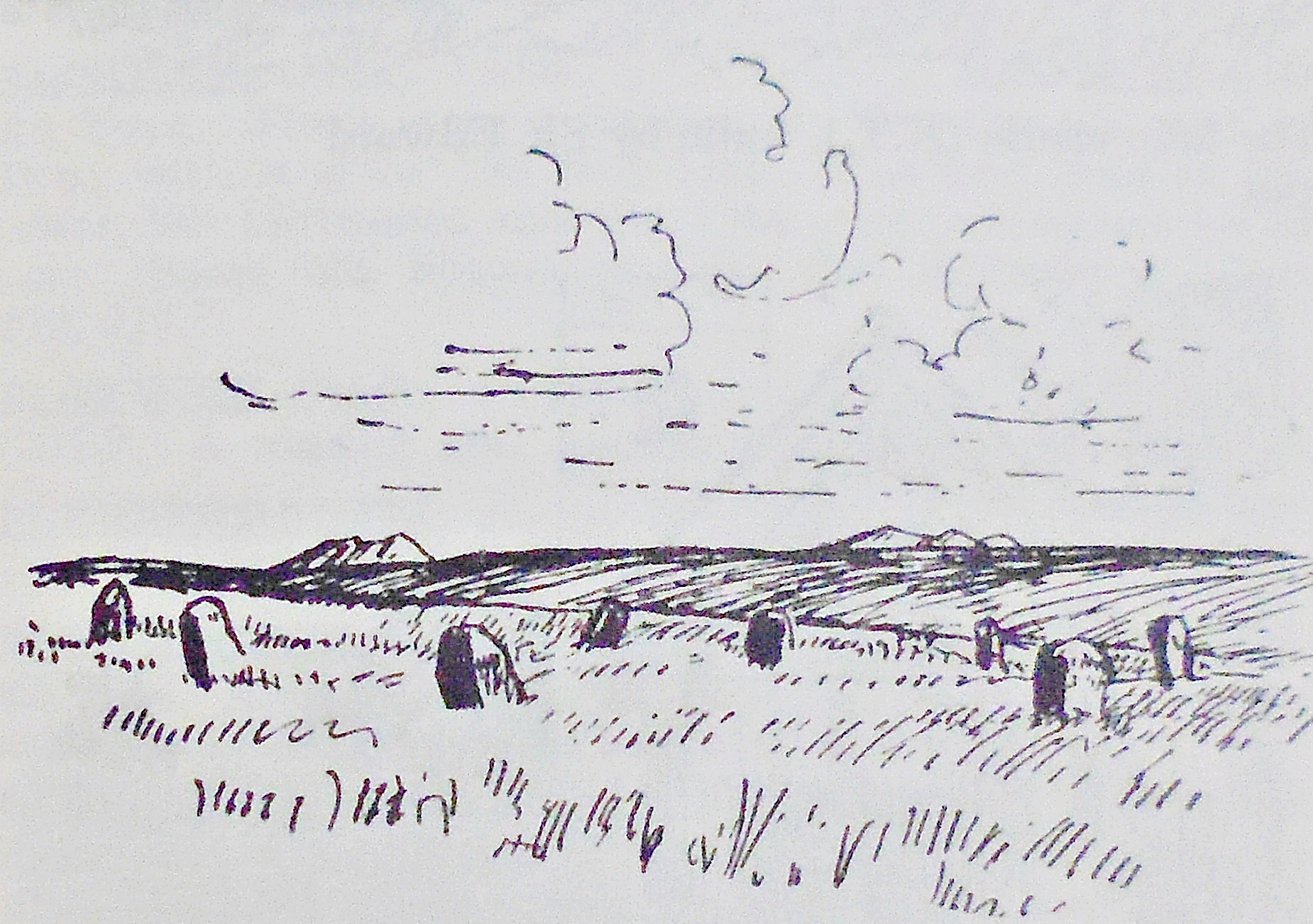
The Trippet Stone Circle, Bodmin Moor, Cornwall.
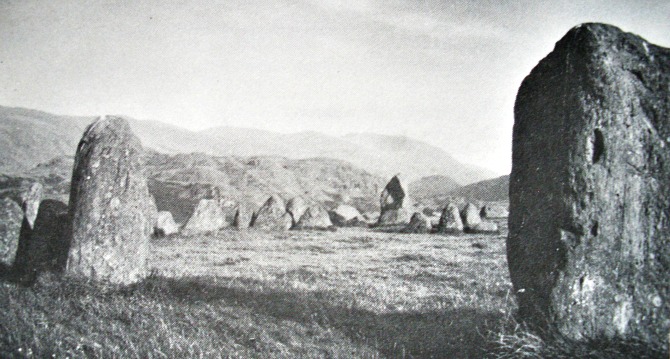
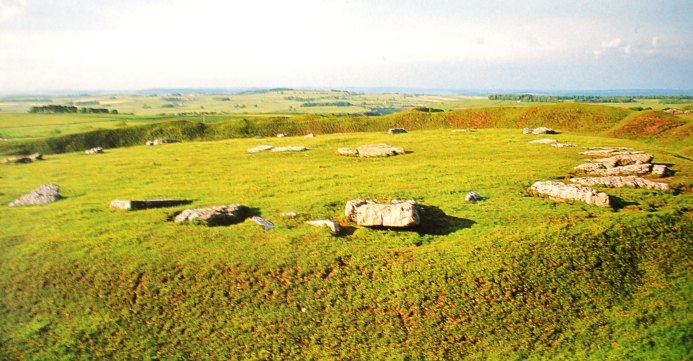
NGR: SX 1310 7500 & SX 1440 7520 respectively. On Manor Common, near Blisland, Corn-wall, are the Trippet or Tripping Stones, which are actually a stone circle of standing and fallen stones. Approximately 1 mile to the northeast, another stone circle, the Stripple Stones, is situated within a henge monument on the south slope of Hawk’s Tor, located on the edge of Bodmin Moor in Cornwall. Both stone circles can be found in direct sight of each other, which would seem not coincidental when the second circle was built, probably in 1700 BC. Both ancient monuments are located some 6 miles northeast of Bodmin, near the A30 road. The Trippet Stone Circle (also known as the Dancing Stones) has a diameter of around 32 metres (105 feet) and is thought to date back to the Bronze Age; and at its centre, a more recent standing stone, whereas the Stripple Stone Circle, which has a recumbent stone at its centre and a few other outer stones, is just over 44 metres (145 feet) in diameter and dates back to the Neolithic period.
James Dyer, writing in 1973, says of Trippet Stones: “This is a small but impressive circle of eight standing, and four fallen, stones, 33 m in diameter. Most of the stones are roughly rectangular blocks, about 1.5 m high. In the centre is a modern boundary stone.”

Plan of Stripple Stone Circle and Henge on Bodmin Moor, Cornwall, from the Wikipedia website.
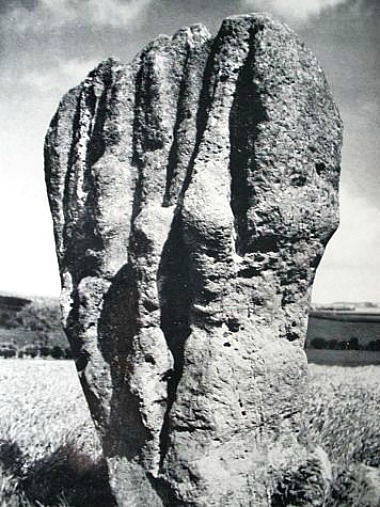
James Dyer, writing in 1973, says of Stripple Stones that: “On the slope of Hawks Tor is an em-banked enclosure with internal ditch 68.3 m in diameter. Inside it is an irregular circle of fifteen (formerly twenty-eight) granite blocks, only four of which are still standing. Almost in the centre of the stone circle, which is 44.5 m in diameter, is a single recumbent stone, and three others lie outside the circle but within the earthwork. Excavations by H. St. George Gray in 1905 showed that the surrounding ditch was very irregular, but averaged 2.7 m wide and 1.2 m deep. It was broken by an entrance facing south-west towards the Trippet Stones. The stones themselves were in shallow holes, none more than 0.8 m deep. The site is clearly a henge monument by the position of its internal ditch. The presence of the stones suggests a continuity between the Neolithic henge and Bronze Age stone circle. Modern excavation might reveal that the earthwork is older than the stone setting.”
John Michell, writing in 2003, says of both the Stripple Stone Circle and the Trippet Stone Circle and the surrounding area: “The Stripple Stones and the Trippet Stones. These two circles stand within a mile of each other on Bodmin Moor below Rough Tor. They were evidently connected, for they are inter-visible and the entrance to the first circle is orientated towards the second. The Stripple Stones are unique in Cornwall, being the only henge circle. The surrounding earthwork has its ditch inside, proving its ritual rather than defensive function. Most of its stones, including the central are now fallen. In the same district are the Leaze Circle to the north-west and, on the east side of the moor, the small and attractive Nine Stones Circle at Altarnen. The Fernacre circle is one of the largest on Bodmin Moor, up to 150 ft across. Its siting is spectacular, with views to Rough Tor, Brown Willy and other landmarks. Originally, it consisted of about 90 stones, most of which are now fallen or missing.”
Mr Michell goes on to say that: “Several circles, together with the only Cornish stone row, are called Nine Maidens, and are supposed to have nineteen stones, representing a lunar cycle. The other common legend is that the stones are petrified dancers or musicians. That was their punishment for dancing and playing on the Sabbath. Near St Buryan in the far west, the Merry Maidens circle, which the old Cornish named the Dancing Stones, was said to represent unauthorised merry-makers who were turned to stone. The same legend is in the name of the Trippet (tripping or dancing) stones on Bodmin Moor.”
Sources & References & Related Websites:-
Dyer, James, An Archaeological Guide — Southern England, Faber, London, 1977.
Michell, John, Prehistoric Sites in Cornwall, Wessex Books, Salisbury, Wiltshire, 2003.
The AA, The Illustrated Road Book of England & Wales, The Automobile Association, London, 1961.
http://www.stone-circles.org.uk/stone/trippet.htm
Wikipedia website: https://en.wikipedia.org/wiki/Stripple_stones https://commons.wikimedia.org/wiki/File:The_Victoria_history_of_the_county_of_Cornwall_(1906)_(14590965339).jpg
https://www.historic-uk.com/HistoryMagazine/DestinationsUK/Bodmin-Moor-Historic-Monuments/
© Copyright, Ray Spencer, 2025.


 The Journal Of Antiquities
_(14590965339).jpg)