The Journal Of Antiquities

Ancient Sites In Great Britain & Southern Ireland


3 Comments

St Oswald’s Church, Winwick, Lancashire

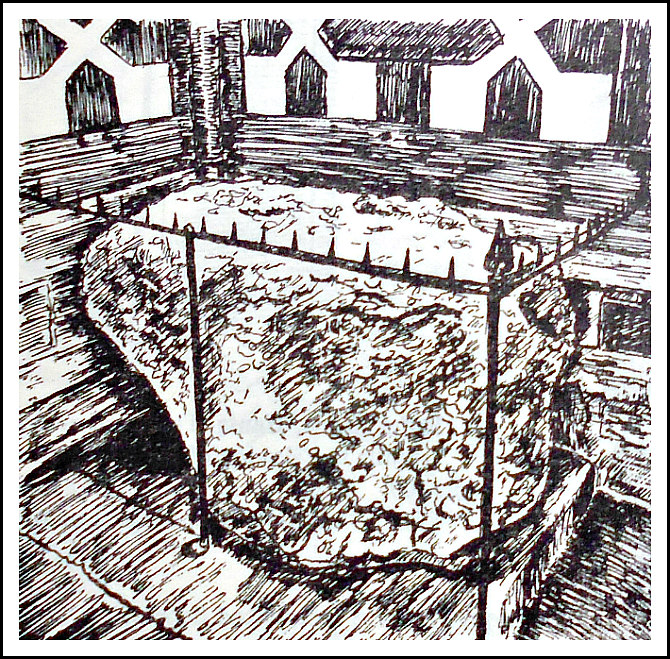
Carving on Tower of St Oswald's Church at Winwick, Lancashire.

Carving on Tower of St Oswald’s Church at Winwick, Lancashire.

OS grid reference: SJ 6038 9283. St Oswald’s parish church is located on Church Walk, off Golborne Road, in the middle of Winwick Village, in Lancashire (it used to be in Cheshire). It is a largely 14th-century building on the site of a pre-Conquest chapel and prior to that a pre-Christian, pagan temple. The church houses an 8th-9th century cross arm section, an ancient font, old inscriptions and a Medieval rood beam. And on the exterior tower wall there is an interesting carving of a pig next to a statue of St Anthony. According to legend, Oswald, king of Northumbria, came to Winwick a few years before he met his death at the hands of King Penda of Mercia, near Oswestry, or according to some historians, he was killed in battle at Maserfield in Shropshire, in 642 AD, at the age of 38. There is a St Oswald’s Well, ½ a mile to the north of Winwick at Hermitage Green; the town of Newton-le-Willows is 1 mile to the north on the A49 road.

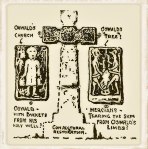
Winwick Church Cross (Illustration/Diagram.

Winwick Church Cross (Illustration/Diagram.

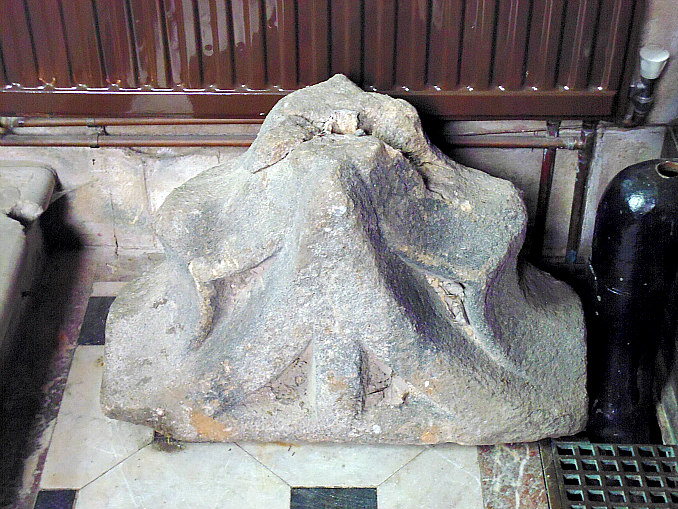
In 1873 part of a Saxon cross was dug up in the churchyard and for some years it was kept there, but it was eventually brought into the church and is now displayed on the windowsill in the Gerard Chapel at the NE side. These are the arms of a tall Saxon preaching cross, dating maybe from the 8th century, which may even have been used by St Oswald himself? Although the carvings are faint, most can still be made out. The front face has key patterns, and there is interlacing and scrollwork. At one end a priest carries two bells or maybe water containers (St Oswald’s Well), while at the other end a saint, probably Oswald, is being martyrd and two soldiers are hanging the saint up-side down from a tree – each having a foot on his face. On the reverse side: three creatures with legs and tails coiled together, and a more recent inscription to the memory of Roger Lowe, who gave this cross as a gravestone in 1793.

The church font on a modern pedestal in the Gerard Chapel could date from the 11th century, or a little earlier, but it was damaged by Puritans, and there is still some Norman masonry to be seen. In the vestry there is part of the Medieval rood beam – the rood loft having long since been destroyed; while the Oak lectern is recent but it has a canopy and carved figure of St Oswald. There is also a Jesse window, and two interesting carved heads at the bases of two columns (north aisle) could be Celtic in origin (Mark Olly, 1997). In 1643 and 1648 two Civil War battles took place at Winwick and the church of St Oswald was used as a stable by soldiers.

On the outside tower wall (west side) there is a carving of a pig next to statues of St Anthony and St Oswald. Legend says that a pig was instrumental in the building of the first church. According to author Ken Howarth ‘Ghosts, Traditions & Legends Of Old Lancashire’, “A pig was seen running away from the site of the new church being built to commemorate St Oswald…..as it ran away, it was heard to scream “We-ee-wick, we-ee-wick, we-ee-wick” from whence the town, according to this particular legend, got its name. The pig then took up a stone in its mouth and carried it to the spot where the church should be built. This remarkable animal apart from talking, then moved all the stones the men had laid to the new sacred site.” But Howarth tells us that another source says: “it is the pig of St Anthony that is preserved in the west front of the church.” The pig is the symbol/badge of St Anthony of Egypt, who died in the mid-4th century AD.

In 1828 three human skeletons of gigantic proportions were discovered 8-10 feet below the chancel. They are thought to have dated from the pre-Christian period and to have been associated with a Druidical temple which stood on the site; maybe they were sacrificial victims? The place of St Oswald’s martyrdom is considered by some historians to be at Makerfield near Winwick, Lancashire, rather than Maserfield in Shropshire.

Sources:

Fields, Kenneth., Lancashire Magic & Mystery, Sigma Leisure, Wilmslow, Cheshire, 1998.

Howarth, Ken., Ghosts, Traditions & Legends Of Old Lancashire, Sigma Leisure, Wilmslow, Cheshire, 1993.

St Oswald’s, Winwick Church

http://www.mysteriousbritain.co.uk/england/cheshire/legends/st-oswalds-church-winwick.html

Olly, Mark., Celtic Warrington And Other Mysteries – Book One – North To East, Churnet Valley Books, Leek, Staffordshire, 1997.

© Copyright, Ray Spencer, 2016.


St Kenelm’s Well, Winchcombe, Gloucestershire

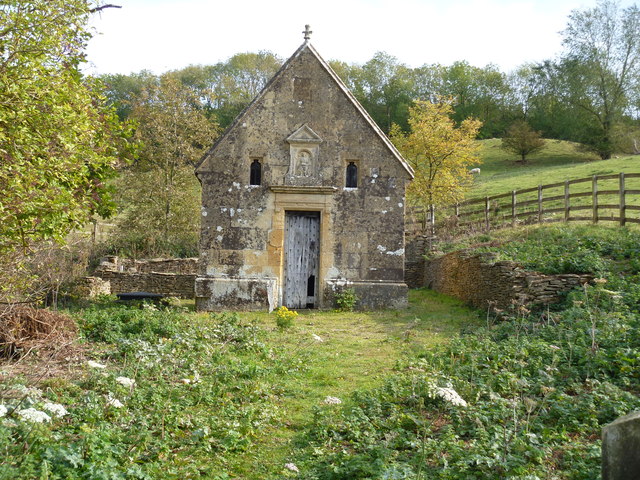
St Kenelm's Well near Winchcombe BY Michael Dibb (Geograph).

St Kenelm’s Well near Winchcombe by Michael Dibb (Geograph).

OS grid reference: SP 0435 2779. About 1 mile east of Winchcombe village, Gloucestershire, on the side of a hill stands St Kenelm’s holy well. The wellhouse-cum-baptistry, which houses the holy well, is a mid-16th-century building. The well takes its name from St Kenelm, a Mercian boy-king and martyr, who was the grandson of King Offa. He was ‘most treacherously’ murdered at the instigation of his scheming elder sister, Quendrida, sometime between 819-821 AD. It is located on the side of a hill which is surrounded by trees on its lower sides, and is easily reached along a country lane that runs in an easterly direction out of Winchcombe village, passing close by Sudeley Castle. A footpath runs just to the west of the well-house. The holy well was a place of pilgrimage in the Middle Ages and in more recent times too, as was Winchcombe Abbey, where the martyr’s coffin had lain for many hundreds of years. It is now housed in St Peter’s parish church.

Francis Duckworth recalls the “Legend of St Kenelm” in his beautiful book ‘The Cotswolds’, and says: “Kenulf, King of Mercia, founded Winchcombe Abbey in the 9th century. He had a daughter, Quenride, and a son, much younger, Kenelm. The latter, while still a child, succeeded his father, and the jealous Quenride at once began to hatch plots to put him out of the way. One fine morning he went out hunting with his tutor, and never returned. So Quenride reigned in his stead.

“Some years afterwards, while the Pope was celebrating mass in St Peter’s, a pure white dove flew in through an open window, and let fall a piece of parchment from her bill. On the parchment was written: “In Clent, in Cowbach, Kenelm, Kinges bermn (bairn) lieth under a thorn heuade birevede (bereft of his head).” An Englishman who happened to be present interpreted this, and the Pope set on foot an investigation of the whole matter. In the end a party of monks from Winchcombe succeeded in finding the headless of Kenelm. At this point the monks of Worcester interfered and claimed the body as having been found within their boundaries. Divine arbitration was implored. Both claimants should sleep one night by the body’s side: the first to wake should possess the relic. This good fortune fell to the Winchcombe monks. On their way they stopped to rest, and the spot is marked by St Kenelm’s Well.”

St Kenelm’s murder took place at Romsley in the Clent Hills, Worcestershire, where another holy well sprang forth where the saint’s body had lain. This well is located in the valley behind St Kenelm’s church, which is about½ a mile north-west of the village, according to authors Janet & Colin Board ‘Sacred Waters’. On its long journey from Romsley in Worcestershire the martyr’s body had been rested, only a mile from Winchcombe Abbey, Gloucestershire, but this simple action caused a second spring of water to burst forth and soon miracles of healing were attributed to its water. The well water was said to be most effective as a cure for eye troubles. Above the door of the stone-built wellhouse is a statue of St Kenelm, who today surveys what would have been his kingdom, but sadly ‘that’ wasn’t to be. The present-day building dates from 1549, and it was restored in 1887.

Author Francis Duckworth goes on to say that after Kenelm’s murder: “Quenride sat at her window to watch the procession pass, and, to cast an evil spell upon it, read aloud the 100th Psalm backwards. When the procession reached her window her eyes dropped out of her head into her lap, and stained the psalter with blood. This psalter was preserved and shown for many years in proof of the story. Kenelm was buried in the abbey precincts, and one of the two very early stone coffins in the west end of the parish church is called Kenelm’s coffin.” The other coffin was thought to be that of King Kenulf (Coenwulf), father of St Kenelm (Cynehelm). Winchcombe Abbey was founded by King Kenulf in 789 or 798 AD, but it was dissolved in 1539. Nothing survives of the abbey above ground. The evil Quenride, also known as Cwenthryth, lived out the rest of her ‘sad’ days in a monastery, where she was ‘perhaps’ made abbess? She died in 827 AD. St Kenelm, the boy-king, is still much venerated at Winchcombe, where his feast-day is held on 17th July.

Over the years there has been much speculative debate on the age of Kenelm when he succeeded his father to the throne of Mercia. We can assume that he came to the throne in either 819 or 821 AD at the age of 7 or 9, if he was born in 812 AD, which is the date usually given, although some historians think he was a few years older than that, maybe as old as 12? Not that it really matters now!

Sources:

Bord, Janet & Colin, Sacred Waters, Paladin, London W1, 1986.

Bottomley, Frank., The Abbey Explorer’s Guide, Kaye & Ward, Tadworth, Surrey, 1981.  

Duckworth, Francis., Beautiful Britain – The Cotswolds, A. & C. Black Ltd., Soho Square, London W1, 1914.

http://www.geograph.org.uk/photo/2767417     © Copyright Michael Dibb and licensed for reuse under this Creative Commons Licence.

St Kenelm’s Well at Winchcombe

© Copyright, Ray Spencer, 2016 (updated 2025).


1 Comment

St Eithne’s Grave, Eileach An Naoimh, Argyll and Bute, Inner Hebrides

Aethne's Grave on Eileach an Naoimh (photo credit: Gordon Doughty Geograph)

Aethne’s Grave on Eileach an Naoimh by Gordon Doughty (Geograph)

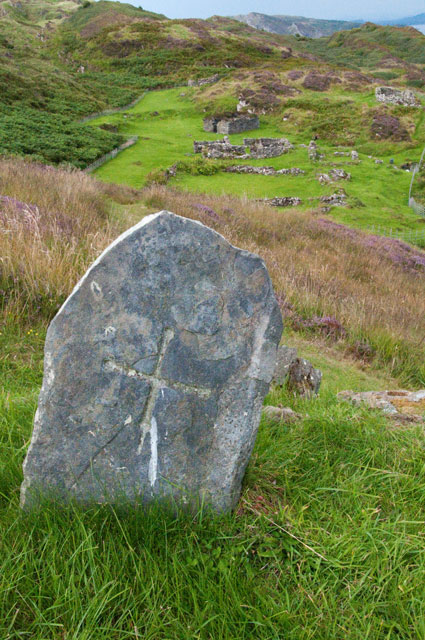
    OS grid reference: NM 6302 0964. The little Scottish island of Eileach-an-Naoimh (Rock of the Saint) is one of the Garvellach Islands, in the Firth of Lorne, and is the reputed burial place of St Eithne, mother of St Columba, making it a ‘holy island’. On this very remote, windswept island are the scant remains of a Celtic monastery with beehive huts, two chapels and a graveyard with three crosses, and 80 metres to the south-west is the traditional site of St Eithne’s grave, which is marked by a grave-slab bearing an incised cross. In old texts the island was called Hinba. And to this little island St Columba and other ‘saintly’ figures came from time to time for a deeper solitude and contemplation – this fact being borne-out because the island was, and still is, largerly inaccessible. There are no ferries or steamers alighting in Port Cholumcille, but some pilgrims do visit the island and pay their respects at St Eithne’s grave, though they have to hire their own boats! The island of Mull is 6 miles to the north and Scarba 4 miles to the south-west, while the mainland of Argyll is 6 miles away.

    Author Reginald B. Hale in his work ‘The Magnificent Gael’, tells us that: “Eithne came of the royal line of Leinster kings. Her husband Felim macFergus was a chieftain of the dynastic family of Ui Neill, heirs of the mighty Niall-of-the-Nine Hostages, High king of Ireland. So their little son was born a prince of the Blood Royal and would inevitably live his life in the glare of the political limelight. His parents had every reason to hope that someday he might hold the scepter of the High King and reign at Tara.

    “But the child also had another heritage. His great-great-grandfather Niall had been a heathen and an unabashed slave raider. However several of his sons had been converted by St Patrick, the ex-slave who brought Christianity to the Irish. One of these sons was Conall Gulben, king of Donegal. St Patrick with his staff marked a cross on King Conall’s shield and from then on his descendants took as their symbol a Hand grasping a Cross. From the time of his conversion his clan had been staunch for the faith. So it was that Felim macFergus, grandson of Conall, was himself a deacon of the Church and his son was born into a devout Christian family.”

    Hale goes on to say that: “Felim and Eithne took their child six miles to Kilmacrenan to be baptized by the priest Cruithnechan which is pronounced “Crenan”. He was christened Colum, which in Latin is Columba. He also received the traditional family name of Crimthann that means a fox, an animal admired by the Gaels.”

    But we know that Columba was born beside Lough Gartan in Co Donegal (521 AD) where there are the Medieval ruins of what is locally called St Eithne’s Convent. And there is a St Eithne’s Well at Termon. The site of St Columba’s birth, near the southern shore of the lough, is marked by the so-called ‘Natal Stone’, and nearby are the saint’s holy well, the Stone of Lonliness, and the saint’s ruined church. His birth was miraculous we are told. St Eithne had a dream in which she was given a beautiful robe with colours similar to the wild flowers, but the wind blew the robe away. However, the wind-blown robe grew in size and spread out to cover the land, mountains and islands – this being a sort of divine portent regarding her son who would eventually take Christianity to the northern Pictish High King, Brude, and his people sometime after 565 AD – at a time that was “dark” in many respects, but for St Columba it was a time of ‘great joyfulness’.

    In 563 AD Columba set sail for Iona and was accompanied by members of his family including his mother and also disciples and servants. Later, he founded a great monastery on the island which became a college of learning; he took the message of Christ to the Picts and established many other monasteries and churches in Scotland. His mother retired to the Island of Hinba (Eileach-an-Naoimh) where she was cared for by Ernan, who was St Columba’s uncle and also prior of the monastery of Hinba, founded by St Brendan. Women were not allowed in the monastery. St Eithne died and was buried on the island in the mid to late 6th century. Her ‘reputed’ grave is located on the Peak of Hinba, 80 metres south-west of the monastery, where a circular enclosure (11 feet in diameter) with three standing stones marks the site, one of these being a grave-marker (2½ feet high) bearing a thin equal-armed Greek cross with terminals, beneath which is a thinner spike. And there are a number of recumbent stones and a kerb running around the site. The grave seems to be positioned so as to look out over the Firth of Lorne.

    But some historians question the grave-site. A few think that it may in fact date from the Iron-Age, or earlier, and others think it may be the burial site of more than one person? But I think it should be pointed out here that the type of burial that was around in prehistoric times was more than likely to have existed well into the early Christian period – the so-called Dark Ages of the 5th-7th centuries AD.

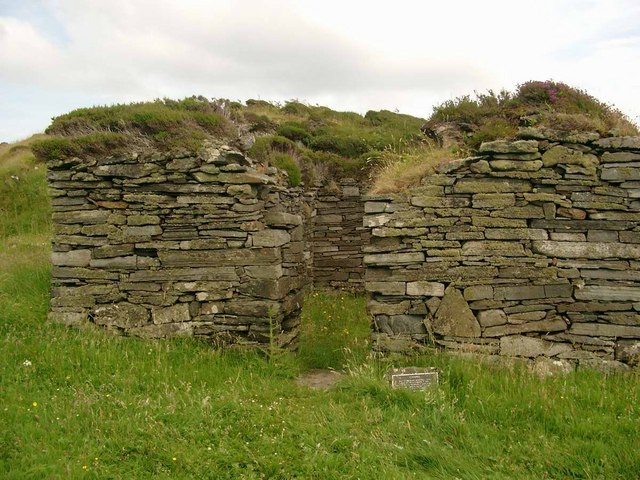
The Monastery Chapel, Eileach an Naoimh by Gordon Brown, Wikipedia.

Monastery Chapel, Eileach an Naoimh by Gordon Brown, Wikipedia.

    The monastery on Eileach-an-Naoimh often ascribed to St Brendan, rather than St Columba, is a ruin consisting of low drystone walls with a number of bee-hive huts (hermits cells) around it, one of which is a double construction. There are two small ruined chapels that are said to date from the 9th-12th centuries and a graveyard with three stones bearing incised crosses, and also a circular feature that is probably an early Christian grave, maybe that of Ernan the first prior? The monastery was probably burned c 800 AD and thereafter it suffered from a number of attacks by invaders from overseas, including the Vikings. The monastic site on Eileach an Naoimh is probably the oldest religious ruin in Scotland.

Sources:

Hale, Reginald B., The Magnificent Gael, R.B.Hale, Otawa, Canada, 1976.

http://www.geograph.org.uk/photo/2014435    © Copyright Gordon Doughty and licensed for reuse under this Creative Commons Licence

https://canmore.org.uk/site/22364/garvellachs-eileach-an-naoimh

https://en.wikipedia.org/wiki/Eileach_an_Naoimh   Photo by Gordon Brown Creative Commons Attribution Share-alike license 2.0

Newton, Norman., The Shell Guide To The Islands Of Britain, David & Charles, Newton Abbot, Devon, 1992. 

The AA, Illustrated Road Book Of Scotland, The Automobile Association, 1963.


The Headless Cross, Anderton, Lancashire

The Headless Cross, Anderton, Lancashire.

The Headless Cross, Anderton, Lancashire.

    OS grid reference: SD 6189 1301. The Headless Cross, also called the Grimeford Cross, stands near the old village stocks at Anderton in Lancashire, to the east of the M61 motorway, and is ‘said’ to date from the late Anglo-Saxon period – the 11th century. Anderton is a suburb of Adlington. It is located beneath trees on a grassy area at the junction of Grimeford Lane, Rivington Lane and Roscoe Lower Brow, opposite the Millstone public house. Over time it has been used as a sundial and a guidepost for directions to nearby towns – its cross-head having being taken to nearby Rivington church. The remaining shaft is decorated on all its four sides with carvings which are rather strange, if not curious, and most unlike other Saxon wayside crosses of a similar date. It may originally have marked the “true” centre of Grimeford village though this does not now exist According to local legend, there used to be a medieval chapel with an underground tunnel close to where the cross now stands, and also there have been a number of reports of ghostly happenings in this area – locally these ghostly, poltergeist-like characters, being referred to as boggarts!

    The pre-Conquest cross was apparently discovered during the construction of the Lower Rivington Reservoir (1852) – the bottom section was brought to its present position, while the top section showing a helmeted Viking figure was sent to the Harris Museum at Preston, and the cross-head displayed in Rivington church, a few miles away. It has taken on the look of a stone bird-table! But it used to have a sun-dial on top of its flat plinth and it has been in use as a guide-post, giving directions to the towns of Blagburn, Boulton, Preston and Wiggin. Today the cross-shaft is around 3 feet high but originally it would have been double that. On the front there is the lower part of a human fugure (two legs) which is presumably the same figure as that on the shaft in Preston museum! On its other three faces there are geometric ‘wavy lines’ in the form of Greek frets (T-frets) within a trellis, and also vinescrolls. The flat stone on top of the shaft is post Medieval and the base-stone is much more recent.

Sources:

Grimeford Cross, Adlington, Lancashire

http://www.megalithic.co.uk/article.php?sid=11076

http://lancashirefolk.com/2013/11/17/20/

The AA, The Illustrated Road Book Of England & Wales, The Automobile Association, London WC2, 1961.


4 Comments

St Helen’s Holy Well, Caernarfon, Gwynedd, Wales

    OS grid reference: SH 48238 62224. St Helen’s Well, also known as Ffynnon Helen, is or was “possibly” located close to South Road at Coed Helen, in the area called Hen Waliau (a Roman walled enclosure), which is about ½ a mile west of Llanbeblig parish church, Caernarfon. Sadly, the well has become ‘overlooked’ and ‘forgotten’ beneath a canopy of trees almost next to the main railway line that runs through a secluded cutting. Long ago a Medieval chapel called Capel Helen stood close to the well, but today all signs of that are virtually gone. The well is located on private land close to a large house. Further along the lane there is an iron gate and, from here a path runs along a raised bank beside the railway line and passes by the well. Permission “may” be needed to visit the holy well.

     The well and its associated ancient chapel were dedicated to the 4th century St Elen of Caernarfon, a Welsh princess who was the daughter of Eudaf Octavius of Ewyas in western Herefordshire, and Aurelia Carausia. She was to figure strongly in the celebrated 14th century Mabinogion Tales. In these “tales” she marries the Roman general Magnus Clemens Maximus (Macsen Wledig) after he dreams about her while stationed in Rome. He then sets out (c 383 AD) to find this beautiful young woman and, after crossing the mountains of Snowdonia, he finally finds the woman of his dream. And so begins the well-known story of Helen and Maximus. But much confusion has arisen over time because Helen and Maximus had a son called Constantine (Custennin Fendigaid), and because of that confusion has arisen with Helen of Caernarvon being mistaken for St Helena of Constantinople (d 330 AD) and her son Constantine the Great – the first Christian Roman emperor. With this in mind, I should add that this Welsh Helen was the granddaughter of Constantine the Great.

    According to legend, Elen (often referred to as Elen Luyddog – Helen of the Hosts), had earlier led an army into north Wales where her father owned large areas of land, one of these being Caernarvon. Another legend states that Maximus, now made emperor in the west (including Spain where he was born), gives his wife Helen the Roman fortifications of Caerleon, Caernarvon and Carmarthen, as a wedding gift. Later, Helen and her sons Constantine and Publicius accompany Maximus to Gaul, but shortly after his return to Rome Maximus is “defeated and killed by the Emperor of the East, Theodosius” (Ashe, Geoffrey, 1976). His death probably took place at Aquileia, northern Italy (388 AD). The family later visit St Martin at Trier, according to St Gregory and St Sulpicius Severus, before travelling back to Wales – St Helen is then credited with introducing a new form of Celtic (Gaulish) monasticism into southeast Wales.

    Ffynnon St Helen was still in use up until the 1920s when local people visited it in order to be healed and they would take away bottles of its curative water, which was described as being plentiful (Hughes & North, 1924). The well stood on a raised area of land and its water was contained in a slate cistern with a flight of modern steps leading to it. Today, not a great deal survives of the well’s original structure. But the water is still flowing somewhere beneath the well, and certainly the sound of running water can still be heard alongside, though no structural remains are visible (Berks, Davidson & Roberts, 2005). The well site was often said to be ‘overgrown and generally abandoned’. There are apparently another five holy wells named after St Elen in Caernarfonshire! Unfortunately, we don’t know what ailments, conditions and diseases were cured by the water from Ffynnon St Helen, and we will probably never know. Over the years Roman coins have been dug up in the vicinity of the well.

    The author Francis Jones in his respected publication ‘The Holy Wells of Wales’, says of Ffynnon Helen that it is: “On the outskirts of Llanbeblig village, near the river Seiont. The ground has been raised round the well, which is now approached by a flight of modern steps: the water is still taken away in bottles for use as medicine: there is said to have been a chapel called Capel Helen near the well. St Helen is listed in ‘Lives of the British Saints’ by S. Baring Gould & J. Fisher, 1913.”

    There are at least three churches dedicated to St Elen in Caernarfon, and there are a few others named for her in Monmouthshire and west Glamorgan, while her sons have church dedications at Llanbeblig near Caernarfon and Welsh Bicknor (Llangystenin), in Hereford-shire; and the Roman road system called ‘the Sarn Helen’ is often attributed to her, although she probably had ‘no’ real connection with it,  but this might be why she is sometimes called ‘Helen of the Legions’. We learn that Helen and Maximus had other sons and daughters who are not quite so well-known: Annun (Eunan), Antonius, Dimit, St Ednyfed, Gratianna (Graciana), Severa and Victor (Gwythr). St Elen is thought to have died sometime between 390-400 AD, and she is venerated by the Church In Wales and the Roman Catholic and Orthodox Churches in Wales. Her feast-day is observed on 22nd May.

However, we learn that there were three or four other possible sites for St Helen’s Wells in Caernarfon, but there is some uncertainty as to those other wells. And there may have been a more recent well named for St Helen at the north side of the former gardens in Coed Helen, although that has now been lost. Thanks to Andy Norfolk on the Facebook group (Holy Wells of Wales, Inc Wellsprings and Cymdeithas Ffynhonnau Cymru. Andy tells us more, and says:-

“Here’s another little oddity
SH 48238 62224 is the grid ref given for St Helen’s Well in Caernarfon on the Journal of Antiquities website. In Cadw Scheduling Enhancement, Holy Wells, Report and Scheduling Recommendations, GAT Project No. 2156, Report No. 931, March, 2011 there’s an approximate grid ref of SH48206230. Neither is right. It’s shown at SH 48212 62164 on the old OS 1:500 town plan. This is where Archwilio shows it. I think a well at the north end of the garden has been mistaken for St Helen’s Well recently.”

Sources:

Ashe, Geoffrey., The Quest for Arthur’s Britain, Paladin, St Albans, Herts, 1976.

Thanks to Andy Norfolk on Facebook.

http://www.cofiadurcahcymru.org.uk/arch/gat/english/gat_interface.html

http://orthodoxwiki.org/Helen_of_Caernarfon

http://www.geni.com/people/St-Elen-Lwyddog-of-the-Host-of-Britain/377649183480004232

http://www.traditionalharp.co.uk/Caer_Feddwyd/articles/Elen.htm

Jones, Francis., The Holy Wells of Wales, University of Wales Press, Cardiff, 1992.

Spencer, Ray., A Guide to the Saints of Wales and the West Country, Llanerch Enterprises, Lampeter, Dyfed, 1990.

Copyright © Ray Spencer, The Journal of Antiquities, 2016 (updated 2023).


Segontium Roman Fort, Caernarfon, Gwynedd, Wales

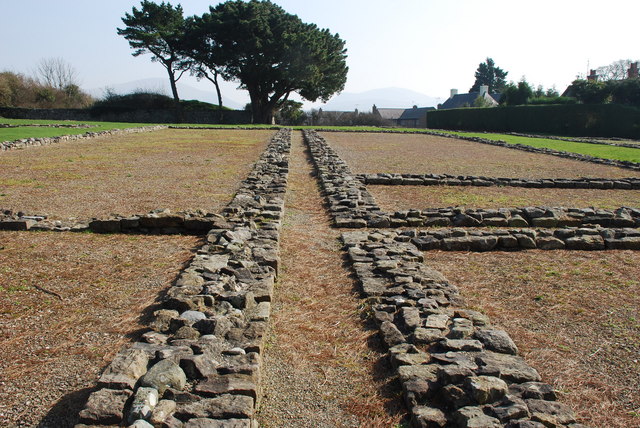
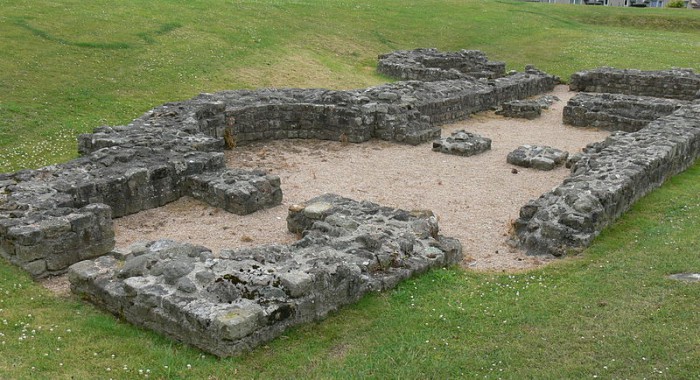
Segontium (Barrack Blocks) by Alan Fryer (Wikipedia)

Segontium Roman Fort(Barrack Blocks) by Alan Fryer (Wikipedia)

    OS grid reference: SH 4854 6243. The fort of Segontium lies in a well-defended position at the tip of a ridge between the rivers Seiont and Cadnant, some 150 feet above sea-level, commanding wide views of the surrounding area. Today the remains of the Roman fort look down over Caernarfon Castle.  The fort lies on the A4085 road to Beddgelert on the outskirts of Caernarfon.  The name ‘Sego’ is Celtic for ‘strong’, while the Roman name Segontium means ‘forceful river’; the name may, therefore, have links with the names of the two rivers, Seiont and Cadnant. Segontium Roman fort was built in AD 77-78.

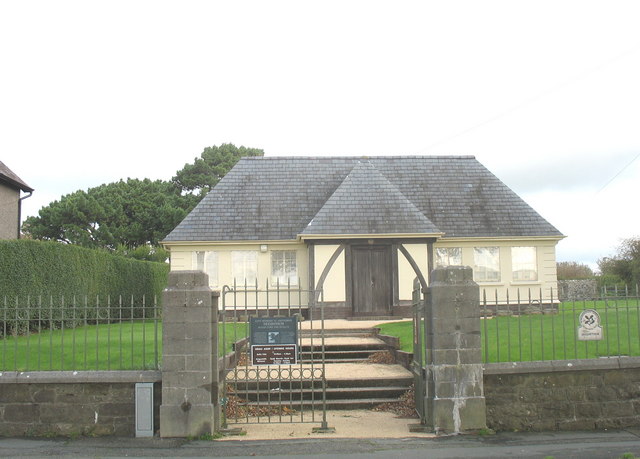
    The fort has had an interesting 20th Century history. The site was saved from builders in 1913, excavated by (Sir) Mortimer Wheeler from 1920-23, purchased by a John Robert’s of Caernarfon who was responsible for erecting the museum, and in 1937 willed by him to the National Trust who in 1958 placed it in the guardianship of Ministry of Public Buildings and Works, who also bought the vicarage area of the site to the south – with a view to further excavation. The SE section was subsequently excavated during the year’s 1975 to 1979. Responsibility for the site now lies with CADW the Historic Environment Service of the Welsh Government. The Museum seems to be managed by a local trust Segontium Cyf. There are references on-line to visitors finding it closed. A Guidebook can be bought at other CADW sites including Caernarfon Castle.

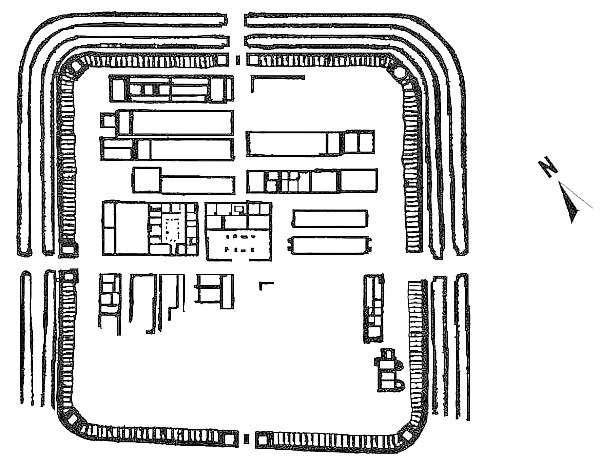
Plan of Segontium Roman Fort (after Collingwood, 1930)

Plan of Segontium Roman Fort (after Collingwood, 1930)

    Segontium fort faces south-east. In shape it is an imperfect rectangle with rounded corners 550 ft by 470 ft with four gateways. The buildings within are of a standard pattern with some exceptions and closely packed though a clear space (intervallum) which runs around the foot of the rampart separating the buildings from the wall. The buildings are arranged in three lateral blocks with the administrative buildings in the centre. Like other forts of its date the defences were originally of earth and timber as would have been the buildings. Coins relating to the reign of Edward I show the fort was used as a quarry for the building of Caernarfon Castle. A Roman Road connected Segontium with the legionary fortress at Chester (Deva).

    There are several elements to the visible remains: A wall with backing mound (the original rampart), counterforts on the interior face of the wall, corner turrets, and three gateways – the fourth at the SE having been lost during the laying of the A4085 which crosses the site. The wall dates from about AD 150 and is about 4’ thick at the base. The wall would originally have had a parapet standing in total about 18 feet high. Evidence of the original holes for scaffolding is still visible. The so-called ‘counter forts’ in base of the wall probably allowed access to the parapet via steps or ladders. Some of the turrets are, or would have been solid to carry the weight of a heavy ballista, a spring mechanism to discharge stone balls. The gateways would have been arched to carry the weight of the gatehouse. The gatehouses structure changed over the centuries as threats and needs varied.

    The internal buildings are of various dates though none earlier than 150 AD. Most show a rebuilding phase in the 4th century AD.
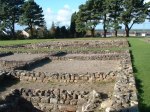
Segontium Roman Fort (The Principia) by JThomas (Wikipedia)

Segontium Roman Fort (The Principia) by JThomas (Wikipedia)

    Taking the middle section the Headquarters Building (Principia) succeeded an earlier timber structure. It includes an enclosed courtyard with porticoes and flagging, a roofed assembly hall later subdivided to provide additional office space, and a row of five rooms at the rear – the central room being the regimental chapel where the standard was kept. In the 3rd century an underground strong room was built into the chapel. Also in the 3rd century an apsidal room was added at the back of the building possibly to store fort records as it is the only part of the fort to have a hypocaust. The building seems to have suffered from damp much as some buildings do today. There is evidence that the builders tried to find ways of dealing with this!

    Next to this and to the NW is the Commandants House (Praetorium). Again part of the standard plan. At Segontium the house consisted of rows of rooms opening off porticoes arranged around a small internal courtyard or garden. A room at the rear, which contains a plinth, may have been the base of a shrine. Again traces of the original timber building have been found. Adjoining this building was a large yard and workshop (Fabrica) with a long subdivided shed at the far side.

    On the other side of the Headquarters Building lay two large granaries (Horrea) measuring 90ft by 19ft built to an unusual design without buttresses and the floor beams taking the entire weight of the grain above. The aim was to store a years worth of grain at each fort. The Roman Soldiers staple diet was bread and biscuits.

    There were eight long buildings to the rear at either side of the street leading to the northwest gate. Of these buildings most seem to have been barrack blocks (Centurie). The buildings were much altered over the centuries. A similar building in the NE corner may have been an additional granary or store. It was rebuilt in the 4th century as living accommodation. The barrack blocks are of a common design (an L shape) with the officer accommodation at the end and the long section for the men. Wooden particians would have further divided the walled areas. The intention was to house a century of men (actually 80 men) in each block or two troops of 30 horsemen with their equipment.
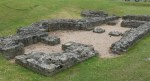
Segontium Roman Fort (Bath-House) by Wolfgang Sauber (Wikimedia)

Segontium (the Bath-House) by Wolfgang Sauber (Wikimedia)

    Excavation of the SE corner revealed a surprise. The largest structure was revealed to be a large building with a courtyard, built about AD 140, with en-suite bathhouse. It has been speculated that this was the residence of the Procurator Metallorum who would have been responsible for the extraction of metal ore in the area. The building and bath-house were demolished in the 4th century and replaced by another bath-house complex. Internal bathhouses are a feature of 4th century rebuilding so this in itself was not a surpise. However, it does not seem to have been ever finished in that a hypocaust system was never installed.

    Archaeological investigations have found a flourishing civil settlement (Vicus) outside the camp. An external bath-house has also been found. A walled enclosure built around 200 AD (230 foot by 165 foot) known as Hen Wallen (‘Old Walls’) may have had something to do with Segontium’s role as a port. The remains of this structure can be viewed 300 yards west of the fort along the A4085, turning left at Segontium Road South, then right at Hendre Street. 150 yards east of the fort near the church of St Peblig, a temple of Mithras was excavated in 1959. The building measured 48 foot by 21 foot, was partly dug into a slope, and had a slate roof. Again it dates from about AD 200. Mithras an Eastern Religion was popular amongst soldiers. It promoted the fight for good over evil and assured a life beyond the grave. There are no visible remains of the external bath-house, Temple of Mithras, or the Vicus.

    Taking the historical context Governor Agricola finally defeated the Welsh tribes in Anglesey in an unexpected lightning strike using Auxiliarie Troops, who swam across the Menai Straights with equipment and horses in AD 78. Segontium housed auxiliary troops from about AD 78. The auxiliary troops complimented the legionary troops who were stationed at Chester and Caerleon. Auxiliary troops often retained the traditional fighting skills and arms of their homelands and were not normally Roman citizens – an honour given to them after 25 years service. Auxiliary troops could be infantry usually 500 to 1000 strong or cavalry up to 500 strong.

The Segontium Museum Building by Eric Jones (Wikipedia)

Segontium Museum Building by Eric Jones (Wikipedia)

    The archaeological evidence suggests that at the very least Segontium was intended as a part mounted military cohort, both by its size, and the existence of what appears for some of the time to be an additional granary. In the early period of the occupation the auxiliaries at Segontium would have been detailed to keep the peace and to ensure continued mineral extraction. An inscription from the time of the Emperor Sepitimus Severus AD 193-211 indicates that, by the beginning of the 3rd century, Segontium was garrisoned by 500 men from the Cohors I Sunicorum, which would have originally been levied among the Sunici, who lived in the Rhine-Musse area, now Belguim. The size of the fort continued to reduce through the 3rd and 4th centuries. In the 4th century Segontium’s main role was probably the defence of the north Wales coast against Irish raiders. Coins found at Segontium show the fort was still occupied until at least 394 AD.

    Finally we enter the world of legend covering the late 4th century. Segontium is generally considered to have been listed among the 28 cities of Britain in the History of the Britains traditionally ascribed to Nennius, a 9th century writer, either as Cair Segeint or Custoient – and who stated that an emperor’s inscribed tomb was still present in his day. This monument such as it existed is now ascribed to Constantine, a son of a St Elen, the patron of the Sarn Helen – a series of road networks across Wales. The story of Elen also features in the 12th century Mabinogion Tales featuring one Maximus – in Welsh Macsen Wledig (possibly a reference to the late 4th century Gallic Roman Emperor Magnus Maximus 383-388). According to legend, Macsen saw Elen or Helen in a dream while he slept in Rome or in Wales, then sent out messengers to find her. Some of them eventually reached Snowdonia. Recognising the mountains and valleys Macsen had seen in the dream, they or “he” found Helen.

    Elen his future wife was the daughter of a Welsh chieftain called Eudaf Octavius. The tomb of her son Constantine (Cystennin) is said to have been moved by Edward I. The legend such as it is probably relates to whatever defences were available to the Romano-British peoples’ after the withdrawal of troops in 410 AD – under pressure from Saxon settlers from the east and Irish invaders from the west. A Celtic saint – St Peblig (Publicius) is said to have established a monastery and church at Llanbeblig – in the late 4th century? And St Peblig is recorded as being another son of Elen and Maximus. St Peblig’s remains the parish church for Llanbeblig. The building we see today is essentialy a 14th-century update of an earlier church built close to the Pagan Temple of Mithras and on a Roman graveyard. The tower was added in the 15th and 16th centuries. Other alterations were made in later centuries, including a major restoration in 1894.

Sources:

Segontium Roman Fort, G.C. Boon, Ministry of Public Buidings and Works, 1963

A Guide To The Roman Remains In Britain, Roger J. A. Wilson, Constable, 2002

https://de.wikipedia.org/wiki/Kastell_Segontium

Click on:   https://commons.wikimedia.org/wiki/File:Segontium_-_Therme_1.jpg

Video Link   http://www.dailypost.co.uk/whats-on/whats-on-news/watch-caernarfon-segontium-roman-fort-7570310

Copyright © Ray Spencer, The Journal of Antiquities, 2016.

2 Comments

The Three Ancient Bridges, Wycoller, Lancashire

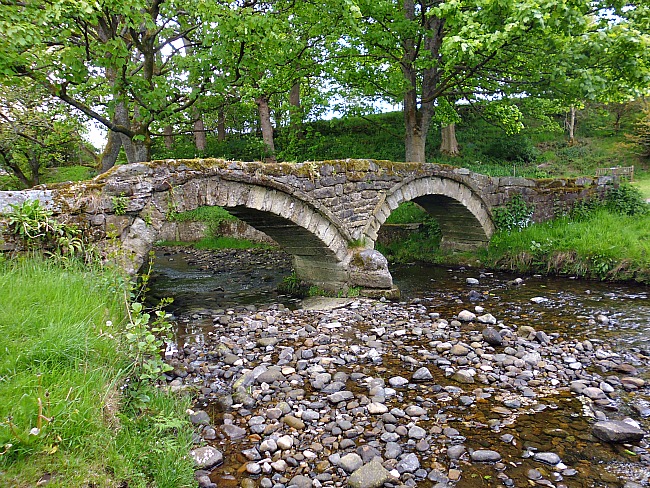
Pack-horse bridge at Wycoller, Lancashire.

Pack-horse bridge at Wycoller, Lancashire.

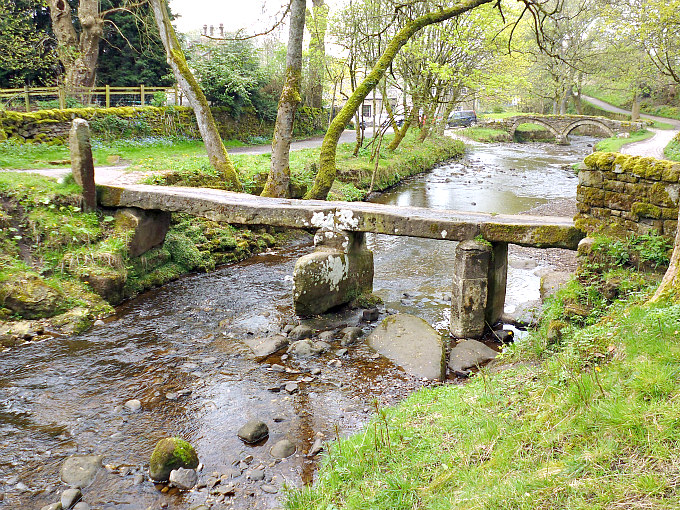
    OS grid reference: SD 932383 39247. The secluded little village of Wycoller nestles in a narrow valley 1½ miles to the east of Trawden, Lancashire, but it is well-known for its three ancient bridges which have stood over the beck for hundreds, if not thousands of years. They have even outlived Wycoller Hall which stands ruined and desolate. But each of the bridges has its very own tale to tell. There are actually seven bridges in the village but the pack-horse, clapper and clam bridges are of historic interest because of “their” great ages. Wycoller is easily reached on country lanes from Trawden. Park up at the large carpark ½ a mile to the west and walk into the village along the footpath at the side of the lane. There is a small carpark for disabled people close to the café.

The pack-horse bridge, Wycoller, Lancashire.

The pack-horse bridge, Wycoller, Lancashire.

    The famous pack-horse bridge is a two-arched structure spanning Wycoller beck. It is sometimes called Sally’s Bridge after one of the Cunliffe family who lived in the hall opposite the bridge in the 18th century. Historians have argued about its age, but none of them are certain, but it is thought to either date from the 13th century or the 15th. Its construction is a bit of an oddity, in that the arches are not equal to each other and the structure’s base-stone boulders are not level, giving the bridge a somewhat precarious appearance because of that – author John Bentley in his fascinating book ‘Portrait of Wycoller’, alludes to this. The coping stones along the sides of the bridge are significant in that some of them have faint cup-marks in them, indicating that they were brought down from a prehistoric site on the moors above Wycoller and used in the bridge’s construction. When walking over the bridge ‘you need’ to take care owing to the smoothness of the paving slabs which have endured hundreds of years of use.

The Clapper Bridge at Wycoller, Lancashire.

The Clapper Bridge at Wycoller, Lancashire.

    Clapper bridge, sometimes called the Druids’ Bridge, Weavers’ Bridge or the Hall Bridge, is just a short distance along the beck. This is a primitive structure but of massive proportions consisting of three flat gritstone slabs resting on two stone piers, one being a round-shaped boulder, the other a thinner pillar-shaped stone that looks quite fragile, but it is in fact very strong. It was originally a two-slab bridge sup-ported on one central pier. However the bridge has succumbed to floods over the years and has had to be reconstructed a few times. Its three slabs are heavily worn by hundreds of years of use. There is a legend that says this bridge led to a grove where druids practiced their strange rituals; there is no sign of this mystical grove or amphitheatre today, and the handloom weavers of Wycoller have long-since hung up their clogs! The clapper bridge is thought to date from the 16th-17th century, though a few historians ‘think’ it might date from before the Norman conquest (Bentley, John, 1993).

The Clam bridge, Wycoller, Lancashire.

The Clam bridge, Wycoller, Lancashire.

    And the third bridge, the clam bridge, is located ¼ of a mile along the track that runs beside the beck in Wycoller Dene. This ancient bridge is formed by one single gritstone slab which is some 12 feet long. It rests at one end on the bank, while on the other side it is propped up on some large stones, but it is very secure even though it might look like it is about to fall into the beck. At one time there was a wooden safety rail at one side and the holes for this can still be seen. The clam bridge is ‘often’ said to date from the Bronze or Iron Age and to have originally stoop up-right on the moors to the north east (as a standing stone – menhir), but there again it probably only dates from the 15th or 16th century. The long slender slab is well-worn and great care should be taken when crossing it. In the floods of 1989-90 the clam bridge was brought crashing down. It has sometimes been mistaken for a tree trunk lying across the beck and at a distance it does indeed look like that.

    The author John Dixon in his work ‘Historic Walks Around The Pendle Way’, came to the conclusion that the three Wycoller bridges were of ‘a mid-16th century’ date. He adds that: “The majority of bridge building was undertaken after the Dissolution of the monasteries when a moderate number of masons became unemployed and were wandering the countryside finding work on many of the new bridges which were required as roads became busier and wooden bridges and fords became inadequate.”

Sources:

Bentley, John., Portrait of Wycoller, Wycoller Country Park Project, Nelson, 1993.

Dixon, John & Mann, Bob., Historic Walks Around The Pendle Way, Aussteiger Publications, Barnoldswick, 1990.

http://www.megalithic.co.uk/article.php?sid=26761

http://www.megalithic.co.uk/article.php?sid=26767


1 Comment

Aedmar’s Mound And Earthworks, Blacko, Lancashire

Aedmer's Mound at Admergill, near Blacko, Lancashire.

Aedmar’s Mound at Admergill, near Blacko, Lancashire.

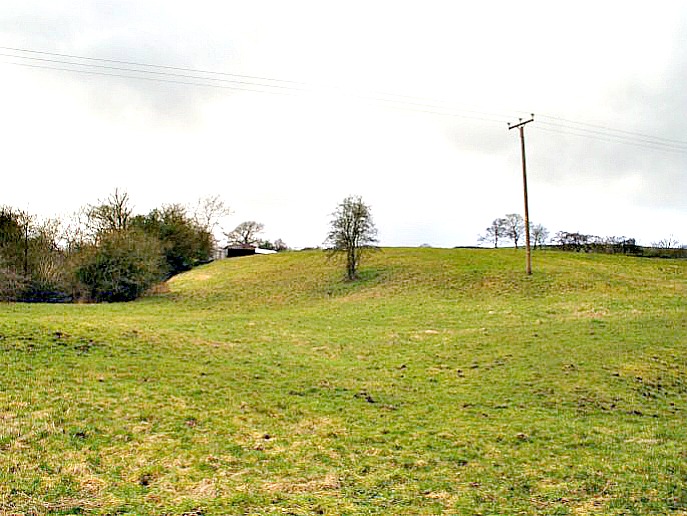
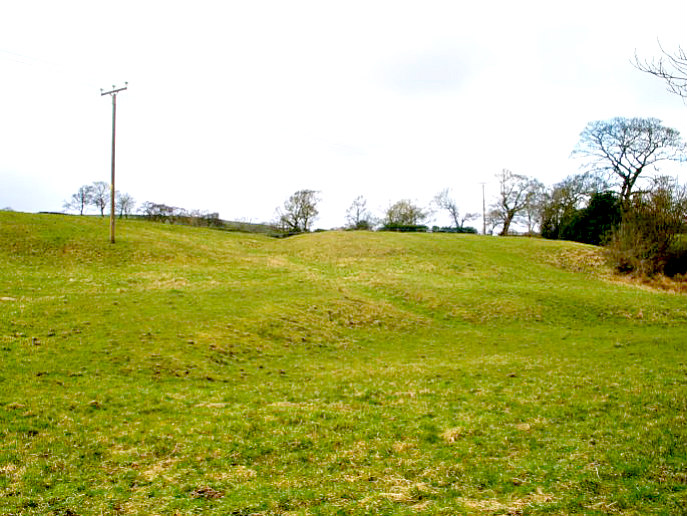
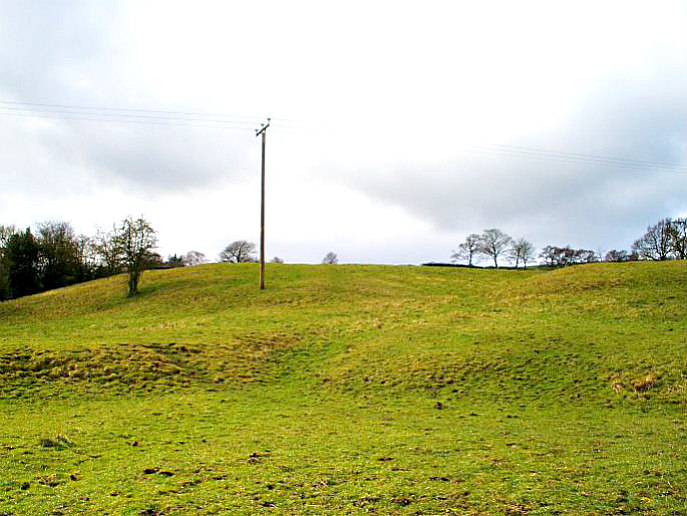
    OS grid reference: SD 84829 41718. For want of a better name I am calling this site ‘Aedmar’s Mound Earthworks’. These earthworks or ringworks are located down in a narrow valley, in a field above Blacko Water, near Wheathead Lane, just to the west of Blacko and Gisburn road, Lancashire, in the area called Admergill. A trackway heads off from Wheathead Lane at the bridge and then goes in a south-westerly direction for a short distance, and eventually through a wall stile – the earthworks are in the field (here) at the western-side of the beck – being noticeable by the grassy rectangular mound with its accompanying low ramparts, known as ringworks. These now rather forgotten earthworks may date back to the Iron-Age, or from the so-called Dark-Ages, or from the early Medieval period, but other than that we do not know when these earthworks were built or what they actually were; and they are not marked on any Ordnance Survey maps.

Aedmar's Mound / Earthworks viewed from the south-east.

Aedmar’s Mound / Earthworks viewed from the south-east.

    The earthworks cover an area of approx. 94m across N-S and 60m diagonally W-S though the S and N sides are cut-off and damaged by the farmer’s ‘modern’ field system, while at the NW side of the site there is a continuation of the low ringwork ramparts. The rectangular-shaped low mound ‘with the telegraph pole’ is quite a distinctive shape, but there are actually two mounds here – both being intersected in the middle by a deep ditch, or entrance. So what was it exactly? Was it a camp, a hillfort, or a defended site? Or was there a settlement here or maybe a royal residence of some kind? There appears to be at least three circular ramparts or ring-works and, possibly a fourth ring by the looks of it, surrounding the low, grassy elevated mound, and the same again at the far NW side but in a sort of square-shape, which has been cut off from the main site, possibly due to farming, or that it was meant to be like this?

    Local author, John Clayton, in his fascinating book ‘Valley of the Drawn Sword’, says that Admergill could possibly take its name from: “the Welsh prince A’dd Maur who controlled certain British lands sometime in the Early Medieval period, it is very possible that this name has been shortened over time to Mawr….but equally, it could apply to the nearby settlement of Admergill…..which eventually leads to A’dd Mawr’s Gill.”

Aedmar's Mound, Blacko, with ditch through the middle.

Aedmar’s Mound, Blacko, with ditch through the middle.

    But what of Aedmar and Eadmer two names that may be connected with this area, in which our ancient site lies.  St Aedmer or Eadmer was a bishop, ecclesiastic, and theologian who died in 1126, and was a friend of St Anselm. Was it “he” who gave his name to Admergill. And, there was a 7th century St Eadmer, a Northumbrian monk and disciple of St Cuthbert. But the truth is we don’t know, and probably never will – the name being lost in the mists of time. I think we should, therefore, say that the Welsh prince A’dd Mawr (Athmawr) is the more liklely contender here. He may have ruled over the Celtic (British) kingdom of Craven – Admergill being at the southern edge of this northern kingdom. And 2 miles to the north we have a farm called Craven Laithe!

    About 1 mile to the north on the southern side of Burn Moor a bowl-shaped quern stone was found, dating from 300-400 BCE (the middle Iron-Age). Grain would have been rubbed in the central depression with a small, rounded stone or pestle. In the vicinity of this discovery there were found to be a number of ancient boulders, some being built into walls (Clayton, John A, 2006).

Sources:

Clayton, John A., The Valley of the Drawn Sword – The Early History of Burnley, Pendle and West Craven, Barrowford Press, 2006.

Dixon, John & Mann, Bob, Historic Walks Around The Pendle Way, Aussteiger Publications, Barnoldswick, 1990.

© Copyright, Ray Spencer, 2016.

2 Comments

Broadbank Earth Circle/Enclosure, Briercliffe, Lancashire

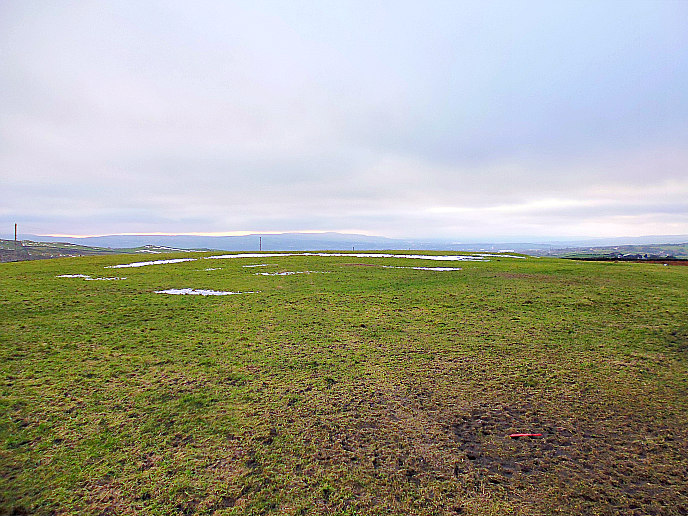
Broadbank Earth Circle / Enclosure looking through the centre N to S.

Broadbank Earth Circle / Enclosure looking through the centre N-S.

    OS grid reference: SD 90236 35225. A fairly large Iron-Age earth circle/enclosure and possible settlement, situated at 350m above sea-level, which is located at the northern end of Halifax road, overlooking Thursden Valley, near Briercliffe, in Lancashire. Sometimes called Burwains Camp. It is located at the northern end of Halifax road (High Ridehalgh), going out of Briercliffe, just before the World War II concrete pill-box. On the opposite side of the lane is a carparking area and picnic site, with beautiful panoramic views over Boulsworth Hill, but it is also easily reached coming over from Nelson past the Coldwell reservoir and Activity Centre, and turning right at the pill-box. There is not much to be seen of the earth circle/enclosure at ground level – it is best seen from an aerial view and from that it is quite a well-defined earthwork. The site is on private farmland and is surrounded by a wall and barbed-wire. The town of Burnley is 3 miles to the south-west.

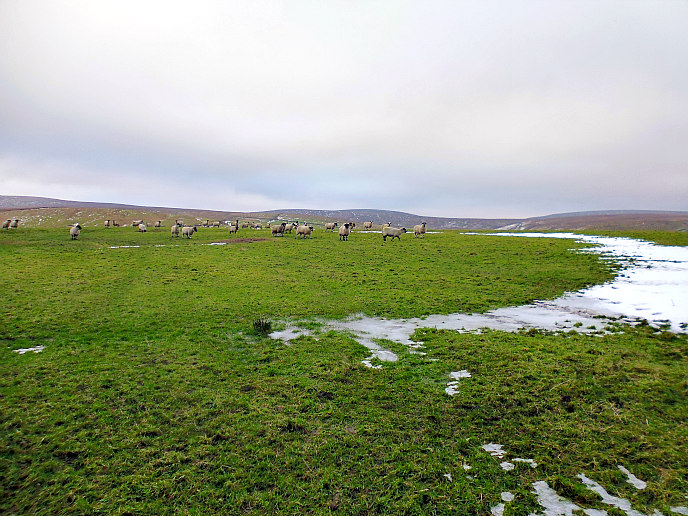
Broadbank Earth Circle / Enclosure viewed from S to E.

Broadbank Earth Circle / Enclosure viewed from  S-E.

    The large earth circle of Iron-Age date just beyond the wall measures approx. 45m vertically and 40m across, and around the perifery there is a narrow, possibly, defensive ditch-line and bank. At the NW and SE sides there has been some damage due ‘perhaps’ to farming methods, or something else. The ditch that runs through the centre of the circle and out from it may be quite recent; this was 3.5m deep when excavated, and 25cm across;  and there are still the ‘noticeable’ remains of a slight curved bank at the W, S and E sides. At the NW and N sides there are two small earth circles: 9m x 11m and 12m x 12m respectively, which could be hut circles? These connect with the large circle by way of short ditches or entrance ways, while at the E side there looks to be a “faint” outline of a medium-sized circle that is approx. 28m x 28m, but this has suffered some damage at its SE side possibly due to its closeness with the wall, past excavations, or something else.

    In 1950 the circle was excavated by The Archaeology Department of Liverpool University. A hearth was discovered at the E side, and there were numerous flint and chert flakes as well as a stone axe (4½ inches long) of Langdale origin which had a curved cutting edge and a thin rounded head and a smooth surface, but there was no evidence of polishing, according to John Dixon & Bob Mann in their book ‘Historic Walks Around The Pendle Way’.

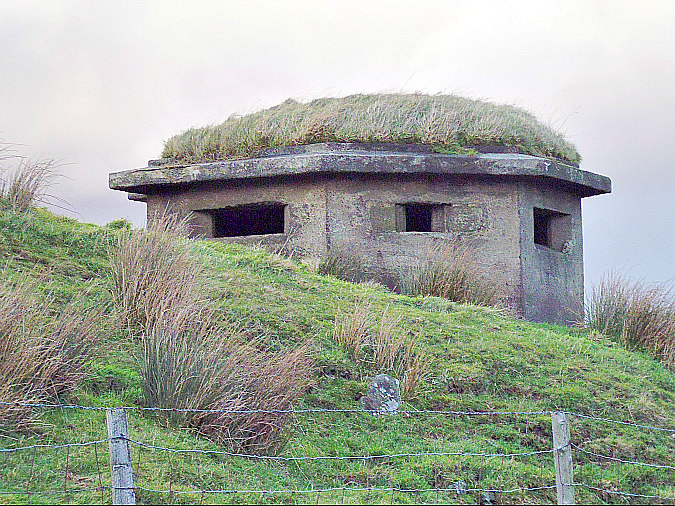
World War II pill-box at Burwains Camp.

World War II pill-box at Burwains Camp.

    Further north along the lane at the side of a grassy mound (OS grid ref: SD 90454 35270) stands a World War II concrete pill-box, dating from about 1940. It would appear that here on this raised area of land there was some sort of camp or fort (Burwains Camp) of Iron-Age origins, and these low ramparts once formed part of that, although it is not marked as such on any OS map. The author, John Clayton, in his work ‘Valley of the Drawn Sword’, says that: “It is likely that this particular spot has been valued for its defensive nature by every culture to have graced our shores since the Neolithic period. Conflict and wars abide and over the wide span of history things do not change!”

Sources:

Clayton, John A., The Valley Of The Drawn Sword – The Early History of Burnley, Pendle and West Craven, Barrowford Press, Barrowford, Lancashire, 2006.

Dixon, John & Mann, Bob., Historic Walks Around The Pendle Way, Aussteiger Publications, Barnoldswick, 1990.

http://www.gridreferencefinder.com/

Broadbank Earth Circle, Thursden, Burnley, Lancashire.

Archaeology Department of Liverpool University, Report and Pamphlet, 1950.

© Copyright, Ray Spencer, 2016.


The Pole Stoop Stone, Green Sykes, Cowling, West Yorkshire

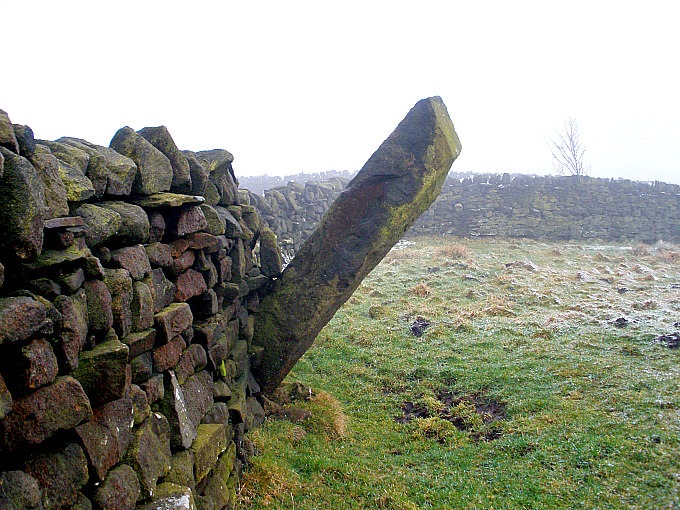
The Pole Stoop Stone, near Cowling, west Yorkshire.

The Pole Stoop Stone, near Cowling, west Yorkshire.

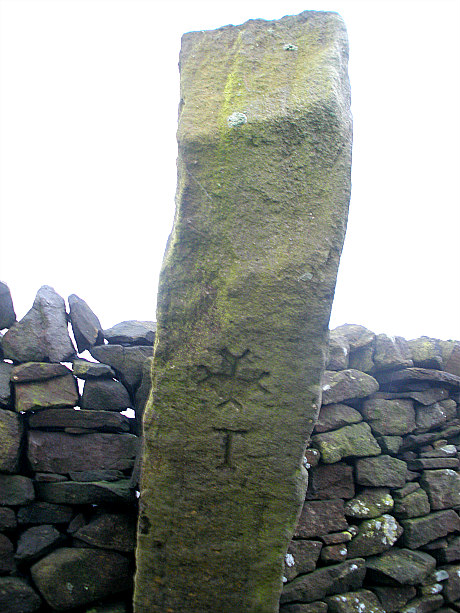
    OS Grid Reference: SE 0153 4169. Halfway between Cowling and Keighley, West Yorkshire, is the boundary stone known as ‘The Pole Stoop’. It is an interesting stone in that it has a decorative, florated cross carved onto it, which is different to many other similar stones that tend to have just Latin letters on them, although this stone does have a Latin letter carved onto it. The Pole Stoop juts out of a field wall close to Pole Road, between High Pole Farm and Green Syke Farm. A footpath goes through the wall at the side of the lane, then to the right, and at the drystone wall you have the leaning stoop stone, located on what was the old bound-ary of Lancashire and West Yorkshire, some 4 miles east of Cowling and 2 miles south-west of Sutton-in-Craven.

The Pole Stoop Stone (close-up of the carvings)

The Pole Stoop Stone (close-up of the carvings)

    The Pole Stoop Stone is a 7 foot-long slender block of gritstone that leans out from the wall at a precarious 45 degree angle, but originally it was a free-standing stone and probably up-right – the wall being built up to it in the last 100 years or so. Or was the stone meant to lean (stoop) and point in the direction that it does? We do not know when the stone was erected here – some think it was the 15th century, others think it was the 17th century. In the middle of the west face there is carved a very nice florated cross and just below that a letter “T” is carved. This Latin-style letter and the cross were probably carved by the person who set up the stone,  or maybe by the landowner wanting everyone to know that “here” lies the county boundary. But the stone would obviously be useful as a ‘waymarker’ stone to travellers traversing the moor, but being different to a milestone in that it had no hands pointing to the nearest village and no mileage numbers.

    There are other odd looking stones in the vicinity, and ¼ of a mile to the north, beside a farm gate along Green Sykes road, is ‘The Sutton Stoop’, a 4½ foot-high stone pillar with a cross and the place-name “SUTTON” carved onto it.

Sources:

http://www.bradfordhistorical.org.uk/boundary.html

http://northernantiquarian.forumotion.net/t280-pole-stoop-standing-stone-or-hanging-stone

© Copyright, Ray Spencer, 2016.


Llech-y-Dribedd, Moylgrove, Pembrokeshire, Wales

Llech-y-tribedd, looking east (photo credit: Bob Helms for Geograph)

Llech-y-tribedd, looking east. Photo credit: Bob Helms (Geograph).

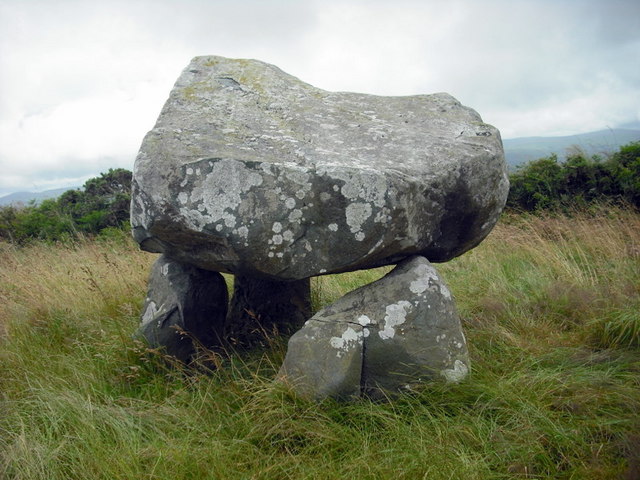
OS Grid Reference: SN 10063 43195. The Neolithic burial chamber Llech-y-Dribbed, or Llech-y-Trypedd, stands on private land 25 metres to the west of a farm track at the south-west side of Penlan Farm, and ¾ of a mile from the village of Moylgrove, in Pembrokeshire. It has been variously described as a cromlech, a quoit and a dolmen. And from some distance away this ancient megalithic monument looks quite eerie – and it has the appearance of an alien spacecraft that has just landed, but close-up it becomes a tripod or triangular-shaped lump of stone on three smaller upright stones, hence its occasional name ‘The Tripod Stone’. Local legend says that the large capstone was hurled from the top of Carn Ingli, near Nevern, by a local giant called Samson, although we don’t know whether this was St Samson, who is associated with other megalithic tombs in this part of Wales.

The name Llech-y-Dribedd means ‘Stone of the Three Graves’ (Sykes, Homer, 1998) so as this was originally a long barrow we might assume that there were three burials here, but all that now remains of the chamber(s) are several large stones partly buried in the ground beneath the monument. It stands on three ‘sturdy’ upright stones at a height of 8 feet, while its huge, “triangular-shaped capstone” measures 9 feet 8 inches long by 9 feet broad, according to the authors Chris Barber & John Godfrey Williams ‘The Ancient Stones of Wales’. The earthen mound that once covered the tomb has long since eroded away, although one of the recumbent stones beneath the capstone was said to be ‘still standing’ in the early 18th century; and I would hope that it will “still” be here in many years to come ‘as a testament to the ancient people who built it.’

Sources:

Barber, Chris & Williams, John Godfrey., The Ancient Stones of Wales, Blorenge Books, Abergavenny, Gwent, 1989.

http://www.geograph.org.uk/photo/1426936      © Copyright Bob Helms and licensed for reuse under this Creative Commons Licence.

http://www.megalithic.co.uk/article.php?sid=4353

Sykes, Homer., Celtic Britain, Pheonix Illustrated Orion Publishing Group, London WC2. 1998.

Copyright © Ray Spencer, The Journal of Antiquities, 2016 (updated 2023).


Church of St John the Divine, Holme-In-Cliviger, Lancashire

Church of St John The Divine, Holme-in-Cliviger.

Church of St John the Divine, Holme-in-Cliviger.

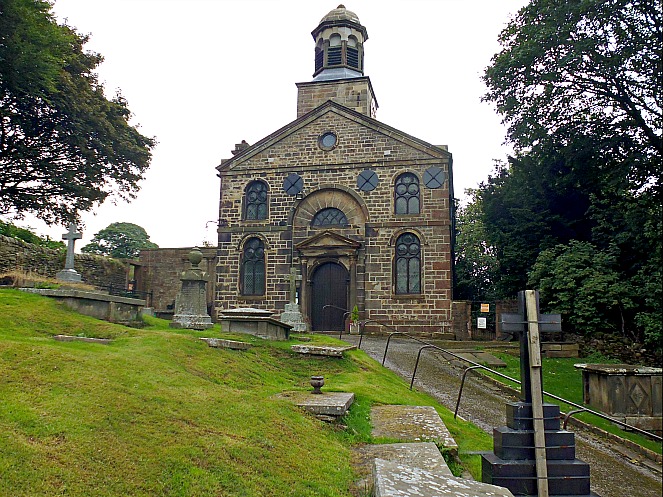
OS Grid Reference: SD 8763 2852. On Burnley road (the A646) at Holme Chapel, Cliviger, also called Holme-in-Cliviger, is the late 18th century church of St John the Divine, or sometimes St John the Evangelist. The building houses two sections of a late medieval cross-head, which may have come from the ruins of Whalley Abbey in Lancashire. The present church stands close to the site of a 16th century chantry chapel that had fallen into disrepair and had to be demolished (1788) – the present church being built upon the hill through the benefices of the Whitaker family of Holme, Cliviger, between 1888-1894, in particular Dr T. D. Whitaker, the eminent historian and antiquarian. Also of interest in the church are the beautifully carved 15th century misericord stalls, 19th century font, pulpit and wall tablets. St John’s is located opposite The Ram Inn, Holme Chapel, 2 miles south-east of Burnley and 5 miles north-west of Todmorden

Top Section of Gothic Cross-Head at St John The Divine Church, Holme-in-Cliviger.

Top Section of Gothic Cross-Head at St John’s.

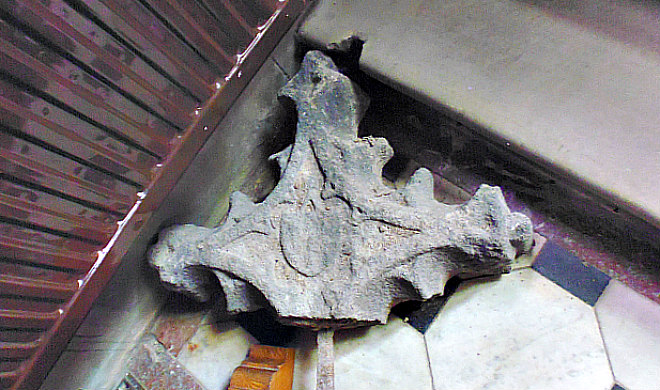
On display in the chancel of St John’s, at either side of the altar, are two sections of sculptured stonework – two parts that make up an ornate late Medieval cross-head of the 15th century. Originally, the two sections were fixed together and stood on the top of a stone gateway at the south side of the church. In recent years the cross-head had become unsafe and so it was brought into the church. It has been described as ‘being in the style of Gothic’ from the late Medieval period. On the front the Sacred Heart with the five wounds of Our Lord’s passion affixed to a cross are depicted; the three cross-arms are intricately carved with crockets – while the lower stem goes down through a narrow arched shape with short, stepped crocketing to the sides of that.

Bottom Section of Cross-Head at St John's, Holme-in-Cliviger.

Bottom Section of Cross-Head at St John’s, Holme-in-Cliviger.

It would seem that the cross-head was brought to St John’s from the ruins of Whalley Abbey, Lancashire, in the late 18th century by Reverend Dr Thomas Dunham Whitaker (1759-1821), an eminent historian, writer and antiquarian, whose family had lived for hundreds of years at ‘The Holme’ in Cliviger, and who was responsible for building St John’s in c 1790, at a cost of £870, which was “defrayed by the Whitaker family.” It is believed that two members of the Whitaker family had ‘actually’ resided at Whalley Abbey in the 15th century, but whether they were in hiding because of ‘their Roman Catholic faith’, we do not know. The church of St John is a beautiful sandstone building (in the Doric/Classical style) with parapet and a nice little cupola, or bell-turret, on its roof, according to the delightful work ‘All O’er t’Parish, by Peter Pomeroy & The Urban Studies Group of The Burnley Teachers’ Centre, 1983. St John’s was enlarged in 1897. It is a Grade II listed building.

Also in this church, there are two very beautifully carved 15th century oak misericord stalls, which again are thought to have been brought here from Whalley Abbey by Dr T. D. Whitaker. We also learn of Dr Whitaker’s great interest in what turned out to be a Roman ceremonial helmet and mask at Ribchester. This came to light when a child was seen kicking around a strange-shaped object. Whitaker arranged for the object to be taken for examination, and later it was found to be a highly decorated Roman artefact. A replica is on display in Ribchester Roman Museum, while the original is in the British Museum, again according to Peter Pomeroy & The Urban Studies Group, 1983.

A fine bust of Dr T. D. Whitaker can be seen in St John’s church along with some wall tablets of the Ormerod and Whitaker families, a 19th century alabaster font and a painting of General Scarlett (1799-1871), the heavy brigade hero of Balaclava in the Crimean War, whose grave is in the churchyard. The present pulpet replaces an earlier three-decker pulpet and sound-board, which was apparently purchased in Leeds and was “perhaps” originally brought from the ruins of Kirkstall Abbey; the old pulpet having become dilapidated and unusable due to its age.

Source:-

https://en.wikipedia.org/wiki/Thomas_Dunham_Whitaker

Pomeroy, Peter I. & The Urban Studies Group of The Burnley Teachers’ Centre., All O’er t’Parish – A Second Stroll Around Cliviger, Lancashire County Council Library and Leisure Committee, 1983.

Copyright © Ray Spencer, The Journal of Antiquities, 2015.


1 Comment

Ancient Crosses at Ilkley by A.W. Morant, F.S.A.

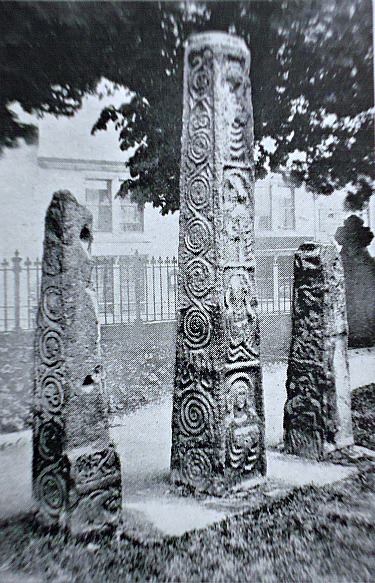
Ilkley Saxon Cross-Shafts used to stand in the churchyard.

Ilkley Saxon Cross-Shafts used to stand in the churchyard.

OS Grid Reference: SE 1163 4782. All Saints parish church is located on Church Street (the A65) in the centre of Ilkley, west Yorkshire, near the River Wharfe, and housed within are three Anglo-Saxon cross-shafts. Originally, these ancient crosses had stood at the side of the church in the churchyard, but due to the ever-increasing fears of erosion they had to be brought inside the church. The church site is an ancient one, dating from the 8th century, but the present building is a restoration of 1860; the church here stands on the site of a Roman fort (Olicana) and there are re-used Roman altar stones in the fabric. The crosses are referred to as ‘Paulinus Crosses’, but they are probably of a later date than St Paulinus, perhaps from the 8th-11th centuries, and though many of the carvings are now very eroded, they are still quite magnificent to look at. The following is the work of A. W. Morant – which was published in ‘Stories & Tales Of Old Yorkshire’, 1993, but which originally appeared in the work ‘Old Yorkshire’, 1882.

    “In Whitaker’s “History of Craven,” we have the following account of these interesting remains of a bygone age:-

    “In different parts of the churchyard are the remains of three very ancient Saxon crosses, wrought in frets, scrolls, knots, &c., which Camden, with that propensity to error, from which the greatest men are not exempt, conjectured to be Roman, only because they were placed within the precincts of a Roman fortress. But they are of the same kind, and probably of the same age, with the three crosses of Paulinus at Whalley, and with three others remaining in Leland’s time at Ripon, which there is great reason to ascribe to Wilfrid. “One thing,” saith that venerable antiquary, “I much noted, that was three crosses standing in rowe at the est ende of the chapel garthe. They were things antiquissimi operis and monuments of some notable men buried there; so that of the old monasterie of Ripon (the work of Wilfrid) and the town I saw no likely tokens after the depopulation of the Danes in the place, but only the waulles of our ladie chapelle and the crossis.” Such is Leland’s conjecture as to the occasion of their being erected; but from the same number, three in every instance, it is reasonable to suppose that they were early objects of religious reverence, alluding to the mystery of the Holy Trinity.

Ancient Crosses at Ilkley, (Illustration)

Ancient Crosses at Ilkley, (Illustration)

“The three crosses are now placed on the south side of the churchyard,…..and have been carefully examined and described by the late Mr. Wardell. That in the centre is the most entire, and is about eight feet in height; the others have been seriously mutilated by having been at one time made use of as gate posts, but are now, it is hoped, placed beyond the reach of further injury. These venerable relics are sepulchral monuments of the Saxon  period, and of the same description as those of which only a few fragments remain at Leeds, Dewsbury, and other places. They are elaborately carved with scroll work and with figures of men, birds, and animals. The centre one, which is 16 inches by 14 inches at the base, tapering to 11 inches square at the top, bears on the north side the symbols of the Evangelists, in oblong compartments, human figures in flowing robes, each with the head of the animal which is his symbol, surrounded by a glory, and holding the book of the gospel. St. John, the uppermost, has the head of an eagle; St. Luke, the next, that of a bull; St. Mark, that of a lion; and St. Matthew, a human figure. The south side contains the figure of our Lord, and there appears to have been an inscription above his head, then a device composed of two animals whose lower extremities are knotted together; and then two other monstrous figures. The remaining sides have scroll-work, with representations of fruit and leaves. (Just to add a note here: the central cross-shaft has had a cross-head fixed to the top. This was apparently recovered from the River Wharfe in 1884 and may, or may not be, the original head).

    “The eastern one is about five feet in height and one foot square at the base, tapering to nine inches at the top, very much defaced and worn—having been used as a gate post; it bears two men facing each other, then two animals, with their lower extremities interlaced, then two others, and lastly two birds. The remaining two sides—for the fourth is mutilated—are composed of scroll-work.

    “The western one is about four feet in height, and much more worn and defaced than the others; it has on one side a scroll and the figure of an ecclesiastic in robes, holding a book; the designs on the other sides are almost obliterated. In this stone the mortice hole for fixing the cross is yet to be seen.

    “In the year 1868 a fragment of another cross of this period…….was found on removing the foundations of some old cottages, nearly opposite the church; it has on the upper portion of one side a human figure, with hands raised in the act of prayer. The other sides bear the usual scroll-work ornamentation.” 

                                                                                                   A. W. Morant,  F. S. A. Leeds.

Source:-

Morant, A.W., Stories & Tales Of Old Yorkshire (orig edt. by William Smith, 1882-3. Selected & edt. by Dawn Robinson-Walsh, 1993, Printwise Publications, Tottington, Bury, Lancs., 1993, [Stories & Tales Of Old Yorkshire selected from the work ‘Old Yorkshire’ 5 vols, 1882-3]. 

Copyright© Ray Spencer, The Journal of Antiquities, 2015.


St Mary’s Nunnery, Island Of Iona, Argyll And Bute, Scotland

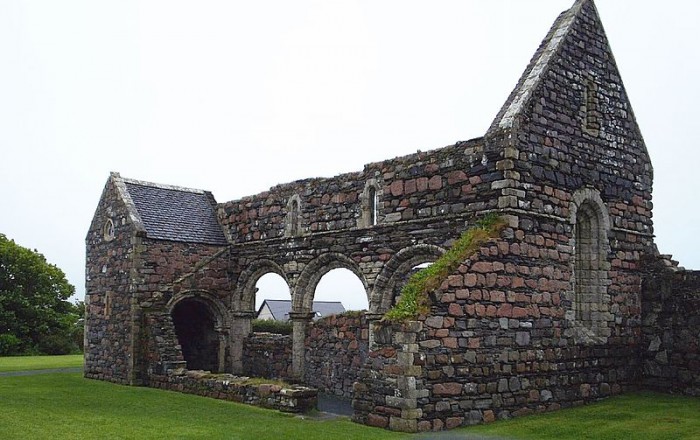
Iona Nunnery (photo credit: Thunderchild5 Flickr.com)

Iona Nunnery (photo credit: Thunderchild5  – Wikipedia)

OS Grid Reference: NM 2849 2411. On the holy Island of Iona, Argyll and Bute, in the Inner Hebrides are the evocative and tranquil ruins of a medieval nunnery – one of only two such religious buildings of this type in Scotland. It is located opposite the landing stage – some 95 metres to the west of the shoreline in the village of Baile Mor. St Oran’s chapel and burial ground* is 120 metres to the north, and between that and the nunnery ruin stands the 16th century ‘Mclean’s Cross’. But further to the north stands the even more famous Iona Abbey, a Benedictine foundation dating from c 1200, which was founded on the site of St Columba’s 6th-century monastery, and near that St Martin’s Cross and the Cathedral. The ruined nunnery is nowadays famous for its cloister garden, but there are a number of interesting architectural features. The Island of Iona can be reached by ferry, across the narrow Sound of Iona, from Fionphort on the Isle of Mull, but better still maybe take the steamer from Oban!

Today, the nunnery of St Mary is sadly without its roof but ‘nonetheless’ it is an outstandingly beautiful religious ruin. It was founded in 1203, shortly after the Abbey, by King Ragnall (Regnald) Somhairle, Lord of the Islands. Initially, it was under the rule of St Benedict, but after a short time it received priory status and its first prioress was one Beatrice (St Bethoc) in 1200;  she was probably the sister of King Ragnall . The sisters here took on the mantle of St Augustine of Hippo and were known as canonesses. They seem to have lived austere lives, often begging for alms, indeed the priory itself was a small and poor house – not coming under the auspices of the Catholic church, according to Frank Bottomley ‘The Abbey Explorer’s Guide’.

The nuns on Iona lived a strict life of devotion, contemplation and prayer. In the 13th century, however, there seems to have been an effort to make the building more liveable, with probably a few minor additions to the building. “The last prioress, Anna Mclean, died in 1543 and was buried in St Ronan’s chapel (originally the parish church) adjoining the nave, then in about 1588 the priory was dissolved and left to become a ruin; the Abbey of Iona succumbed to the dissolution a few years after in 1560-61” – (AA illustrated Road Book of Scotland). At the dissolution in 1558 a few of the nuns retired to a cave at Carsaig on the Isle of Mull. St Ronan’s Church (Teampull Ronain) may date from the 8th century and within there are are some medieval gravestones with the names of the nuns who died here.

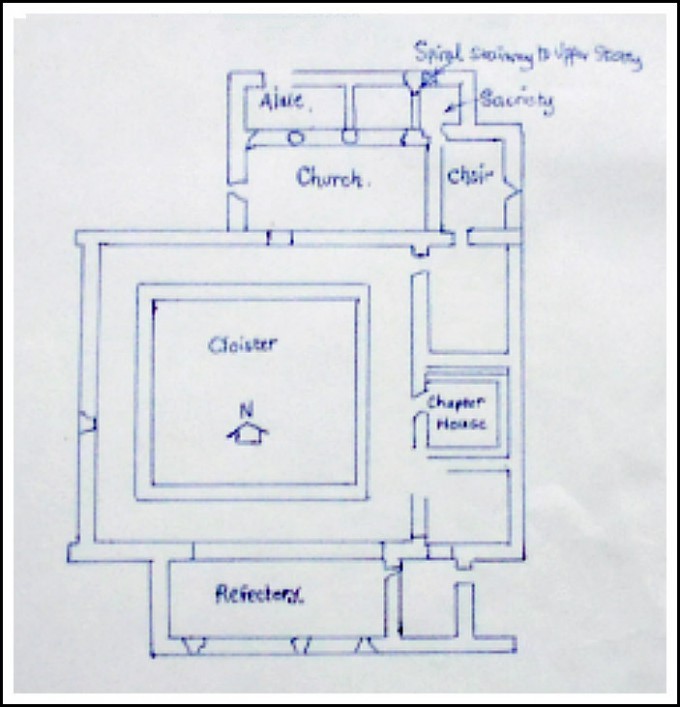
Plan of St Mary's Nunnery on Iona.

Plan of St Mary’s Nunnery on Iona.

Known as ‘An Eaglais Dhubh’ (the Black Church) after the colour of the nuns’ habits. The nunnery is 25 metres in length, it walls are made of granite, and it is a three-bay building with a passage-way (aisle) at the N side and chapel at the E – and it is probably ‘the most complete remains of a medieval nunnery’ (still extant) in Britain; the construction of the building is ‘typical Irish style’ of the 12-13th centuries. The chapel (E. side) has a very fine triangular-headed window, while the three ‘complete’ arches running down the rib-vaulted nave – separating cloister and chapter house – are quite exceptional and have equally exceptional carvings. The S wing is the refectory and kitchen, but sadly the W wing is now buried beneath a road, while the ‘completely’ square-shaped cloister at 14 metres across is now a beautiful, tranquil garden to walk around and “contemplate”. A spiral stairway (NE side) leads up to the upper storey and the nuns’ sleeping area or dorter (Dormitorium). Restoration work took place on the building in 1923 and 1993.

*And what of St Oran’s Chapel and burial ground (Reilig Odhrain). This we are told: “takes its name from a cousin of St Columba who was buried alive (willingly) in order to consecrate the ground, but was dug up again and found to be still alive!” says Andrew Jones in his book ‘Every Pilgrim’s Guide To Celtic Britain And Ireland’. Here in this ancient burial ground, according to the legends, up to fifty early Scottish kings were buried.

Sources:

AA Publication,  Illustrated Road Book Of Scotland, The Automobile Association, London, 1963.

Bottomley, Frank., The Abbey Explorer’s Guide, Kaye & Ward Ltd., Tadworth, Surrey, 1981.

https://commons.wikimedia.org/wiki/File:Iona_nunnery.jpg            Photo credited to Thunderchild5 Creative Commons Attribution 2.0 Generic license.

https://en.wikipedia.org/wiki/Iona_Nunnery

Jones, Andrew., Every Pilgrim’s Guide To Celtic Britain And Ireland, Canterbury Press, Norwich, Norfolk, 2002.

Copyright © Ray Spencer, The Journal of Antiquities, 2015 (Updated) 2022.


1 Comment

St Helen’s Well, Eshton, North Yorkshire

St Helen's Well, Eshton, North Yorkshire.

St Helen’s Well, Eshton, North Yorkshire.

     NGR: SD 9309 5704. St Helen’s holy well stands in a walled and railed-off enclosure beside Eshton Lane, tucked in between the water-works and a wooded area, about halfway between Gargrave and Rylstone – in what is the district of Craven, north Yorkshire. Skipton lies a few miles to the east. The holy well has been a sacred site, not just since the late Roman period, but ‘long’ before that. However, almost certainly it had been ‘a sacred place’ in the so-called Dark Ages when the well/spring was dedicated to St Helen, the wife of Constantius Chlorus and mother of the first Christian emperor of the Roman Empire, Constantine the Great, who was converted to Christianity in 312 AD. St Helen, also known as Helena, died in 330 AD; she was much honoured in the west where her feast-day was celebrated on 18th August. A number of churches and holy wells were dedicated to her in the north of England and a few in the south and south-west of England.

St Helen's Well at Eshton.

St Helen’s Well at Eshton.

    In the Anglo-Saxon age and later the Medieval period it became a place of pilgrimage and healing; the water of the well having the miraculous ability to cure diseases and ailments of the body.Today the well is still ‘a sight to behold’ with the water gushing forth (often with gusto) into the circular-shaped pool – although the carved stones that apparently lie in the pool are very often well below the mud and water-level! An ancient cross was found opposite the well in the 18th century, but then it went missing, though later pieces of this were deposited in St Andrew’s church at Gargrave.

    The authors John & Phillip Dixon in ‘Journeys Through Brigantia’ (Volume One), say that: “The practice of regarding water, and in particular a well, as having sacred and healing qualities is well attested among the Celtic peoples. Holy wells have their origins in the pre-English period and many occur on a number of Roman sites in West and North Yorkshire. With the coming of Christianity the pagan deities to whom the wells were dedicated were converted and replaced by a Christian saint — St Helen was especially popular in those early times.

    “St Helen was the mother of Constantine the Great and said to be of Northern British origin, an ancestor of Coel Hen Godebog — the post-Roman overlord of Northern Britain who came down in legend as ‘Old King Cole’. After her conversion to Christianity she made an energetic and devout pilgrimage to Jerusalem, and founded several churches in Palestine.

    “Her popularity began to crystallize about seventy years after her death after the story went round that she was privileged to discover the cross of Christ on the site of the Passion. She is usually depicted wearing a crown and holding a long T-cross” (John & Phillip Dixon, 1990).

    It was Geoffrey of Monmouth who ‘claimed’ that St Helena was a British princess and of the family of Old King Cole, but she was, according to David Farmer in his work ‘Oxford Dictionary of Saints’, born at Drepanum (Helenopolis) in Bithynia. Maybe Geoffrey had genuinely mistaken Bithynia for Britain, or that he hoped and wanted her to originate from Britain! Her son Constantine the Great did, however, have strong associations with Britain, particularly the city of York, known as Eboracum to the Romans.

St Helen's Well at Eshton in North Yorkshire.

St Helen’s Well at Eshton in North Yorkshire.

    The water issues from a hole low down in the bank below the railings and flows into a circular shaped pool. At the front and sides of this pool (in a curved formation) there are a number of shaped stones that make up the outer perimeter of the sacred pool. Just in front of the point of entry for the water coming in there are ‘said’ to be two carved stones that resemble Celtic stone heads, but these are often covered by thick mud – and therefore not often visible – unless you feel around for them with your hands! The water goes out into a more modern drain at the side of the wall entrance. In the past devout people used to hang coloured rags on the branches of a tree, though this seems to have ceased now. There are records of a chapel existing in Chapel Field, close to the holy well but this has gone. In the 18th century an Anglo-Saxon cross was discovered opposite the well (John & Phillip Dixon, 1990), but this then to disappeared. It’s thought the carved stones in St Andrew’s church, Gargrave, are from “this” site opposite St Helen’s Well. According to John & Phillip Dixon the cross was very similar to the ones in Whalley churchyard, dating probably from the 11th century.

Sources:-

Dixon, John & Phillip., Journeys Through Brigantia (Volume One) Walks in Craven, Airedale and Wharfedale, Aussteiger Publications, Barnoldswick, 1990.

Farmer, David., Oxford Dictionary Of Saints, Oxford University Press, 2003.

Copyright © Ray Spencer, The Journal of Antiquities, 2015.