The Journal Of Antiquities

Ancient Sites In Great Britain & Southern Ireland


1 Comment

Maen Ceti (Arthur’s Stone), Cefn Bryn, Reynoldston, Gower, Wales

Maen Ceti (Arthur's Stone) illustration.

Maen Ceti (Arthur’s Stone) illustration.

OS grid reference: SS 4914 9055. On the south-facing ridge of Cefn-y- Bryn, overlooking the village of Reynoldston, on the Gower Peninsula, stands the Neolithic burial chamber known as Maen Ceti, but more commonly known as ‘Arthur’s Stone’. Maen Ceti means just that – ‘The Stone of Ceti’. This well-known ancient, megalithic chambered tomb, with its huge capstone is variously known as a cromlech, a dolmen and a quoit, but they all mean the same thing in reality – a burial chamber. It is located 300 yards to the north of the main road that crosses Cefn Bryn – between Reynoldston and Cillibion  – ¾ a mile to the east of Reynoldston village.  There are many footpaths criss-crossing the 609-foot-high Cefn Bryn Hill, which is locally called ‘the common’, but at least two of these moorland paths head to Maen Ceti from the road; the ancient monument can quite easily be seen once you start to climb up onto the ridge itself. The village of Llanrhidian is a further mile to the north of Maen Ceti.

Plan of Maen Ceti (Arthur's Stone).

*Plan of Maen Ceti (Arthur’s Stone)

The monument is a double chambered tomb that consists of a huge capstone, a glacial boulder of millstone grit measuring 12 feet across, which is supported on four small up-rights, with a large part of the capstone having fallen to the ground at the side and another bit partly lying beneath the capstone, and there are six other small stones lying around the monument and beneath it, which presumably were up-rights that “now” don’t support the great stone. Maen Cetti burial chamber is 8 feet high and dates from the Neolithic – 2, 500 BC, or maybe earlier. The capstone weighs as much as 25 tons, or it used to do, so it would have been ‘a great fete of strength’ on the part of the builders of the monument.

“The raising of the huge stone onto its supports has also been summed up in ancient records as one of ‘the three arduous undertakings accomplished in Britain, the old proverb: Mal gwaith Maen Ceti – ‘Like the labour of the Stone of Ceti” supports that fact, according to Chris Barber ‘More Mysterious Wales’. The burial chamber has taken a battering from the elements on the high ridge of Cefn Bryn, being very exposed to high winds and driving rain, ‘causing the capstone to split in two places – though this feature is often put down to other things in legend including King Arthur’s sword Excalibur and, even St David, who took a dislike to the pagan stone. Long ago a large mound of earth and stones covered the burial chamber, but nothing much of that remains – although there are traces of a ring cairn.

Chris Barber in ‘The Ancient Stones of Wales’ says that: “It is marked as Arthur’s Stone on the first Ordnance Survey map of 1830 and later editions.” He says that in its Welsh name “It is first mentioned in a Triad of the 10th century.” And that: “There are over 70 literary references to Arthur’s Stone and it is better documented than any other prehistoric stone monument in Wales.” Maen Ceti is “one of the wonders of the ancient isle of Britain” (The Gower Society, 1989).

We know, however, that Maen Ceti pre-dates King Arthur and St David by thousands of years, but it is always a good thing to have a British king and a Welsh saint on board. According to the legend: “When one day King Arthur was walking in Carmarthenshire he felt a pebble in his shoe and plucked it out and threw it into the air; it landed in Gower and became the capstone of Maen Ceti.  So does the historical Arthur become inflated to gigantic stature” (Jacquetta Hawkes, 1973).

Arthur's Stone near Swansea (depicted c 1840 by Henry G. Gastineau - Wikipedia)

Arthur’s Stone (as depicted c 1840 by Henry G. Gastineau – Wikipedia)

Beneath the ancient monument, there is “said” to be a spring called Ffynnon Fawr which apparently ‘ebbs and flows’ with the tide, although the sea is several miles south of Maen Ceti. However, one other legend says that the stone “goes down to the sea to drink on New Year’s Eve” (The Gower Society, 1989). Maybe St David, patron saint of Wales, ’caused the spring to flow when he came by here in the 6th century. In a sense then, St David had attempted to Christianise the pagan stone, though of course, we know the spring was here long before Christianity was established in Gower. About 500 metres to the south-east there is, though, a holy well called Ffynnon Fair (St Mary’s Well), which was for a long time one of the main sources of water supply for the Gower. Chris Barber ‘Mysterious Wales’, tells us more about the myths and legends:

At midnight on nights of the full moon maidens from the Swansea area used to place cakes made of barley meal and honey, wetted with milk and well kneaded, on the Stone. Then on hands and knees the girls would crawl three times around the stones. This was done to test the fidelity of their lovers. If the young men were faithful to their sweethearts they would appear. If they did not come, the girls regarded it as a token of  their fickleness, or intention never to marry them. The water (of Ffynnon Fawr).….. used to be drunk from the palm of the hand and one had to make a wish at the same time. On nights with a full moon a figure wearing shining armour emerges from under the stone and makes his way to Llanrhidian. Those who have seen this  mysterious spectre claim that it was King Arthur.”

Arthur’s Stone (Maen Ceti) is regarded as one of the most magical stones in Wales, according to Bill Anderton ‘Guide To Ancient Britain’, and he goes on to say that: “the holy well (Ffynnon Fair) along Cefn Bryn, as well as a number of standing stones, are all involved in a complex of ley lines. And says Anderton: “The name Arthur is probably a corruption of a more ancient word, yet it is the same Arthur who was supposed to have split the capstone with his sword.” There are other ancient burial tombs, cairns, hill-forts and earthworks in this particular area.

Sources:-

Anderton, Bill., Guide To Ancient Britain, W. Foulsham, & Co. Ltd., Slough, Berkshire, 1991.

Barber, Chris., More Mysterious Wales, Paladin Books, London W1X, 1987.

Barber, Chris & Williams, John Godfrey., The Ancient Stones of Wales, Blorenge Books, Abergavenny, Gwent, 1989.

Barber, Chris., Mysterious Wales, Paladin Books, London W1X, 1987.

Hawkes, Jacquetta., A Guide To The Prehistoric And Roman Monuments In England And Wales, Cardinal, London, 1975.

https://en.wikipedia.org/wiki/Cefn_Bryn

*The Gower Society, A Guide To Gower, The Publication Committee of The Gower Soc., (orig. prepared 1965. Edt. 1989).

Copyright © Ray Spencer, The Journal of Antiquities, 2015.


3 Comments

Newgrange Passage-Tomb, Co. Meath, Southern Ireland

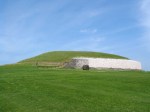
Newgrange (photo by Shira - for Wikipedia).

Newgrange (photo by Shira – for Wikipedia).

    OS grid reference O 0073 7272. The ancient megalithic tomb complex of Newgrange in Co. Meath stands in the middle of a field, just north of the River Boyne (Bend of the Boyne), 3 miles south-east of Slane, and is said to date from the Neolithic period over 5,000 years ago. The tomb is surrounded by a large stone circle of a similar age, though many of the stones are missing. It can be reached on country lanes from the N51 Balfeddock road, east of the village of Slane, and via Knowth, where there is another megalithic tomb – along with a third ancient site at Dowth – they are all linked together and known as ‘the Boyne Cemetery Complexe’ (Brú na Bóinne). But the passage-tomb here at Newgrange is of great interest due to the many prehistoric rock carvings/petroglyphs – both inside and outside of the monument. Although the megalithic tomb has been partially restored to its original shape, it is still a big tourist attraction with up to 200,000 visitors coming from all over the world each year. The town of Drogheda is 5 miles to the east. Newgrange is now a UNESCO World Heritage Site

The Entrance To Newgrange in 1905 (QuartierLatin1968 - for Wikipedia)

The Entrance To Newgrange in 1905 (QuartierLatin1968 – for Wikipedia)

    The Newgrange passage-tomb is said to date from the Neolithic – around 3,300 to 3,200 BC, or according to some historians 2,500 BC, while the stone circle surrounding it ‘probably’ dates from about the same time, though some archaeologists have suggested 2,000 BC. The grassy, drum-shaped mound covering the chambered tomb is a staggering 250 feet (80) metres in diameter and 49 feet (15) metres high – originally it would have stood much higher than this, maybe up to 150 feet. Around the edge of the mound there are 97 large, revetted kerbstones, many displaying symbolic carved geometric designs: spirals, diamonds, lozengers, cup-and-ring and sun motifs, on all their faces. Author Rodney Castleden in his article ‘The Ring of Stone’ for ‘Exploring The Supernatural’ magazine says: “Can we claim this continuous wall of giant stones as a stone circle? Do we ignore it because it is the containing wall of a burial mound?

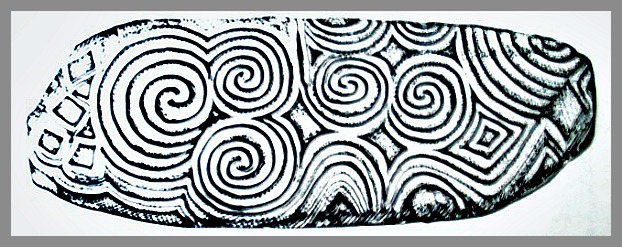
The Newgrange Decorated Entrance Stone.

Newgrange Decorated Entrance Stone.

    At the entrance to the tomb there is a highly decorative carved stone. This huge entrance stone is 10½ foot long and 4½ foot high and has beautiful spirals carvings; this is regarded “as one of the finest achievements of European Neolithic art”, according to Cathal Coyle in his article on ‘Famous Landmarks’ for the ‘Ireland’s Own’ magazine. Above the entrance a huge, flat slab-stone ‘seems’ to holds up the above facial walling. The authors Janet & Colin  Bord in their acclaimed work ‘Mysterious Britain’, say of Newgrange passage-tomb:

   “The mound consisted of a cairn of pebbles, with white quartz stones on the outer surface. The designs on the stones are probably symbolic, not just decorative, and the spirals may represent the maze of life.

   “The kings of Tara were buried here, according to the legend. Newgrange, which is one of the many burial mounds in the pagan cemetery of Brug-Na-Boinne, also has associations with the Tuatha de Danann, ancient rulers of Ireland, of whom Dagda, Lug the Irish sea-god, and others were buried in this important and remarkable area.”

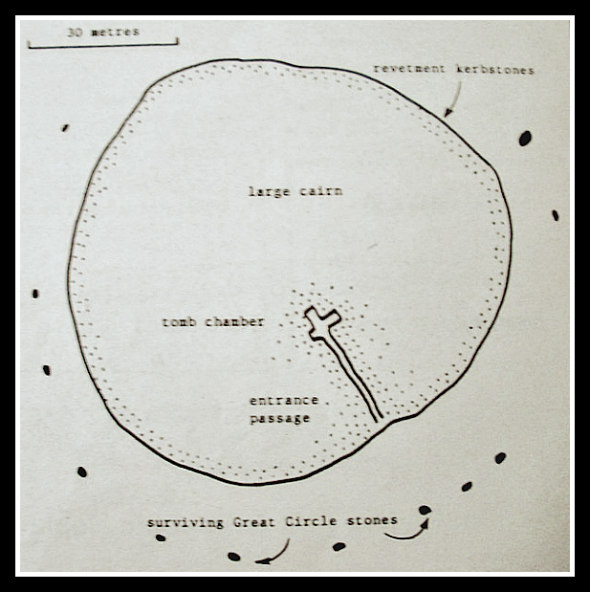
Plan of Newgrange.

Plan of Newgrange.

    The passage-way leading into the tomb chamber is 60 foot (18.2 metres) long and is surrounded on all sides by large slab-stones, some of which are decorated with geometric symbols: triangles, chevrons and lozenges. This leads on into a cross-shaped chamber with massive stone basins that would have held offerings, or burials; above the chamber is a corbelled roof. No mortar was used, and the chamber is still waterproof – even after 5,000 years! But in fact there are three small chambers inside the mound. Author Cathal Coyle says that in order to construct this roof: “the builders overlapped layers of large rocks until the roof could be sealed with a capstone, six metres above the floor.” The corbelled roof contains the famous ‘triple spiral stone’ carved onto one of its stone slabs; the authors Janet & Colin Bord in (Ancient Mysteries of Britain) call these spiral-carved stones – ‘labyrinthine in concept’.

   “At dawn on the Winter solstice, the shortest day of the year and for a number of days before and after, a shaft of sunlight enters the chamber through an opening in the roof box and penetrates the passage, shining onto the floor of the inner chamber. The beam illuminates the inner chamber for just 17 minutes. To the Neolithic culture of the Boyne Valley, the winter solstice marked the start of the New Year – a sign of nature’s rebirth and promising renewed life to animals and humans” – (Coyle, 2015).

   Outside the tomb and surrounding it there is a circle of 12 stones, there would have originally been 35, and two of these lost stones would have stood at the south-side, opposite the tomb entrance, at either side of the so-called ‘surviving Great Circle stones’, and the others at the NW, N, NE and SE sides although there is great uncertainty about the exact number of missing stones. This circle of stones was probably built about 3,300 BC though some archaeologists suggest it dates from 2,000 BC. But is it a “true” stone circle? Author Rodney Castleden says of the circle:-

   “O’Kelley, who excavated the mound thought that some of the stones, missing from the circle, had been re-used in the ring of kerbstones, although he could not prove it. Maybe there was a change of plan and the Great Circle was never completed; there is a lot of uncertainty about the missing stones.

   “As far as we can tell this huge ring of stones at Newgrange, a hundred metres in diameter, is the earliest one of all. Most of them have not been radiocarbon dated, but from the evidence available the Newgrange Great Circle seems to be the ancestor of the British stone circles.

   “The custom of building stone circles spread rapidly as the country-wide trade in stone axes got under way. Axes made of distinctive and rare rocks can be traced back very precisely to the Neolithic factories where they were made. We can tell, for instance, that some axes used at Stone-henge were imported from Cornwall and that some came from Snowdonia and that others came from Great Langdale in the Lake District.”

    Author Cathal Coyle gives us more on the legends and myths of Newgrange. He say’s that: “According to the ancient mythology, the Tuatha Dé Danann (the People of the Goddess Danu, who according to tradition ruled Ireland before the coming of the Celts) were said to have built New-grange as a burial place for their chief, Dagda Mór, and his three sons. One of the sons, named Aonghus of the Brugh. It is believed that he was owner of the Brugh land, and that a smaller mound between Newgrange and the Boyne was owned by the Dagda.

   ” The highly renowned author, Geoffrey Ashe, in his great work ‘Mythology Of The British Isles’, says of the Tuatha De Danann that:-

   “The king of the Tuatha De Danann was Nuadu. He is the Irish equivalent of Nudd, Gwyn’s father, and, like him, is an embodiment of the Celtic god whom the Britons called Nodons. When the Tuatha De Danann fought their forerunners the Fir Bolg, Nuadu lost a hand in battle, It was replaced by a silver one, so that he became Nuadu Airgetlam, Nuadu of the Silver Hand. Later he had to contend with the sinister Fomorians as they inflicted various disasters. Their chief was Balor, who had an evil eye. To defeat them Nuadu temporarily resigned power to Lug, a hero of rare versatility and resource. Lug overwhelmed the Formorians with magic. Balor, however, had slain Nuadu in the battle. It was after this that the Milesians occupied Ireland, and the Tuatha De Danann faded into the Otherworld and the realm of faerie.”

Newgrange (Richard Gallagher 2003 - Wikipedia).

Newgrange (copyright Richard Gallagher 2003 – Wikipedia).

   Cathal Coyle goes on to say that: “Newgrange was ‘re-discovered’ in 1699 by the removal of material for road building. The landowner, Charles Campbell, needed some stones and asked his workers to carry some stones away from the cairn. When those stones were moved, the entrance to the tomb was uncovered. An extensive archaeological excavation took place at Newgrange from 1962 until 1975, and the roof was was re-discovered in 1963.” And, says the author: “An interesting phenomenon associated with Newgrange is the discovery of Roman coins over the past four centuries. Many have been found at the site, the first recorded find of a coin was in 1699. These Roman coins were still being found in the 1960s when Newgrange was being excavated — some of them in mint condition. Whether they were buried here by native Irish worshippers or pilgrims from the Roman world, remains a mystery” – (Coyle, 2015).

Sources:-

Ashe, Geoffrey., Mythology Of The British Isles, Methuen, London SW3, 1993.

Bord, Janet & Colin., Mysterious Britain, Paladin Books, London W1X, 1984.

Bord, Janet & Colin., Ancient Mysteries of Britain, Diamond Books, London, 1994.

Castleden, Rodney., Ring of Stones – Part 1 Key To An Ancient World, Exploring The Supernatural, March 1987.

Coyle, Cathal., Famous Landmarks, Ireland’s Own, Wexford, Ireland, (November, 2015, No 5,523 & various dates).

http://www.megalithic.co.uk/article.php?lat=53.69167&lon=6.47472

https://en.wikipedia.org/wiki/Newgrange

https://en.wikipedia.org/wiki/Newgrange#/media/File:Newgrange.JPG                                                                                                                               Photo Credit: Shira∼commonswiki (Creative Commons 2.5 Attribution).

https://en.wikipedia.org/wiki/Newgrange#/media/File:Newgrange_ireland_750px.jpg                                                                                                            Photo credit: copyright Richard Gallagher 2003.


1 Comment

Wookey Hole Caves, Mendip Hills, Somerset

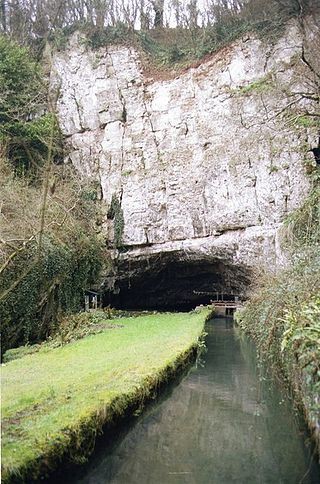
Wookey Hole Cave River Axe (photo credit: Pierre Terre (Wikipedia)

Wookey Hole Cave River Axe (photo credit: Pierre Terre (Wikipedia)

OS grid reference: ST 5320 4796. The Somerset village of Wookey Hole, 1 mile west of Lower Milton, at the southern side of the Mendip Hills has become famous for its deep caves which have, over the past two-hundred years, yielded up many archaeological finds from prehistoric times, but  the caves here at Wookey have been a tourist attraction from as far back as the 15th century. It is here that the River Axe emerges from beneath the caves and then flows southwards towards Haybridge. An interesting Wookey Hole Caves Museum is located at the site.

Twenty-five underground chambers have been discovered by archaeologists and cave explorers, the most famous having names such as: ‘the kitchen’, ‘the Parlour’, ‘the Oast Office’ and the Great Cave itself, which has the eerie, calcified figure of a woman called ‘Witch of Wookey’, and in the entrance an image of a man called ‘the Porter’ – (Dunning, 1980). Adjoining the caves is a rock shelter called ‘Hyena Den’ and it is here that most of the finds from prehistoric times have been excavated, many artefacts in fact dating back ‘many’ thousands of years to the Palaeolithic Age. And above ‘Hyena Den’, there is yet another famous cave known as ‘the Badger Hole’, whose inhabitants were indeed “badgers”! 

The caves of Wookey Hole are located just to the north of the village beyond a number of mills and workings from the industrial age, along a footpath up to the southern escarpment of the Mendip Hills and the ravine where the caves are to be found. The town of Shepton Mallet lies some 3 miles to the south-east and the city of Wells is just under 3 miles in the same direction.

The first phase of archaeological excavations was carried out in 1859-74 by William Boyd Dawkins and, later continued by Herbert E. Balch between 1904-14; the work continued between the years 1938-54, then again 1946-9, and then 1954-57 and, more recently in 1972.

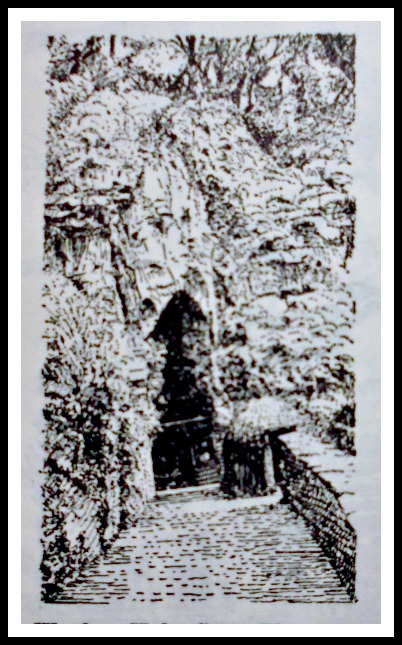
Wookey Hole Cave Entrance (illustration).

Wookey Hole Cave Entrance (illustration).

The limestone caves at Wookey Hole were occupied roughly between 250 BC and 450 AD, before that there would perhaps have been habitation by wild animals along with ‘some’ human company, but more likely the animal bones that have been found were simply thrown into the caverns, or placed inside as a form of ‘offering’, or brought inside by other wild animals. Hyena Den was very likely the home of local hermits, and others, up until more recent times – at least the Middle Ages. Archaeologists in the 19th and 20th centuries have excavated the “bones of lion, mammoth, bear, woolly rhinoceros, wild horse, dear, fox and hare, nearly all chewed by hyenas who occasionally had to share their home with Palaeolithic men, who left behind them some flint tools and broken marrow bones” (Dunning, 1980). From more recent times 250 BC-450 AD “pottery, weaving equipment, coins, part of a horse’s bridle, and evidence of the use of coal and of storage of grain show how the caves were home to generations; but evidence of human sacrifice suggests not only an origin for the Witch Legend but also points to the abrupt end of the Great Cave as a dwelling in the 4th century”, according to Robert Dunning, ‘Somerset & Avon’. But, says Dunning:-

“even all this evidence is small compared to the bones found in an adjoining rock shelter, called Hynena Den; bones of animals dating back to the Palaeolithic age, perhaps 5,0000 B.C.”

The author Jacquetta Hawkes in her work ‘A Guide To The Prehistoric And Roman Monuments In England And Wales’, gives us a somewhat different but very informative view of Wookey Hole Caves. She says:-

“We are concerned with three caves in the ravine, all of them occupied by troglodytes though at very different periods. The first is the Hyaena Den, a small cave in the right-hand side of the ravine approached across a rustic bridge. The Hyena Den was first discovered in the middle of the nineteenth century and digging was begun there, almost in the year of the publication of the Origin of Species, under the direction of Sir William Boyd Dawkins, who was himself so much concerned in the struggle which led to recognition of the hitherto undreamt-of antiquity of man. It proved to contain vast masses of animal bones which had been lying there between twenty and a hundred thousand years. There in the heart of Somerset, Victorian gentlemen unearthed the remains of cave lion, cave and grizzly bears, mammoth, woolly rhinoceros, bison, Irish elk, and many other species, including great numbers of hyaenas. These last unpleasant beasts had been responsible for dragging in many of the other species, either as prey or carrion, but not all of them, for the ashes of campfires, burnt bones and implements of flint and chert told of the use of the cave by Old Stone Age hunters. Whether the human families had actually to expel the hyaenas before they could claim the shelter of the cave who shall say, but the place must have been foul and fetid enough with the rank smell of the dogs and their putrifying mid-dens. On the other hand, any cave was welcome in glacial winters and at Wookey the water supply was excellent. Certainly hunting parties returned to the place from time to time over a great span of years, though all within the last phase of the Old Stone Age when the glaciers having ground their way southward for the last time, alternately melted back during a slightly warmer spell or advanced again with the intensifying cold—the minor oscillations which preceded the end of the Ice Age.

“Wookey Hole itself is a high, narrow entrance just above the spot at which the Axe glides out from under the precipice at the head of the ravine. It is far more spacious than the other caves, with three open chambers hung with stalactites through which the Axe flows and widens to a lake. It is now flood-lit and makes a pretty spectacle for those who like such places. More caves stretch deep into the rock below the water, and divers have already discovered seven of them—dangerous exploration which has had its fatalities.

“Here in Wookey, there was no Stone Age occupation, but the chambers made a home for Celtic Britons of the Late Iron Age, poor cousins of the villagers of Glastonbury and Meare. It remained the home of their descendants long after the Roman conquest. There is a tradition that in the Middle Ages Wookey Hole was the lair of a troublesome witch, and her body, turned to stone by an exorcizing monk, now stands in the cave as a large stalagmite. It seems not altogether impossible that this represents the vague memory of a tragedy which in fact overtook its British occupants. Excavators found that the outer part of the cave had been used as a stable for goats—it contained their dung, and charred stump of a tethering-post, a pot probably used for milking and the bones of two goats.”

 The author Robbert Dunning ‘Somerset & Avon’ goes on to tell us more about the recent industrial past of Wookey Hole and the surrounding area. He says:-

The industrial buildings at Wookey Hole may be something of a surprise; and their contents even more so. At least since the early 17th century the emergent Axe has been harnessed to make paper, and the present buildings were put up by Hodgkinson family from the mid 19th century. High-quality hand-made paper was made here until 1972, and the whole property was sold in 1973 to Madame Tussaud’s. Since that time there have been notable changes: part of the mill houses Lady Bangor’s famous collection of fairground objects, themselves made between 1870 and 1939, including organs, gallopers from roundabouts, cars from scenic railways, and many other pieces of now almost vanished culture, resplendent in the colours and detail that could hardly be studied when the fairground was at work at night, and often at high speed.

“Another part of the mill has become the working store-room and studio for Madame Tussaud’s exhibition. Heads, bodies and limbs of those whose fame has faded, and costumes and crowns, ready to take their place again in Baker Street, are there arranged neatly on shelves, together with the plaster negative moulds of those of current fame.

“Paper is again made on the premises by hand, bringing industry back to this remarkable site which offers such a range of the evidence of man’s activity in so small a compass ………..the flint tools in the Hyena Den are at least a comfort to ordinary mortals.”

    William Worcester, the highly acclaimed 15th century antiquarian, visited the Somerset caves and as usual had something to say about the place:-

“…….a certain narrow entry where to begin with is the image of a man called the Porter. One must ask leave from the Porter to enter the hall of Wookey, and the people carry with them ….. sheaves of reed sedge to light the hall. It is as big as Westminster Hall and stalactites hang from the vault which is wondrously arched over with stone……. the passage through which one enters the hall is about half a furlong in length ……. between the passage and the hall is a broad lake crossed by 500 stone steps …….. and if a man goes off the steps he falls into the water.”

Sources and websites used:-

Dunning, Robert., Somerset & Avon, John Bartholomew & Sons Limited, Edinburgh, Scotland, 1980.

Hawkes, Jacquetta., A Guide To The Prehistoric And Roman Monuments in England And Wales, (Published for Cardinal by Sphere Books Ltd., London, 1975.

https://en.wikipedia.org/wiki/Wookey_Hole_Caves

Worcester, William., (ed. Harvey, J. H.) Itineraries (1969).

Copyright © Ray Spencer, The Journal of Antiquities, 2015 (updated 2025).


1 Comment

Whitby Abbey, North Yorkshire, by Edward White

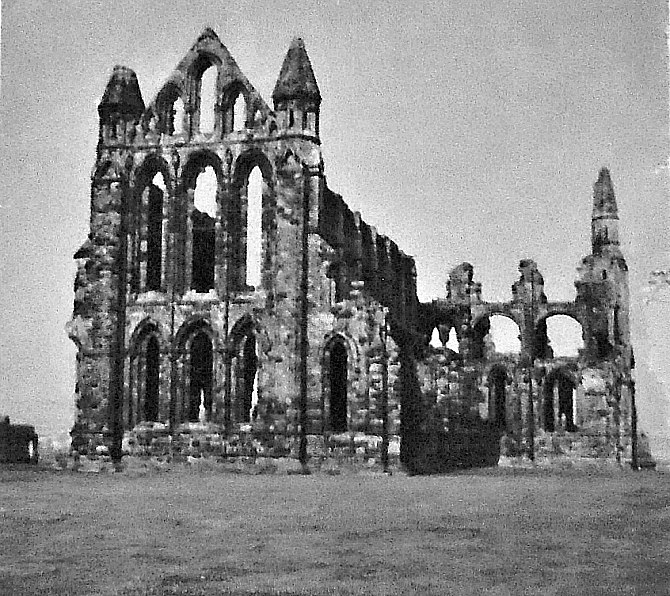
Whitby Abbey B/W.

OS grid reference: NZ 9030 1122. On the headland of the east-cliff (up the famous 199 steps) and above the seaside town of Whitby, north Yorkshire, stand the formidable ruins of Whitby Abbey, which was initially founded as a priory sometime after 1078 by Reinfrith, then in c 1105 it became a Benedictine abbey. It was finally dissolved on 14th December, 1539. On the same site back in 657-58 AD an Anglo-Saxon monastery was founded by Oswy, the King of Northumbria. This ‘then’ became a double monastery for both men and women and was headed by St Hilda (614-680 AD), a Saxon princess who had travelled ‘here’ from Hartlepool at the request of the king; Hilda being the daughter of a prince by the name of Hereic, who was apparently poisoned in 616 AD.

 In 663 AD the famous ‘Synod (Council) of Whitby’ took place at the monastery itself and, was significant in that it brought together both the  Celtic and Roman churches! In 867 AD the Saxon monastery of Whitby was destroyed by Viking raiders. The majestic ruins of Whitby Abbey that we see today date, for the most part, from the mid 13th century. St Hilda (Hild) died on the 17th November (her feast-day) in 680 AD – her passing being mentioned by the Venerable Bede and ‘The Anglo Saxon Chronicle’. In the Dark Ages Whitby was called ‘Streonshall’ and continued to be called that until at least the Viking Invasion in the 9th century, but probably the old name continued to be used long after that.

The following ‘Whitby Abbey’, which I will quote” in full is taken from ‘Stories & Tales Of Old Yorkshire’, 1993, an excellent compilation of work by Edward White – that was first edited by him whilst residing in London (1883) – and then published in the antiquarian work ‘Old Yorkshire’, in 5 volumes. White says:- 

“This famous Abbey was founded by Lady Hilda, whose death took place twelve-hundred years ago, and an enquiry into the special circum-stances which induced her to build the Abbey opens up an interesting chapter in ancient local and general history. This will be seen when we consider what England was when Hilda’s Abbey and College first arose, a lighthouse above the ocean — waters in the seventh century — when it first shone like a Pharos over the old kingdom of Deira, which was one of the chief provinces of the kingdom of darkness.”

“England was, from North to South, along its whole eastern side, and far up in the Midland Counties, a thoroughly heathen country, and had been heathen for 200 years preceding, ever since the departure of the Romans. What makes this fact so striking and terrible is that during the 400 years of the Roman Dominion, nearly the whole country had been evangelized. St Ninian, after whom one of Whitby’s churches is named, was a Scottish nobleman educated in Rome, who became one of the chief evangelists of the ancient races during the Roman times. The British tribes, and their neighbours, the Irish people, had thus early received the Gospel. When the Saxons came and saw, and conquered Britain, they restored heathenism over the whole area of their conquests. It was almost as if any army of Hindoos should now land in England, vanquish the inhabitants, drive the remnant towards the West, and establish Indian idolatry on the ruins of our Christianity. We are the descendants of those Saxon heathens, and we still call our week-days after the names of their impure gods and goddesses, Sun-day, Moon-day, Tuisca’s day, Woden’s, Thor’s day, Freyga’s day—a fearful memorial of the overflow of the ancient British Christianity.”
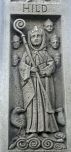
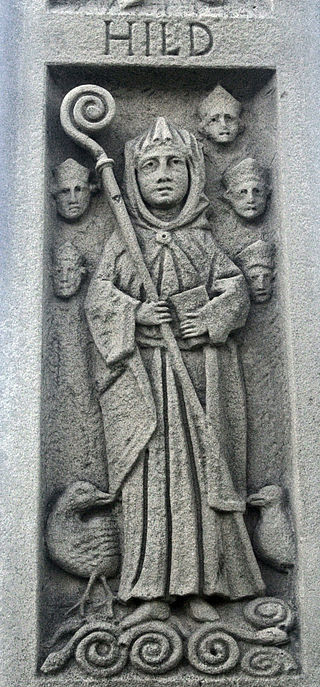
St Hilda's Statue at Whitby (photo credit Wilson44691 for Wikipedia)

St Hilda’s Statue (photo Wilson 44691 for Wikipedia)

“The conquered Britons retired westward, fighting all the way, into Cornwall, into Devonshire, into Wales, into Cumberland, and Westmoreland, and Lancashire; and they took their Christianity and civilization with them, leaving behind a vast and awful night of  barbarous Saxon paganism—of paganism with its ignorance, ferocity, blood-thirstiness, drunkenness, and lust. Eastern and Midland England for 200 years, from the time of Hengist to the time of Hilda, was full of ferocious tribes, battling all along the west with the remnant of the British aborigines, and battling just as fiercely with each other. When St Hilda was a young woman all central England, or Mercia, was held by a savage Pagan Sovereign named Penda, 80 years of age, a sort of Saxon Cetewayo, master of a powerful army, who for fifty years had made a war upon his neighbours. And it was in consequence of the destruction of this terrible old Pagan warrior by King Oswy at Winwidfield, near Leeds, in 655, that Hilda was enabled in 658 to found her abbey. Penda had previously slain King Oswald in the west, and hanged his mangled body aloft at Oswald’s tree, now Oswestry.” 

“A monastery of the ancient ages is often thought of as necessarily an abode of idleness, and even of licentiousness. Such no doubt many of the religious houses at last became, and even this great Benedictine house at Whitby among the number in its latter days. Its present ruin is, according to Dr. Young, the visible punishment of the sins of its lates inmates. But in the earlier centuries a great monastery was often a stronghold of the good cause against the powers of darkness—and this mighty foundation of Hilda’s was among the noblest in England. Its purpose can hardly be understood, unless we remember that in the first half of the seventh century, there was in all Europe no more awful Aceldama and “abomination of desolation” than this northern part of England. The Saxon Heathen and Pictish Highlanders, had repeatedly laid the land waste in their wars, and made its rivers flow with blood. The country was scarred with the black marks  of conflagrations of farms and homesteads. Deira invaded Mercia, and old Mercian Penda invaded Deira again and again. Bernicia invaded Lancashire and North Wales, and North Wales invaded Bernicia and Deira, or Northumberland and Yorkshire. All the history of these parts that remains is the history of cruelty, wrong, and bloodshed. No power but one could save and civilize Saxon heathenism, and turn this hell of the angles into a paradise. That power was Christianity.”
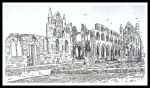
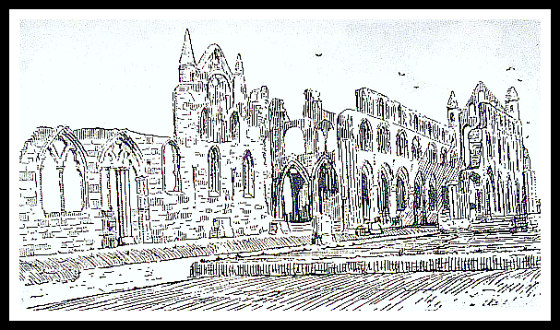
Whitby Abbey (Line Drawing 1960's)

Whitby Abbey (Line Drawing 1960’s)

“The kings had begun to hear of what Christianity had done for other states  and nations in Europe, and they were growing weary of their own wars and miseries. The monasteries which arose in that age, in the midst of the forests and open countries, were, then, strongholds of Christianity and civilization. A great monastery well placed aloft, like Cassino or Streonshall, and wisely and holily governed, was a Bethesda or Pool of Mercy with many porches. It was (1) a Temple for the worship of the living and eternal God, amidst the grotesque and degrading horrors of paganism, where the light of truth shone on high over the pagan pande-monium. (2) It was a place of education for both sexes. The Princess Hilda, grand-niece of King Edwin of Northumbria, founded here (after the modern American fashion) a college and school for both sexes, for both monks and nuns. Many of these were persons, like Hilda, well on in life and weary of the world; some of these were young, some even almost boys and girls. Her first charge was the little Princess Elfreda, well-born on her mother’s side; for there had been a succession of Christian Queens. First, Bertha, a French Princess, married Ethelbert, the King of Kent, and brought Christianity with her. Their daughter was Ethelburga, who married King Edwin in the great well-built Roman city of York, the capital of his kingdom of Deira. There daughter was Eanfleda, who married King Oswy, still a heathen; and their child was Elfreda, who was educated as a Christian at Whitby. In three cases Christianity came with the wife to a pagan husband. Who could say how great a blessing, or how great a curse, every young woman carries with her in her marriage, according as she is a loving wife and worshipper of God, or a heathen-ish worldling. Thus a monastery was a College and a School, and often had a learned Library. We still possess the catalogue of good books in manuscript, which this Abbey treasured up in the 12th century, beginning with the Bible. Part of the work of the place always was to copy good books, the priceless legacies of elder times, as it is now a good work to give or to lend them. A monastery inspired by such persons as Hilda and her fellow-workers was next a great mission centre, whence educated men went forth on foot to evangelise the neighbouring villages and towns; and many were the cells and village churches which were set up by the godly monks from Whitby College.”

“The noble St Chad, or Ceadda, of Lindisfarne, was often here; and so holy and laborious a worker and walker was he, that the people in after-times fancied that a healing virtue remained in the springs and pools where he baptized the heathen Saxons whom he converted; so that the name of “St. Chad’swell,” or Shadwell, is found over half of England, and has reached as far as London. For long Ceadda’s central abode was at Lastringham, beyond Pickering; and afterwards, in his last days when full of years and honours, he was made the Bishop of Litchfield, the first  of a series of eighty, ending with Bishop Maclagan.” 

3.  A monastery was also a great school of medicine, and place of healing. There were stored up all manner of receipts, wise and unwise, for the medical use of plants and treatment of wounds. And thence went forth elder Sisters of Mercy, to nurse the poor people of Whitby 1200 years ago”

“4.  A great monastery was a fountain of civilization in all the useful arts, such as agriculture and gardening. The best intelligence of the time was frequently brought to bear on the culture of a great abbey’s  possessions. It was also a school of the fine artsof music, singing, painting, and preeminently of architecture. It was likewise a school of  poetry, for here Caedmon sang his inspired song of the creation, and commended to the semi-barbarous Saxons divine ideas in strains that echoed far and wide over Saxon England, and gave prophetic hints of Miltons of the future yet to come.”

“And (5) lastly, a great monastery was a visible monument of all the Past Divine History of the world, as well as a written prophecy of a better kingdom to come.”

“All this was in the design of the Princess Hilda, when she planted her great Abbey upon these heights; and since she was, beyond all reasonable doubt, a devoted Christian, her object was in a great measure realized. For the great church and college of Whitby became to Yorkshire, and far beyond it, a fountain of salvation. Her religion was clothed in the idiom, the ceremonial, the con-ceptions of her own day; and much of that external investure was no doubt the growth of ages of gradual departure from the apostolic model. But what a grand and noble woman was this, who kindled so great a light on that sublime eminence, the memory of whose noble works was powerful enough 400 years after her death, to create another race of men to  rebuild the fallen in new splendor on the very site of her earlier enterprise.”

Now arose the early monasteries of Canterbury, of Glastonbury, of Streonshall—to this last king Oswy assisting  by the gift to Hilda of twelve manors, prompted thereto by the remorseful desires of a heart that repented itself of its previous blood-stained and violent career. Now hence-forth the figure of the Princess Hilda rises on her sacred hill, towering aloft above the desolated villages of Saxon Deira, a true messenger of peace to the troubled people. Her monastery continued for 200 years to be the central light amongst this darkness; and the gleam that shone through the rounded windows of her humble early church was truly a light of life to the Saxons. Then, as you know,  followed in the 9th century the complete destruction of the first modest and mostly wooden fabric by the Danish pirates, and an utter desolation of Streonshall for 200 years, indeed until after the Norman conquest. Then the Norman Percys, moved by the horrors of William the Conqueror’s desolation of Yorkshire—as Hilda had been moved 400 years before by the similar horrors of the Saxon war Desolations—began the re-building of the Abbey and Monastery, of which, and its subsequent additions, we can see the noble ruins to day.”
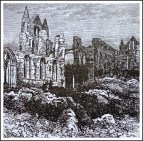
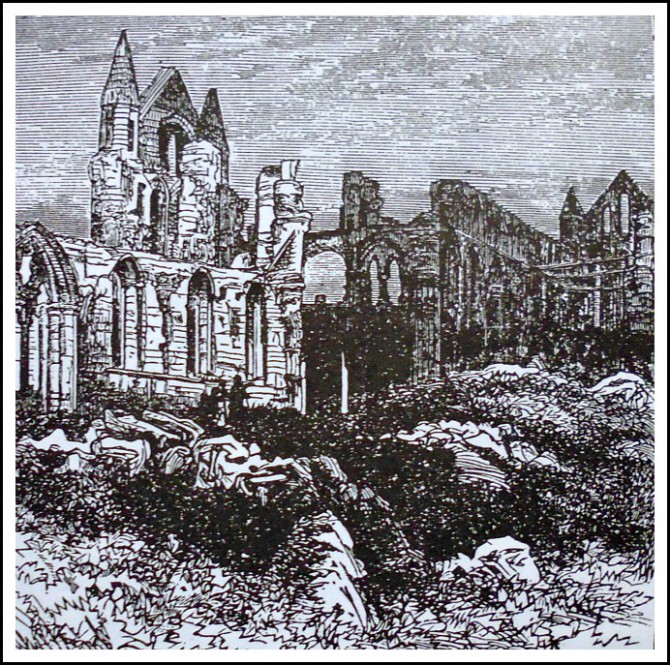
Whitby Abbey Ruins (old illustration).

Whitby Abbey Ruins (old illustration).

“Now again 400 years followed of growing magnificence, of cease-less worship, of holy song, devout study, of strenuous labour by twenty-five generations of the black-robed Benedictine monks among the surrounding towns and villages; and alas, of increasing superstition, increasing depravation of manners, increasing sloth and forgetfulness of God, until the crisis was reached of the Tudor reigns; when the voice of England, thundering indignantly like a northern tempest against the apostate church, supported Henry VIII in the dissolution and plunder of the Abbeys, then possessed of at least one-third of the cultivated land of the kingdom, and ruin fell upon Streonshall, with its precincts full of the dust of saints and kings, in the just judgment of God.”

Sources:-

https://es.wikipedia.org/wiki/Hilda_de_Whitby

Smith, William., Stories & Tales Of Old Yorkshire, (orig. edt. by William Smith, 1882-3. Selected & Edt. by Dawn Robinson-Walsh, 1993), Printwise Publications, Tottington, Bury, Lancs., 1993. [Stories & Tales of Old Yorkshire selected from the work ‘Old Yorkshire’ 5 vols, 1882-3.]

Copyright © Ray Spencer, The Journal of Antiquities, 2015 (updated 2025).



The Ebbing And Flowing Well, Giggleswick, North Yorkshire

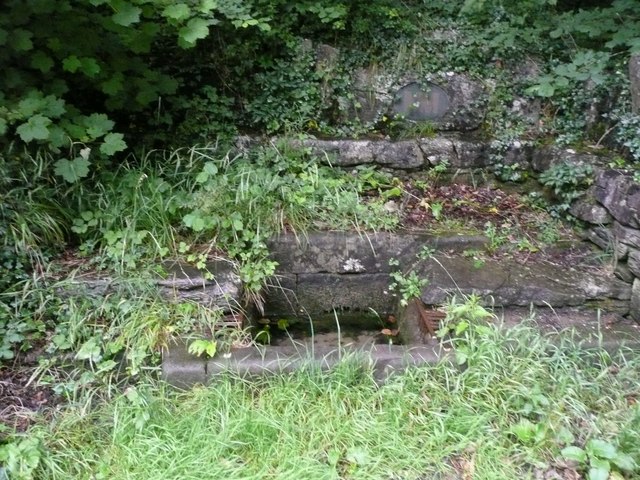
Ebbing and Flowing Well, Giggleswick (photo credit: Humphrey Bolton for Geograph)

Ebbing and Flowing Well, Giggleswick (photo credit: Humphrey Bolton for Geograph)

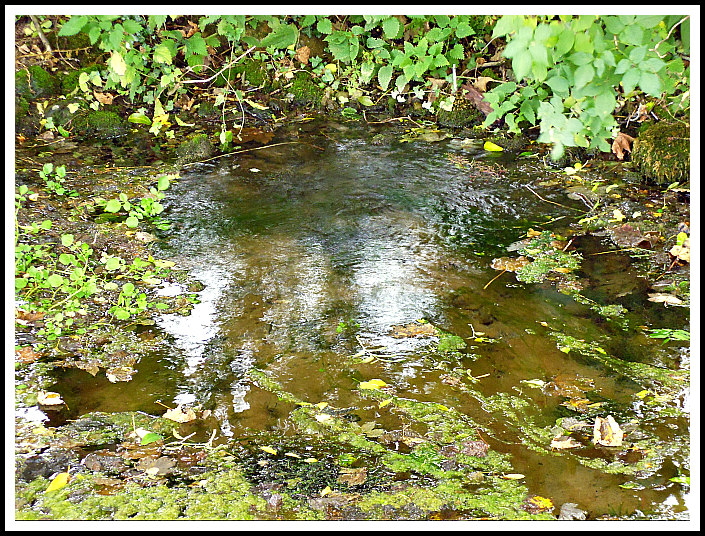
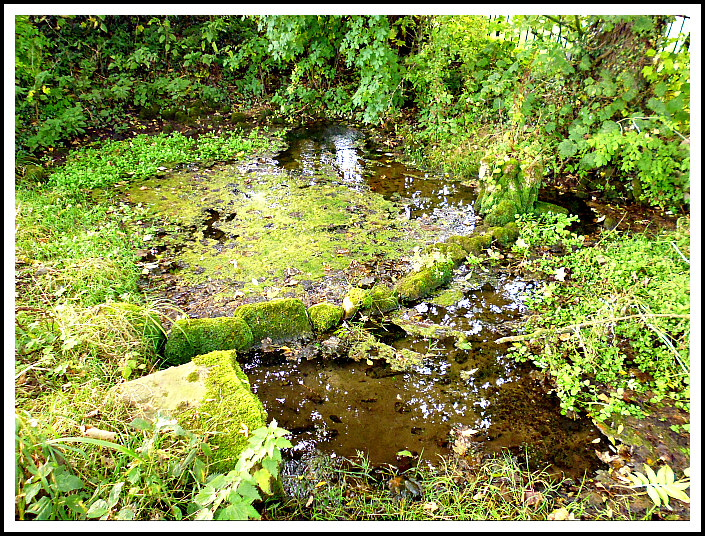
NGR: SD 8039 6538. The Ebbing and Flowing Well is, perhaps rather annoyingly, located at the side of the busy B6480 (Old Clapham road) out of the village of Giggleswick, about two-thirds of the way up the steep and ‘often very busy’ Buck Haw Brow, opposite Settle Golf-course. It’s about 1 mile north-west of Giggleswick and one-and-three-quarter miles from the town of Settle. The rocky and tree-covered Giggleswick Scar, formed from the South Craven Fault, towers above the curious holy well, which has long been famous for its abilities to “ebb and flow” though this does not occur as much as it used to do – due probably to the mining that now takes place over and on top of the scar, or some other atrocity. I should point out here that ‘it is quite dangerous to stand and view the well’ as there is a constant flow of vehicles rushing past the site and, it is therefore very difficult, if not dangerous to attempt to take photographs – so please “be warned” and do please stay very safe.

The well has been famous over the centuries for its strange and curious ability to ‘ebb and flow’, indeed so much so that in the past local people have tried to dig down below the well in order to find out ‘why it does this’, though probably without actually establishing what causes such a thing to take place, if it really does, and now on rare occasions. We take the word “ebb” to mean flow back, fall, drain and subside, and the word “flow” to mean issue forth, pour forth, pour outward, refill and well-up. So is that what the well does? When the well does flow it flows under the road to emerge in a wet, muddy mess, on the opposite side of the road and, sometimes flows over the road itself, but mostly it simply wells up to fill its square-shaped stone chamber, and then without much warning drains-away and ‘goes back’ into the limestone scar – probably from one of the deep caves that is undoubtedly linked-up with the well somewhere along the way. Author Brian Spencer in his book ‘The Visitor’s Guide To The Yorkshire Dales, says of this strange phenomenon:

“On the rare occasions that the well functions, it rapidly drains, and then after a pause refills itself. This is due to a unique double chambered cave somewhere behind the well which causes a sudden syphoning effect inside the hole and temporarily cuts off the flow of water.”

   In the much-acclaimed tome ‘Folklore Myths and Legends of Britains’, by Reader’s Digest, we are given a more Folklore-ish angle to this:

“Near to Giggleswick Scar is an oddity of nature, the Ebbing and Flowing Well. An explanation for its behavior is that a nymph who was being chased by a satyr prayed to the gods for help. They turned her into a spring of water, which still ebbs and flows with her panting breaths. 

The 17th-century highwayman, John Nevison, is said to have evaded capture by letting his horse drink at the well. The water gave the horse strength and Nevison escaped by leaping from the top of a cliff, still known as Nevison’s Leap.”

In the past a few historians have tried to associate the Ebbing and Flowing Well with a local north-country saint – in this case St Alkelda – who is still venerated at the church in Giggleswick and, also at the church in Middleham, North Yorkshire, where she is said, according to the legend, to have been murdered by two Danish women in c 800 AD, or maybe in the 10th century so say some. Alkelda was an Anglo-Saxon princess and also a ‘devout’ Christian. One day she was approached by two pagan women who murdered her with a ‘thick scarf’ which they pulled tightly around her neck; this terrible crime probably took place where the church of Sts Mary & Alkelda now stands, or ‘maybe’ beside the well that is also named for her; and the church houses some fragments of a 15th-century stained-glass window which depicts the saint’s martyrdom.

The church of St Alkelda at Giggleswick apparently still uses water from the Ebbing and Flowing Well in its baptism services and, “a 19th century stained-glass window depicts the spirit of the well in the form of an angel hovering above the waters. This is a Christianised version of the pagan water-spirits, called undines”, according to author Bill Anderton in his work ‘Guide To Ancient Britain’. But did St Alkelda even exist because her name could simply be a corruption of the Old English words ‘Hal Keld’ (Halig Keld) – meaning “holy well”. The renowned author Jessica Lofthouse explains this in her book ‘Lancashire Countrygoer’, she says:

“Ghikel was probably a Norseman whose “wick” or farm was here. Also the ebbing and flowing well, not so far away, was a “gugglian” or bubbling spring: the wick by the gurgling well could be a derivation. But who caresor whether or no there was a Saxon Princess martyred at the hand of pagan Danes to give St. Alkelda’s its name. Or was the well where the Celts worshipped a spirit of water, later sanctified as a holy well, and as the “helig keld” did it give the first church its unusual name?”

   Authors Janet & Colin Bord in their renowned work ‘Sacred Waters’, have little if anything to say about the well only that: “Sadly the well no longer ebbs and flows.”

Sources:

Anderton, Bill., Guide To Ancient Britain, Foulsham, Slough Berkshire, 1991.

Bord, Janet & Colin, Sacred Waters, Paladin Books, London W1X, 1986.

http://www.geograph.org.uk/photo/925879   © Copyright Humphrey Bolton and licensed for reuse under this Creative Commons Licence.

https://megalithix.wordpress.com/2008/09/12/ebbing-flowing-well-giggleswick-north-yorkshire-holy-well/

Lofthouse, Jessica., Lancashire Countrygoer, (second edition), Robert Hale, London SW2, 1974.

Reader’s Digest, Folklore Myths And Legends Of Britain, (Second Edition), The Reader’s Digest Association Limited, London, 1977.

Spencer, Brian., The Visitor’s Guide To The Yorkshire Dales, Hunter Publishing Inc., Edison, NJ, USA, 1986.

Copyright © Ray Spencer, The Journal of Antiquities, 2015 (updated 2024).


Robin Hood’s Stone, Allerton, Liverpool, Merseyside

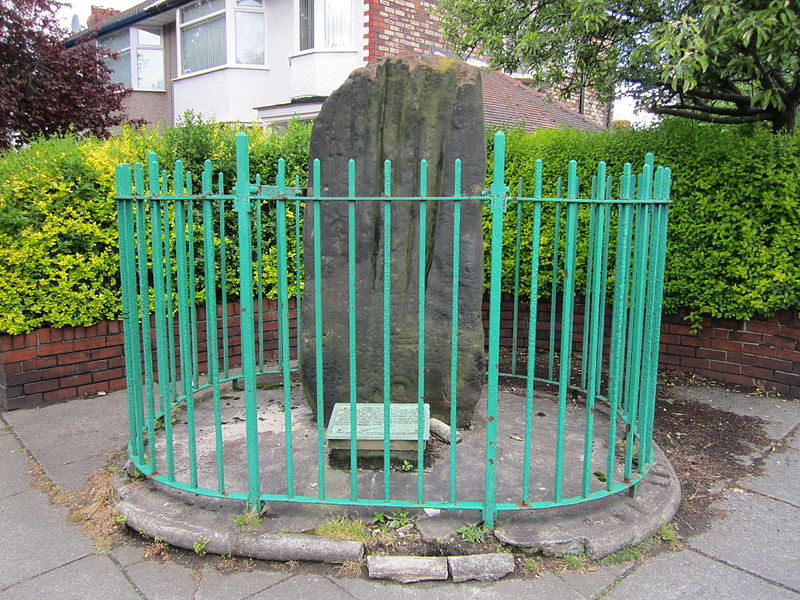
Robin Hood's Stone, Liverpool (photo by Rept0n1x for Wikimedia Commons)

Robin Hood’s Stone, Liverpool (photo by Rept0n1x for Wikimedia Commons)

OS grid reference: SJ 3998 8638. A prehistoric standing stone, now heavily worn by thousands of years of erosion, stands behind railings on Brooker Avenue at the junction of Archerfield Road in Allerton, Liverpool, Merseyside, near to West Allerton Railway Station. The heavily grooved monolith is thought to be one of the famous Calder Stones, which now reside in the Palm House in Calderstones Park, a quarter of a mile or so to the north-east, but ‘a few’ historians have considered the stone to date from the early part of the 16th century, and in particular the reign of King Henry VIII, when arrows were sharpened upon it. Archerfield Road is a giveaway here, I think. But just where Robin Hood the famed outlaw of Sherwood Forest features in the long history of this monument am at something of a loss like everyone else before me, but mythical and legendary heroes from our history ‘very often’ have their names attributed to stones that are: in no way “whatsoever” connected’, though it does give the ancient monument ‘in question’ a more interesting name.

The red sandstone monolith is 2.4 metres high (7 feet 9 inches) and 0.9 metres (2 feet 11 inches) in width. It was apparently dug up in 1928 in a field in the Forty Pits area – where it then stood for some considerable time until a new housing estate was built, and, then it was moved (once again) to its present position on Brooker Avenue, just opposite Archerfield Road, at the beginning of the 1970s. There are ‘said’ to be several prehistoric cup-marks at the base of the stone, but sadly, these are now beneath the soil. The author Derek M. Whale in his book ‘Lost Villages Of Liverpool – Part One’, says of Robin Hood’s Stone:-

    “Josias Booker’s field, called Stone Hey, in which the stone originally stood, is said to have accommodated butts for arches – probably about the time of Henry VIII. The King ordered most of his male subjects under 60 to practice archery and butts – mounds of sods to which targets were attached – were built in fields in almost every township. Most of the grooves were found on the side of the stone facing the sun – suggesting that most of the shooting took place from that side of the field, with archers firing with the light at their backs.”

In 1970, a similar stone was ploughed up in a farmer’s field at Haskayne, north of the city, and this also had grooves made by thousands of years of weathering. And so it is presumed this, and the so-called Robin Hood’s Stone, were probably part of the Calder Stones, which date back 4,000 years to the Bronze-Age. The Calder Stones had once formed part of a megalithic burial tomb in the Allerton area of Liverpool, but they were eventually brought to Calderstones Park and re-housed in the Palm House. But I can see ‘why’ some have considered the so-called Robin Hood’s Stone to be a relic of the early 16th century – as the deep scoring marks made by arrow-sharpening are still very visible on the stone. 

Sources: 

https://thejournalofantiquities.com/2014/07/19/the-calderstones-allerton-merseyside/

http://www.megalithic.co.uk/article.php?sid=8435

http://www.roydenhistory.co.uk/mrlhp/local/calders/calders.

https://commons.wikimedia.org/wiki/File:Robin_Hood%27s_Stone,_Liverpool_(1).JPG  – This file is licensed under the Creative Commons Attribution-Share Alike 3.0 Unported license.

Whale, Derek M., Lost Villages Of Liverpool – Part One, (second edition), T. Stephenson & Sons Ltd., Prescott, Merseyside, 1985. 

Copyright © Ray Spencer, The Journal of Antiquities, 2015.


1 Comment

St Chad’s Well, Tinedale Farm, Spen Brook, Lancashire

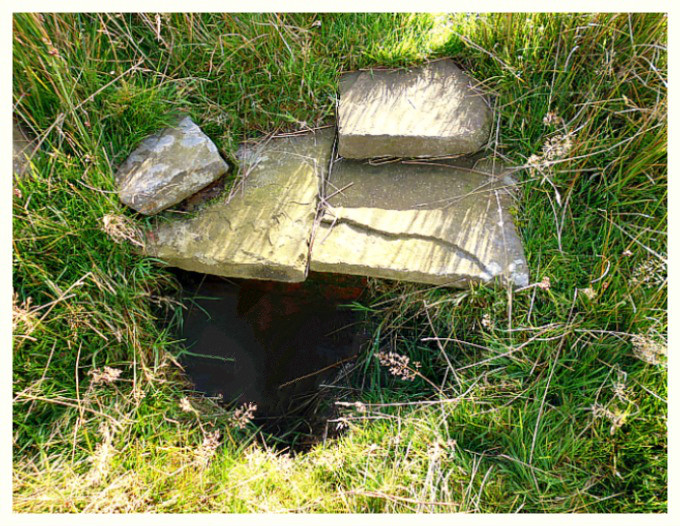
St Chad's Well, Near Tinedale Farm, Spen Brook, Lancashire.

St Chad’s Well, Near Tinedale Farm, Spen Brook, Lancashire.

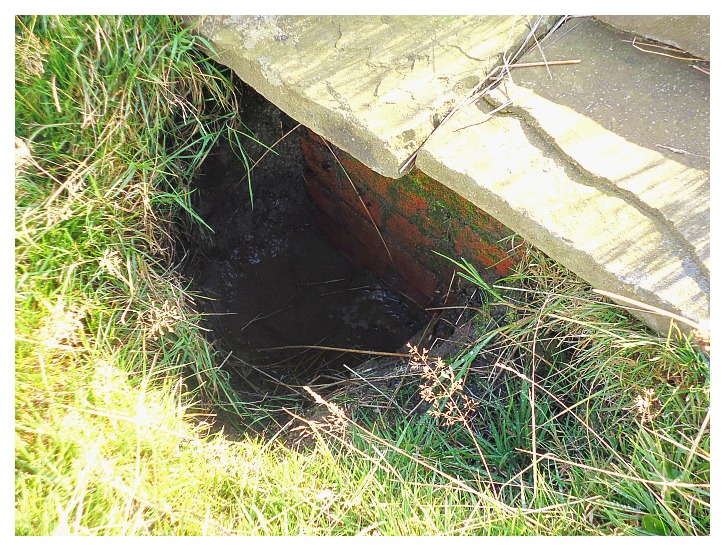
   St Chad’s Well is located in a boggy field with reed beds, just east of Tinedale Farm, 1 mile south of Newchurch-in-Pendle. From above Hoarstones, Fence, go north along the country lane, then at the very top walk along the straight farmtrack with a sign for Rigg of England and Tinedale Farm. After a while take the second wall-style leading into the field. At the centre of this, often boggy field where the power cables intersect, look for a large area of reeds, here hidden away is the largerly forgotten holy well. It is covered by two flat stones, together measuring 3 feet across, while the well-basin is roughly 1 foot in depth, and is lined at one side by brickwork (which looks recent). There is a layer of mud at the bottom, but the water is quite clear ‘upon cupping’ one’s hands in the water, though probably ‘not drinkable’ today!

St Chad's Well near Tinedale Farm, Spen Brook.

St Chad’s Well

   According to local legend St Chad, a 7th century Anglo Saxon saint, who became Archbishop of York, came to this area during his travels in the north of England. However it is more likely one of his many disciples came here and dedicated the well to his master. It is though, as we already know, a pre-Christian well/spring. I am not aware of any cures happening at this well, though I’m not saying they didn’t happen here long ago. I am told that the water was used by local farms in the area of Tinedale, according to a gentleman who is a member of ‘The Pendle Forest Historical Society’. The well is “now” only marked on old maps of the area. Regarding St Chad, who died in 672 AD, one or two historians have ‘suggested’ albeit tenuously, that the village of Chatburn, near Dowham, is named after the well-known northern saint, though there does not appear to be any credible link with the saint to the actual place.  However, the name is usually taken to mean Ceatta’s Stream in the ‘Old English’ form – meaning Ceatta/Ceada (a personal name) and burn (a stream); the two other forms of Chad’s name are, of course, Ceadda and Ceatta! 

   The local author/historian John A. Clayton informs us in his excellent book ‘Burnley And Pendle Archaeology – Part 1 – Ice Age to Early Bronze Age’, that: “in 1978 a small stone bust, possibly of the Romano-British goddess Sulis/Minerva, was discovered near to the well.” And he says: ‘This, along with Roman pottery recently found by [himself] in nearby Sabden Fold, strongly suggests that the ridge-top site [above the holy well,] sitting as it does on a major ancient trade route, was of importance in the Roman Iron Age.” The ridge-top site which Clayton alludes to is called ‘Standing Stone Height’.

    The well stands close to an ancient trackway, which apparently pilgrims used in order to get to Whalley Abbey, 4 miles to the north-west. Tinedale (Tynedale) farm is “said” to be haunted, and it was associated at the beginning of the 17th century with the Pendle Witches, who met at Malkin Tower, a scant ruin to the north of the farm – between the farms of Bull Hole and Moss End, according to the late John Dixon in his work ‘Historic Walks Around The Pendle Way’. Tinedale farm dates from 1750 but the original building was of 1600. In this area, too, we are told ‘the ancient fire festival of Beltaine’ used to take place – long ago back in the mists of time.

Sources:

Clayton, John A., Burnley And Pendle Archaeology – Part 1 – Ice Age to Early Bronze Age, Barrowford Press, 2014.

Dixon, John & Mann, Bob., Historic Walks Around The Pendle Way, Aussteiger Publications, Barnoldswick, 1990.

Farmer, David., Oxford Dictionary of Saints, Oxford University Press, 2004.

http://kepn.nottingham.ac.uk/map/place/Lancashire/Chatburn

Copyright © Ray Spencer, The Journal of Antiquities, 2015 (updated 2024).


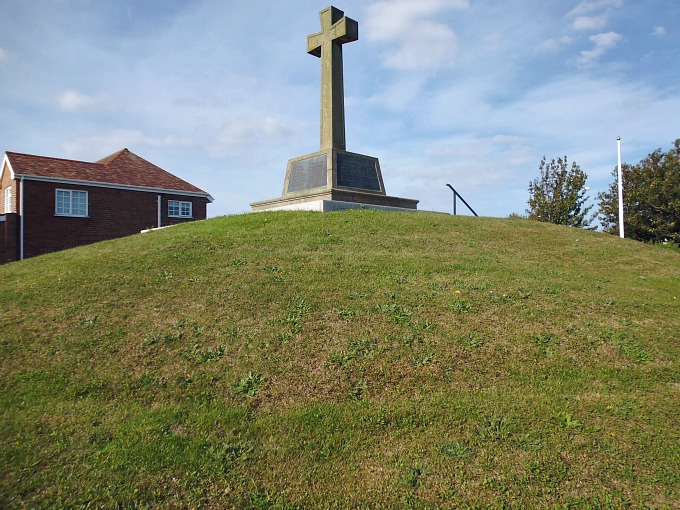
Haken’s Mound, Preesall, Lancashire

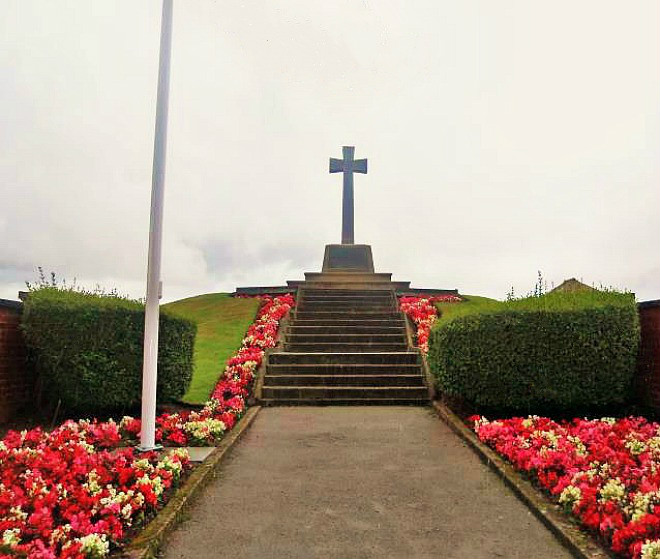
Preesall War Memorial on the B5270 Lancaster Road.

Preesall War Memorial on the B5270 Lancaster Road.

OS grid reference SD 3601 4822. This is one of those strange curiosities that do seem to crop up every so often. Haken’s Mound, also known as ‘Haakon’s Mound’ and ‘The Mount’ is, in fact, the Preesall war memorial near St Oswald’s church on the B5270 Lancaster road. The large, grassy mound always has well-tended flowers at its entrance and up to the monument, and on top of the large mound, there is a substantial memorial cross which commemorates the fallen of the two World Wars. According to ‘the’ local legend and, to some extent “myth” Haken or Haakon, an early 10th century Viking chieftain, who settled half a mile or so up the road at Hakensall in Knott-End-On-Sea, was buried inside the mound that is today known as ‘The Mount”. Whether there is any real truth in this I do not know – we will probably never know. The war memorial is located halfway between St Oswald’s church and B5377 Stalmine turning, while the very pretty seaside village of Knott End is half a mile in the opposite direction along Lancaster Road.

The story goes that: At some point in the early 10th century AD Haken, an invading Viking chieftain, sailed up the Wyre estuary (maybe in a longboat) and, just inland between Fleetwood and Knott End, founded a settlement at a place now called Hackensall – today the medieval Hackensall Hall on Whinny Lane (OS grid ref: SD 2874 5394) stands more or less on that site. The original hall (a defensive moated building) was built in 1190; the building there today is of 1656; it was built by the Fleetwood family. In the 19th century the hall was greatly renovated by Sir James Bourne. According to “the” Legend, it is said from his settlement, Haken laid siege to the area, pillaging and murdering, but I feel that here we have much embellishment added to the actual legend itself – and one “must” be very wary of this fact. Conversely, it may be that Haken was simply a seafaring Norseman who had come to the area and wanted to lead a quiet, unassuming life there.

The Mount at Preesall, Lancashire.

The Mount at Preesall, Lancashire.

As to whether Haken or Haakon was still a pagan, I don’t know, but I suppose it’s possible that he was a Christian, or had recently become one? After his death this Viking chieftain was buried nearby and a large mound built over his grave. Today this burial mound near St Oswald’s church, Preesall, is locally called ‘The Mount’ or ‘Haakon’s Mound’ and it still looks very impressive, made more so ‘perhaps’ by the war memorial cross standing on top. Alas, today, there are no visible signs (earthworks) of Haken’s settlement at Hackensall, only Hackensall road and Hackensall Hall are reminders. But we will never know archaeologically whether the Viking chieftain lies buried within the mound, due to the fact that it is protected as a war memorial.

There are a few historians that have tried to link King Cnut, himself a Norseman, with Knott End with regards to the meaning of the place, but it seems that that is ‘not’ the case as most tend to agree “now” that it takes its name from a “knot”- a hillock that is located above the estuary. This knot or hillock probably refers to the golf course above the shoreline at Knott End, just to the north-west of Hackensall Hall. A ghostly horse (boggart) is ‘said’ to haunt the hall.

In the delightful little book ‘The Lancashire Coastal Way And The Wyre Way’, by Ian & Krysia Brodie, we are enlightened about the possible meaning of Knott End: “The large sandbank off Knott End is called Bernard’s Wharf – reputedly after St Bernard. Many small birds, including knot and dunlin, feed here in the nutrient-rich mud. One story says Knott End derives from these birds, another that the Norse marked the channel of the Wyre with a chain of knots or cairns, the final one being the Knott End!” There is a church named for St Bernard on Hackensall Road.

In 1926 a hoard of Roman coins was dug up in the vicinity of Hackensall Hall, 500 to be precise, which later came to be known as the Hackensall Hoard. The coins were found beneath a stone and had been placed inside a leather bag. “Whilst the bag was originally found to contain around 500 coins, only 339 now have their whereabouts known” (Ian & Krysia Brodie, 1993). Some of the coin hoard was eventually given to The Revoe Museum in Blackpool, while more coins went to museums and galleries across the north-west of England.

   In the work ‘Romans in Lancashire’ by D. C. A. Shotter, we are told of the possibility that the mouth of the Wyre estuary, a safe and sheltered anchorage between Fleetwood and Knott End, was in use as a port in Roman times and that the great Ptolemy, who lived in the 2nd century AD, referred to it as such: “More important, however, for the present purpose is the reference in Ptolemy to the site which he names as PORTUS SETANTIORUM……this could have been the Roman name for Lancaster; alternatively, many have felt that the site has at some time been overwhelmed by the sea, and lies off the coast at the mouth of the Wyre.”

Sources:

Brodie, Ian & Krysia., The Lancashire Coastal Way And The Wyre Way, Lancashire County Books, Preston, 1993.

http://www.pastscape.org.uk/hob.aspx?hob_id=39399&sort=2&type=&rational=a&class1=None&period=None&county=1306799&district=None&parish=None&place=&recordsperpage=10&source=text&rtype=&rnumber=&p=465&move=n&nor=6188&recfc=4000

http://www.preesalltowncouncil.org/about-preesall.pl

Shotter, D. C. A., Romans in Lancashire, Dalesman Publishing Company Ltd., Clapham, Yorkshire, 1973.

Copyright ©  Ray Spencer, The Journal of Antiquities, 2015 (updated 2925).


The Wirksworth Stone, St Mary’s Church, Wirksworth, Derbyshire

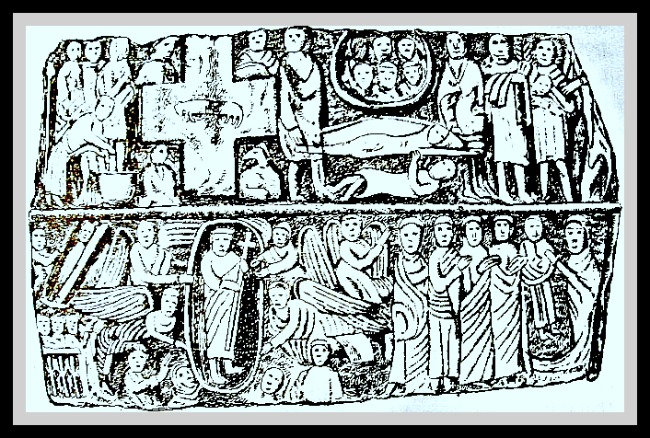
The Wirksworth Stone, Derbyshire (Drawing by J. Romilly Allen, c 1889).

The Wirksworth Stone, Derbyshire (Drawing by J. Romilly Allen, c 1889).

OS grid reference: SK 2874 5394. Near to the centre of the town of Wirksworth, Derbyshire, along St Mary’s Gate stands the ancient parish church of St Mary the Virgin, and housed within is the Anglo-Saxon ‘Wirksworth Stone’, a richly carved sculptured stone with biblical scenes and figures, which is said to date from the 7th-9th century AD; and there is also a stone with a ‘rare’ example of an Anglo-Saxon lead-miner carved onto it, dating from the 8th century? The ancient parish church of St Mary, dating largerly from the 13-14th centuries, is located some 25 metres south of the B5035 (Wirksworth Moor road) on St Mary’s Gate, close to the centre of the town. The villages of Cromford and Bonsall lie a couple of miles to the north on the B5036 road.

The Wirksworth Stone is built into the north wall of the nave and is oblong-shaped and chunky; it measures 5 feet x 3 feet but is probably not as long as it originally was (as can be seen at the western edge) – due to damage over the centuries. This richly sculptured stone-slab, which is in fact a coffin lid [from a sarcophagus], is adorned with scenes and figures from the Bible, most of which depict the ‘Life of Christ’. There are numerous angels, apostles, disciples and members of the holy family. Yet these figures look ‘almost’ as if they had been carved yesterday! They were probably carved in 800 AD. The stone was discovered lying upside-down beneath the chancel floor, quite close to the altar, in 1820. The first church on this site was apparently founded by the Northumbrian monk and missionary, St Betti, in c 653 AD. So, could the sculptured stone be from his tomb?

In Simon Jenkins’ great tome ‘England’s Thousand Best Churches’ we are ‘enthusiastically’ informed about the contents of St Mary’s church: “The contents of Wirksworth include one of the finest Saxon coffin lids extant…..its relief carving portraying eight scenes from the life of Christ. We can discern Christ washing the disciples’ feet, the Entombment and, on the lower tier, the Ascension. This lid is among the most evocative images of Dark Ages art. Its inspiration is similar to the ‘Byzantine’ carvings at Breedon (Leics) to the south. The figures could hardly be more primitive, more aloof from the Saxon tradition, yet they radiate life.”

The author Derek Bryce in his antiquarian book ‘Symbolism of the Celtic Cross’ says that: “In Britain there is a unique instance of the Lamb of God on a cross, on a sculptured slab in Wirksworth Church, Derbyshire.” The said ‘Lamb of God’ is depicted on a rather thick cross on the top tier of the slab, with three creatures and a human figure surrounding it.

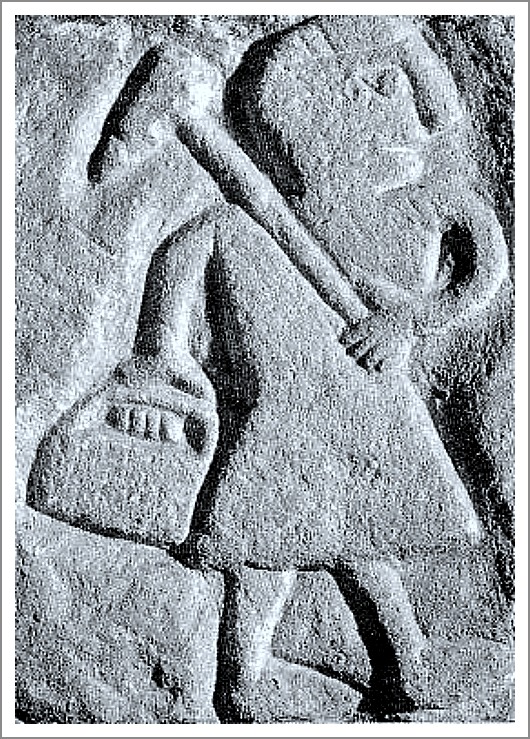
Carving of lead miner, St Mary's, Wirksworth, Derbys.

Carving of lead miner, St Mary’s, Wirksworth, Derbys.

Also inside St Mary’s, in the wall of the south transept, is a fragment of stone from maybe the 8th century AD, which has a carving of a lead miner upon it. This little figure is locally called T’owd Man of Bonsall or just ‘Owd Man’ and is thought to have come from Bonsall church near Cromford in 1876 – the two Derbyshire villages lie a few miles north of Wirksworth. The area around here has always been known for its lead mines; indeed, the Romans are ‘said’ to have mined the stuff. In the early 19th century lead had then become such a sellable commodity that a “moot” hall was established in Wirksworth.

The author Frank Rodgers in his very interesting book ‘Curiosities of Derbyshire And The Peak District’ says of the ancient stones inside St Mary’s: “………other fragments of ancient carving are built into the walls, one in the south transept depicting a lead miner with his tools, a reminder that not far from the north gate of the churchyard is the Moot Hall in Chapel Lane.”

Sources:-

Bryce, Derek., Symbolism Of The Celtic Cross, Llanerch Enterprises, Felinfach, Lampeter, Dyfed, Wales, 1989.

http://www.wirksworth.org.uk/x559.htm

Jenkins, Simon., England’s Thousand Best Churches, Penguin Books Ltd., London, 2000.

Rodgers, Frank., Curiosities of Derbyshire And The Peak District, Derbyshire Countryside Ltd., Derby, 2000. 

Romilly Allen J., Christian Symbolism in Great Britain and Ireland before the 13th Century, 1889.

Copyright © Ray Spencer, The Journal of Antiquities, 2015.


Sambo’s Grave, Sunderland Point, Lancashire – An Article by Cliff Astin

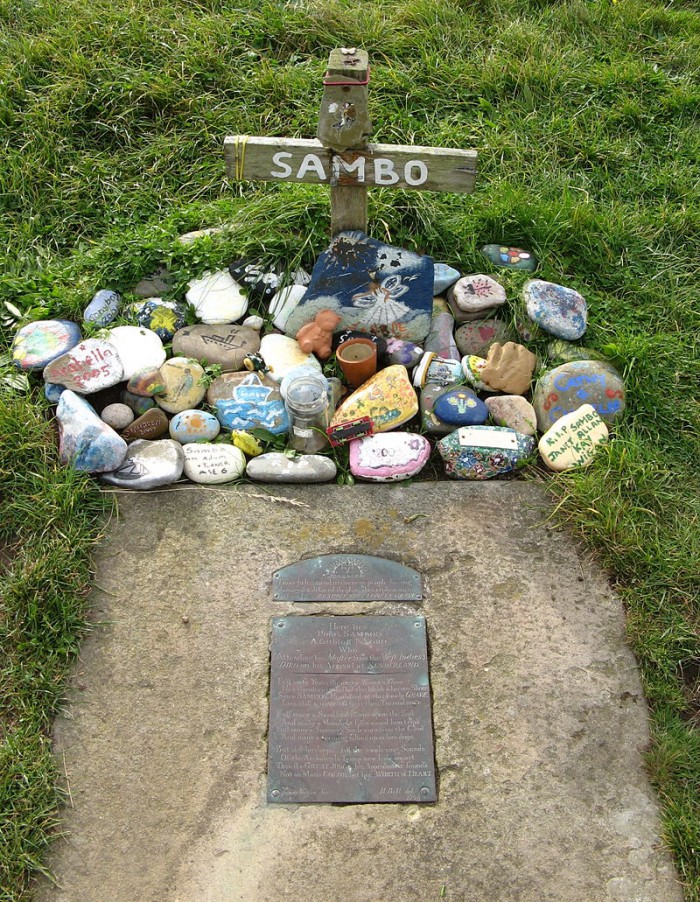
Sambo's Grave, Sunderland Point, Lancashire (photo credit: Rwendland for Wikipedia)

Sambo’s Grave, Sunderland Point, Lancashire (photo credit: Rwendland for Wikipedia)

   Os grid reference: SD 4222 5594. I recently came across this interesting article by Cliff Astin in his series called ‘Digging Deeper into Graves’ which appeared in the August 1996 edition of the ‘Really Lancashire’ magazine  A Magazine for the Red Rose County. I thought that it would be good to share this on here for all to read. The well-tendered grave is located at the far western side of Sunderland Point, close to the coast. To reach the site from Overton walk 1 mile south-west along a track crossing the northern and western edges of the Lune estuary (please check the tides) as there are deep river channels. On reaching Sunderland Point (SD 4266 5598) walk the length of the ‘Lane’. At the far western side of the lane walk 100m south on a footpath. Here in the corner of a field lies Sambo’s Grave. Children have left flowers, painted pebbles and tiny little wooden crosses at the graveside.

   [I would like to apologize about the name “Sambo” but it is the one that is “always” given for this site and, also for any other “offensive” words that appear here, they are not the “words” that I would have given, but they are the ones that “still” seem to crop up in this world of ours. To me that is very sad.]

   “Sunderland Point was, for purposes of shipping, the predecessor of Glasson Dock, which in turn was superseded as the most important port in our area by Lancaster. Should you choose to visit Sunderland Point, take care to check the tide tables before setting out in order to leave time to wander along the shoreline and to accommodate your return. On reaching the shore, walk to your left until you see a marker indicating ‘Sambo’s Grave’ – a fascinating burial spot but also a somewhat disgusting and misplaced instance of contemporary superiority and man’s inhumanity to man on the part of the local inhabitants of the day. Happily, this has been tempered by later and greater understanding and kindness albeit mainly on the part of our young ones.”

   “About 1730 a negro boy who had been acting as a sea captain’s servant arrived at Sunderland Point in one of the ships from the West Indies. Because it took some time to unload and re-freight the vessel, this negro – they called him Sambo, I suppose nobody bothered to ask him his real name – was accommodated at one of the inns. There are no inns at Sunderland Point now but formerly there were two. His master, the sea captain, meanwhile went off to Lancaster to attend to some business affairs, whereupon the negro slave took it into his head that in this alien foreign-speaking land he had been abandoned. He became so worried and depressed that he refused to take any food and in a very short time he died. Here’s where the inhumanity comes in.”

   “The “good Christians” of the parish could not tolerate the idea of a black heathen being buried in consecrated ground and so at a spot on the lonely western side close to the shore (it is now one corner of a field) sailors buried Sambo coffinless covered only with his own clothes.”

   “In 1796 (sixty years later) the reverend James Watson, the recently retired headmaster of Lancaster grammar school, was shown the burial spot. By now, Sunderland Point had become popular with visitors so James Watson collected a shilling from every willing visitor and placed on the site a monumental stone containing, in the centre on a copper plate, the following inscription:-” Here lies Poor Sambo, A Faithful  Negro who (attending his master from the West Indies), Died on his arrival at Sunderland.

   “Whenever you visit this site today you will find pathetic but loving little offerings from local children in the form of daisies, buttercups or other wildflowers in jam jars and crosses made from twigs or lolly sticks, for the local schoolchildren and other visitors have taken Sambo into their hearts. Happily in Sunderland Point today Sambo is the most remembered resident.”                                                                                                                                                                                                                                                                                                                                                                                                                                                            Full sixty Years the angry Winter’s Wave
Has thundering daſhd this bleak & barren Shore
Since Sambo‘s Head laid in this lonely Grave
Lies still & ne’er will hear their turmoil more.

Full many a Sandbird chirps upon the Sod
And many a Moonlight Elfin round him trips
Full many a Summer’s Sunbeam warms the Clod
And many a teeming Cloud upon him drips.

But still he sleeps _ till the awakening Sounds
Of the Archangel’s Trump new Life impart
Then the Great Judge his Approbation founds
Not on Man’s Color but his_Worth of Heart

James Watſon Scr.               H.Bell del. 1796

Sources:-

Astin, Cliff., Sambo’s Grave (article), Really Lancashire – A Magazine for the Red Rose County, Issue No. 2, August 1996, Landy Publishing, Staining, Blackpool, Lancs.

https://en.wikipedia.org/wiki/Sambo%27s_Grave

Copyright © Ray Spencer, The Journal of Antiquities, 2015 (updated 2024).


1 Comment

Llangorse Lake and Crannog, Powys, Wales

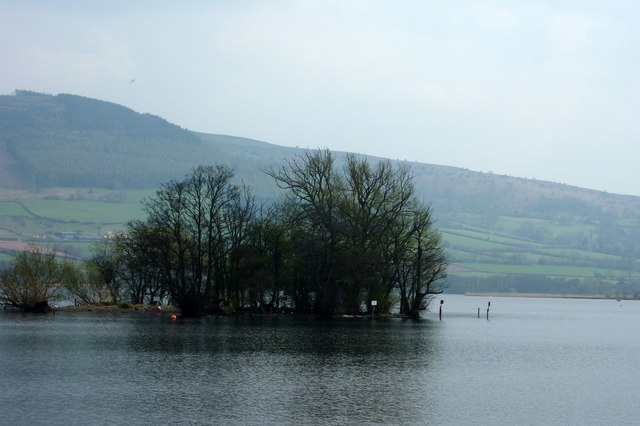
Crannog on Llangorse Lake (photo credit: Pam Fray - for Geograph)

Crannog on Llangorse Lake (photo credit: Pam Fray – for Geograph)

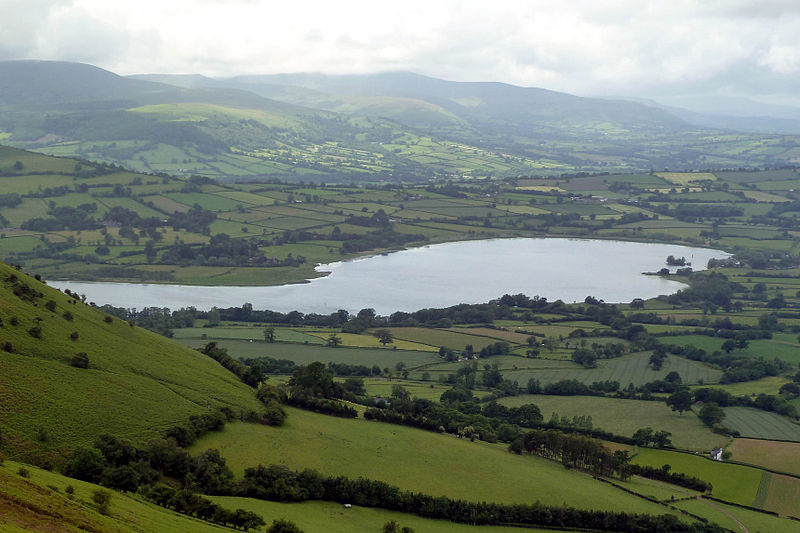
OS grid reference: SO 1287 2689. About 37 metres from the northern shoreline of Llangorse Lake (Llyn Safaddan), Powys, also known as “Savaddan Lake and Lake of Brycheiniog” (Bord, Janet & Colin, 1986), lies the tiny man-made island of Ynys Bwlc, which is in fact a crannog, a Dark Age island settlement, dating probably from about the beginning of the 10th century, or maybe earlier, which would have once supported a royal residence for the king of Brycheiniog. The lake is said to be the second largest natural lake in Wales, being formed at the last Ice Age many thousands of years ago; the River Llynfi (Afon Llyfni) enters at the far south-eastern side of the lake and then, rather strangely flows out of the lake at the far northwestern side, close by the caravan park. The lake is 1 mile long and 5 miles in circumference.

Llangorse lake and crannog can be reached on a country lane to the west of Llangorse village, heading south close to the caravan park, which brings you out at ‘The Welsh Crannog Centre’. A few miles to the south is the village of Llansantffraed, while the town of Brecon lies some 4 miles to the west and, at the south-side of the lake stands the ancient church of St Gastyn at Llangasty Tal-y-Llyn. The place-name Llangorse is nowadays ‘often’ shortened to Llangors.

Llangorse Lake viewed from Mynydd Llangorse (photo credit: Velella for Wikipedia)

Llangorse Lake viewed from Mynydd Llangorse (photo credit: Velella for Wikipedia)

And the lake is also the setting for a number of myths and legends – including one that says the lake is the location for the submerged Roman city of Loventium, but in early medieval history it was known as ‘Brecenenmere’. In 1925 a 25-foot-long wooden dug-out canoe was excavated from the mud near the northern shore of the lake, and in 1990 a second dug-out boat was excavated from close by. These have been dated from between the 8th and 11th centuries AD. In the 12th century, Gerald of Wales (Giraldus Cambrensis) visited the lake and made mention in his great work ‘The Journey Through Wales/The Description Of Wales’ of the abundance of fish and also how miraculous it was and the numerous strange colours that the lake water takes on at certain times. And the lake has long been associated with fairies, very large eels, and a witch who lived beside the lake and was known to frighten away naughty children!

Giraldus, who was a medieval historian, claimed that birds living around the lake would only sing ‘when a rightful prince returns to rule the area’. At this time the area was ruled over by King Henry I of England. One day the king was walking along the lake’s shoreline in the presence of two Norman lords and the Welsh prince Gruffydd ap Rhys, but he noticed that all the birds were silent. He then commanded them to sing – they ignored him, but when Prince Rhys asked them to sing – they sang merrily! Near the southern shores of Llangorse lake, near Bwlc, can be found the crumbling remains of Blaenllyfni Castle, a 12th century Norman foundation.

“The tiny man-made island was first identified as a crannog in 1876 by E.N. Dumbleton”, according to Chris Barber in his work ‘More Mysterious Wales’. The almost round-shaped tree-covered crannog at the northern side of Llangorse Lake is thought to date from c890 AD. It was probably destroyed in either 911 AD or 916 AD possibly by King Alfred’s daughter Ethelflaed (Lady of the Mercians), when according to legend, they “took the king’s wife and thirty-three others prisoner” (Hughes, Wendy, 1995). However, some historians and archaeologists believe it could, in fact, be of an earlier date, maybe 7th-9th century? There is, however, some reason to suspect an Iron Age ‘crannog’ here, artificially improved with stakes as a lake-dwelling like those at Glastonbury and Meare in Somerset (Houlder, Christopher, 1978).

According to legend a palace is said to lie beneath the waves. Long ago a ruthless princess ruled at the palace; she married a poor man from the town, but the agreement was that ‘he would bring her lots of gold’. In sheer desperation, the man robbed and killed a rich merchant. When he returned to the palace with his spoils the princess immediately married him, but then shortly afterwards the murdered man’s ghost began haunting the place and, later warned the newly-married couple that their crime would be avenged, and this would fall heavily on the ninth generation of their descendants. However, the princess and her husband became even more greedy and wicked – their lust for wealth being unceasing. The warning eventually came true and the palace was inundated by a deluge of water from the nearby hills which had been triggered by an earthquake – drowning both palace and town – the ninth generation of the family including the princess and her husband were killed, according to “the” legend.

Local people claim to have seen the foundations of submerged buildings when the water-level is low in drought conditions and, they also claim to have heard the eerie sounds of church bells ringing out from below the waves in very stormy conditions when there is a heavy swell on the water.

 At the north-side of the crannog there is a sort of stone jetty which indicates where a wooden causeway once existed – linking the island to the shoreline. The artificial island measures ‘roughly’ 50m x 55m and is “set upon a base of stones and brushwood” (Figgis, N. P., 1995), and built of willow branches and reeds – with sturdy wooden piles sunk up to 7 metres down into the lake bed. It would ‘probably’ have been defended with a double row of wooden palisades. “Fragments of pottery, implements and animal bones” (Hughes, Wendy, 1995) have been found beneath the crannog during recent archaeological excavations, including the one by Time Team in 1993, and earlier in 1991 a few fragmentary metal parts from a small portable house-shaped reliquary/shrine were found during underwater excavations at the crannog; and there are also apparently traces of hut circles on the island.

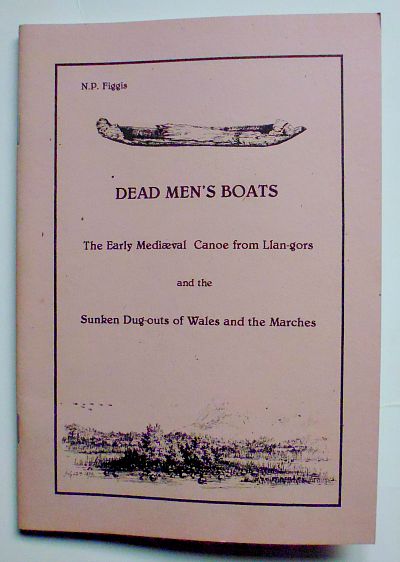
Dead Men's Boats by N.P. Figgis (Atelier Productions), 1995.

Dead Men’s Boats by N.P. Figgis (Atelier Productions), 1995.

In 1925 a 25-foot-long wooden dug-out canoe was excavated from the mud at the northern edge of the lake at (OS grid ref: roughly SO 132 269) which ‘was’ considered to be of an early medieval date, maybe 8th-11th centuries, and so a bit more recent than the lake crannog? The dug-out canoe can be seen on display in the Brecon Museum and a replica is at The Welsh Crannog Centre on the lake’s north-western shoreline, close by the crannog. And then in 1990 second similar dug-out boat was excavated from the lake near where the first had been found. But these dug-out boats have their origins in the Iron-Age. The canoe was eventually radiocarbon dated to centre on 814 AD, so there is a strong possibility that the sample dates from somewhere between the years AD 754 and 874 AD, according to author N.P. Figgis.

The dug-out canoe was excavated 1 metre down in the mud by a local man, Mr Thomas Jenkins and his sons. Author N.P. Figgis in his book ‘Dead Men’s Boats’ says: “The boat they brought ashore was a long, thin dug-out canoe. Her prow had broken off, and one side had caved in, and the stern was a step-shaped, heavy block; she was not like any modern craft”.

Christopher Houlder in his excellent archaeological guide book: ‘Wales: An Archaeological Guide’, with regard to the dug-out canoe says that: “Though of primitive type it may be only medieval in date, used for access to the island near the N. shore for fishing and similar purposes”.

At the south-side of Llangorse Lake is the hamlet of Llangasty Tal-y-Llyn (OS grid ref: SO 1331 2613) and a mid-19th century church (on the site of an earlier medieval foundation) dedicated to St Gastyn. The churchyard looks to be almost circular in shape, indicative of a sacred site. St Gastyn was a Celtic hermit who founded the first “llan” here in the mid-5th century AD and was apparently the tutor to some of the many children of the saintly King Brychan, who ruled ‘this’ area, which became known as Brecknock (Brycheiniog).

Sources:

http://www.geograph.org.uk/photo/1823433 © Copyright pam fray and licensed for reuse under this Creative Commons Licence.

https://en.wikipedia.org/wiki/Llangorse_Lake

Barber, Chris., More Mysterious Wales, Paladin, London W1X, 1987.

Bord, Janet & Colin., Sacred Waters, Paladin, London W1X, 1986.

Dumbleton, E.N., On a Crannog, or Stockaded Island, in Llangorse Lake, near Brecon, Archaeologia Cambrensis, 4th series, vol 1, part 3, 1870.

Figgis, N. P., Dead Men’s Boats, Atelier Productions, Machynlleth, Wales, 1995.

Gerald of Wales., The Journey Through Wales/The Description Of Wales, Penguin Books Ltd., London WC2R, 1978.

Houlder, Christopher., Wales: An Archaeological Guide, Faber and Faber Limited, London WC1, 1978.

http://www.bbc.co.uk/ahistoryoftheworld/objects/kJyO0xSbTlCmDBtWr3cnsQ

Hughes, Wendy., The Story of Brecknock, Gwasg Carreg Gwalch, Llanrwst, Gwynedd, Wales, 1995.

Copyright © Ray Spencer, The Journal of Antiquities, 2015.


Beneath The Waves – An Article by Paul Harris

Ptolemy Cosmographia (Wikipedia)

Ptolemy Cosmographia (Wikipedia)

Looking through some of my old ‘Prediction’ magazines, I came across a fascinating historical article by Paul Harris. This article appeared in the June 1995 edition of the magazine and is all about the sunken lands, lost cities, kingdoms and islands (one of which has ‘perhaps’ given rise to the famous legend and perhaps myth of Atlantis) which are reputed to lie around the coastline of the British Isles. I thought that other people might like to read this, and so here it is “quoted” in full. The author says:

“The coastline of Britain is constantly under attack from the sea with vast tracts of land having been lost over the centuries, while medieval ports find themselves stranded inland by the action of longshore drift and estuarine silting. With this ever-changing scenario it is not surprising that many tales are told of one-time kingdoms, cities and islands now lost beneath the waves.”

“One of the most extensive of these ‘lost lands’ would seem to be that reputed to lie under Cardigan Bay, Wales. Known as Cantrer Gwaelod, or Bottom Cantred, this land was said to be 40 miles in length, 20 in breadth, containing 16 cities and protected from the sea by a series of dykes.”

“According to a tale told in the Welsh Triads, a dyke-keeper, being drunk, left open some sluice gates which inevitably led to the overwhelming of Cantre Gwaelod by the sea. It is now said that church bells can be heard tolling mournfully from their undersea locations at certain times and that, at low tide when the water is clear, buildings can be seen beneath the shallow sea.”

The Triads date the flood as ‘the time of Ambrosius.’ Since Ambrosius was the Celtic leader between about 460AD and 480AD, the flood must have occurred then. So what evidence exists to support the local belief and the Triad story?

“Well, firstly, there are long pebble ridges that stretch out to sea here. They look like abandoned sea defences and are often assumed so to be. Also, there are megalithic remains in the shallower parts of Cardigan Bay.”

Submerged Forest Ceredigion Coast (photo credit: Richerman for Wikipedia)

Submerged Forest Ceredigion Coast (photo credit: Richerman for Wikipedia)

“Indisputably then, there were islands off this coast during the Neolithic and Bronze Age periods that have since been submerged, thus leaving the megalithic structures beneath the sea and indicating that the sea level has risen since then. Also, there are fossil remains of forests that must have existed in the warm period after the end of the last Ice Age. These are now only exposed at low tide.”

 “This raising of the sea level, though, affected the whole of Britain, not just Cardigan Bay, and certainly occurred prior to the ‘time of Ambrosius.’ It seems, therefore, that the indications of former land, now submerged, may have given rise to the legend of Cantrer Gwaelod, not the other way round. The Triads story may refer to the flooding of a small island elsewhere. Indeed, it bears an uncanny resemblance to the story of the island of Ker Is which, according to Celtic sources, sank off Brittany during the 6th century.”

“So what of the sea defences? These apparently are natural formations. Indeed, it was not even suggested that they were submerged sea walls until the 17th century, according to folklore researcher and author, Jennifer Westwood.”

Lyonesse                                                                                                                                                                                                   

Land's End (Looking West) Photo Credit: Carcharoth (Commons) for Wikipedia

Land’s End (Looking West) Photo Credit: Carcharoth (Commons) for Wikipedia

“Evidence is much stronger, however, for the fabled lost land of Lyonesse, no doubt the best known of our legendary sunken kingdoms. Its capital, the City of Lions, is said to have existed in the area of the Seven Stones, which lie seven miles west of Land’s End.”

 “Lyonesse itself supposedly extended from the Cornish peninsula to the Scilly Isles, contained many towns and villages and a total of 140 churches. The lost land also has a place in Arthurian legend; but did it ever exist?”

 “Certainly the Scilly Isles themselves were one island as recently as the period of the Roman occupation, there being reliable descriptions of the Silvram insulam or Scilly Isle in 240AD and by Suplicius Severus in about 400AD. Furthermore, the islands themselves show signs of inundation since the pre-Roman Iron Age, there being huts and walls from this period still visible in the shallow waters between the islands. This, with the Roman reports mentioned above and the Arthurian legend of Lyonesse, strongly suggests the existence of a lost land here at least into the 5th century.”

“Perhaps the flood described in the Welsh Triads sank Lyonesse, too? Or did all these Celtic legends arise from just one event? Whatever, the timing of this particular submergence seems fairly clear. As for the depth of the submergence, investigations during the 1950s and 1960s put this as 14ft since the Iron Age.”

“This is enough to link some of the Scillies together, particularly with the aid of sea defenses, but not enough to allow the area from the Scillies to Land’s End to be above sea level in its entirety, though parts such as the Seven Stones reef would be. To allow the whole of the legendary land of Lyonesse to be above sea level would require a drop of 60ft in ocean depth. The last time that this was the case was toward the end of the last Ice Age, some 9,000-10,000 years ago, perhaps stretching back into prehistory.”

East Coast                                                                                                                                                                                                

Plan Of Goodwin Sandbank (photo credit: Claus Ableiter for Wikipedia)

Plan Of Goodwin Sandbank (photo credit: Claus Ableiter for Wikipedia)

“Moving around the coast to Kent, we come to the Straits of Dover and off the coast near Deal lie the Goodwin Sands, grave for upwards of 50,000 mariners over the centuries. At  low tide the sands can be exposed to such an extent that it is possible to land on them.”

 “Named after Earl Goodwin, the sands were once the island of Lomea, so tradition tells us. Apparently, the Earl neglected to maintain the island’s sea defences and, in the ‘Martinmas Storm’ of 1099, it was overwhelmed and never reclaimed.”

“Core samples taken from the Sands show that the ‘island’ is basically only a sand bar with a bedrock of chalk much deeper than sea level. However, in the past, the rivers Stour and Wantsum emptied much more silt into the sea near here, possibly leading to the sustenance of a much more pronounced sandbank than exists today. If this is so, there may be a basis to the legends.”

“What is factual beyond doubt, however, is the constant erosion of this coast by the sea to a quite spectacular degree. The Isle of Sheppey, on the North Kent coast, is eroding at an alarming rate. On the north coast of the island is the town of Minster. During the Middle Ages this was situated in the centre of the island! Further north, all along the coast of East Anglia, lonely, windswept  clifftops overlook dark, choppy  seas where once human activity took place and spectral church bells supposedly toll.”

 Dunwich                                                                                                                                                                                                  

Ruin of All Saints Church, Dunwich, 1904 postcard (Wikipedia)

Ruin of All Saints Church, Dunwich, 1904 postcard (Wikipedia)

“One ‘lost city’ here is very well documented: Dunwich, on the Suffolk coast between Southwold and Sizewell. It was once a prosperous port situated on the River Blyth and became the capital of Saxon East Anglia reaching its peak during medieval times. But in January 1326 disaster struck. In one night three churches and over 400 houses were swept away in a great storm and one million tons of shingle and sand banked up across the harbor mouth, cutting off the River Blyth and diverting it northwards.”

 “Dunwich died, its trade killed by this sudden lack of a harbour. The population declined as merchants moved away and its sea defences were neglected. By the mid 17th century the marketplace was awash and house after house, street after street, fell over the crumbling cliffs into the advancing sea. Now, all that remains is a church, a ruined priory, a pub and a few houses.”

Atland                                                                                                                                                                                                        

Map of Doggerland c8,000 BCE (photo credit: Max Naylor for Wikipedia)

Map of Doggerland c8,000 BCE (photo credit: Max Naylor for Wikipedia)

“Travelling north eastwards across the North Sea brings us to the vicinity of the Dogger Bank, today the shallowest part of the sea between Britain and Scandinavia but at one time a large, populated island. Evidence for this has been found in the form of Mesolithic implements found in the material dredged from the Dogger Bank. The period during which a large island existed here would have been towards the close of the last Ice Age when the sea level was some 60-70ft lower than at present. However, there is a belief that a large island called Atland existed here until 2193BC when it was overwhelmed by tidal waves caused by volcanic activity.”

 “Atland is described in a mysterious book that appeared in London in 1876 called the Oera Linda Book and subtitled ‘from a manuscript of the 13th century.’ The original was in the Frisian language and told of Atland and its inhabitants, the disaster that overwhelmed them and the subsequent history of the survivors who, it is said, carried civilisation across the world to, among other places, Egypt, Crete and Greece and were said to be the ancestors of the Celtic races.”

“Experts thought the book a forgery dating back to about the 1730s. Certainly this is a distinct possibility, especially as some of the contents do not seem credible. For instance, the survivors of Atland did not found the civilization in Egypt; this was already well advanced by 2193BC. Also, why were only the Mediterranean countries settled by Atland survivors and not Britain, France and Holland which were much nearer? Furthermore, there has been no volcanic activity for many millions of years.”

Atlantis                                                                                                                                                                                                     

Athanasius Kircher's Atlantis Map (Mundus Subterraneus 1669) Wikipedia

Athanasius Kircher’s Atlantis Map (Mundus Subterraneus 1669) Wikipedia

“None of this, however, prevented Robert Scrutton publishing the contents of the Oera Linda book in 1977 in his The Other Atlantis. Naturally parallels are drawn with Plato’s Atlantis which is thought to be the same place – after all the name is surely too similar to be coincidence? Maybe so but it is  equally likely to indicate a deliberate attempt to emulate the Atlantis account.”

“Nevertheless, Scrutton draws attention to traditions of a major catastrophe of a flood-like nature in the northern hemisphere in times past, recorded in the Welsh Triads and, as we have seen earlier, there may be a basis of fact in those accounts.”

“What is certain is that today’s sea level is higher than it was in the past and is still rising. Also, large tracts of land have been lost to the sea and, no doubt, given rise to many legendary stories around our coasts.”

“What is also clear is that such disasters can happen at any time; the devastating East Coast floods of 1953 and 1978 are evidence of this. What has been may be again.”

[If you have found the above article interesting and would like to find out more about this particular topic, then please read the book ‘Lost Cities And Sunken Lands’ by Nigel Pennick, published by Capall Bann, 1997].

Sources:

Harris, Paul., ‘Beneath The Waves’ (article in Prediction magazine), June 1995, Volume 61, Number 6, Croydon, Surrey.

https://en.wikipedia.org/wiki/Cantre%27r_Gwaelod

https://en.wikipedia.org/wiki/Cantre%27r_Gwaelod

https://en.wikipedia.org/wiki/Land%27s_End

https://en.wikipedia.org/wiki/Goodwin_Sands

https://en.wikipedia.org/wiki/Dunwich

https://en.wikipedia.org/wiki/Dogger_Bank

https://en.wikipedia.org/wiki/Atlantis

Copyright © Ray Spencer, The Journal of Antiquities, 2015 (updated 2025).


2 Comments

The Saxon Shore Forts Of South-East England And East Anglia

Map of The Saxon Shore Forts (Wikipedia)

Map of The Saxon Shore Forts (Wikipedia)

   There were originally 10 or possibly even 11 ‘Saxon Shore Forts’ (Litus Saxonicum) commanded by an officer with the title of ‘Comes litoris Saxonica per Britanniam’ or ‘Count of the Saxon Shore’. Most were built in the late third century though others have an earlier origin. Richborough incorporates older buildings, as does Reculver. Dover was already a militarised site. Nine are referred to in the Notitia Dignitatum, a military text from the late 4th early 5th century. A 10th fort may have existed at Walton Castle, near Felixstowe, but this has now been lost to the sea.

   The forts are all similar in that they are located near sea harbours or river estuaries, suggesting that their purpose was to prevent sea-borne invaders getting inland. Each could support a substantial garrison either infantry or sailors. All are of a similar structure – massive walls with bastions for mounting ballistae and surrounding ditches and, ramparts for extra protection.

    A parallel defence system contemporary with the Saxon Shore Forts the Litus Saxonicum exists on the other side of the Channel from Mardyck near Calais to the estuary of the Garonne. However this system is not as close knit with five of these forts not on navigable rivers. Rather the issue here seems to be the defence of key positions rather then a shoreline.

    From the north we have Brancaster (Branodunum) OS grid ref: TF 7821 4404 located between Burnham Market and Hunstanton, covering 6 ½ acres of standard trapezoidal shape, and with walls 9 foot thick of which nothing now remains above ground.

Mid-19th Century Illustration of Burgh Castle (Wikipedia).
Mid-19th Century Illustration of Burgh Castle (Wikipedia).
   Then Burgh Castle (possibly Gariannonum) OS grid ref: TG 4745 0461 is now well back from the sea with walls 11 foot in width and in places still 15 foot in height enclosing 5 acres. Three sides of the walls remain. Six bastions appear to have been added at a later date after the fort was constructed.

    Further south in Essex lies Bradwell (OS grid ref: TM 0313 0810) on the Blackwater Estuary (possibly Othona) with sections of 3 walls originally surviving, one with a bastion.

    On the Watsum River in Kent lies Reculver (Regullium) OS grid ref: TR 2274 6930 which was once on a broad waterway between the Isle of Thanet and the coast, but now sadly eroded by the sea. The walls of this fort were 8 feet thick surrounding an enclosure of standard Roman shape and protected by a ditch and earth rampart. Much has been lost to the sea. Also of note at Reculver are the ruins of a church founded about AD 669 by Egbert, King of Kent. There was a nave 37 feet long and a chancel with an apse. The towers, which remain, were added in the 12th Century.

Richborough Roman/Saxon Fort (photo credit: Midnightblueowl for Wikipedia).

Richborough Roman/Saxon Fort (photo credit: Midnightblueowl -Wikipedia).

   Richborough (Rutupiae) beside the river Stour at (OS grid ref: TR 3245 6018) has perhaps the most imposing remains, and the longest history. It is possible that this is where the Romans landed in AD43 under the command of Aulus Plautius. Defensive ditches have been found enclosing a large area. And 40 years later a marble monument in the form of a triumphal arch 82 feet tall with a façade of Italian granite was erected ‘possibly’ to commem-orate the event. The foundations remain. There is also evidence of occupation in the 2nd Century, when it seems to have been a civilian settlement with temples, an amphitheatre and a mansio (hotel). A fort with earth ramparts with triple ditches remains of which are extent dates from the second half of the third century with a stone walled fort of standard Roman shape and bastions replacing it soon after. At this time also the monument was converted into a look-out post. Finds from archaeological digs are housed in the site museum.

    Dover (Dubris) OS grid ref: TR 3193 4133 lies buried under the modern town (Queen Street) and is more famous for its Pharos (lighthouse) explored elsewhere on this web site. The Fort dates from the 2nd Century – being reused later as part of the ‘Saxon Shore’ defence.

    Lympne (Portus Lemanis) lies on Romney Marsh (on private land) OS grid ref: TR 1170 3420 and is marked by a few walls tilted at odd angles and, an east gate. The fort appears ho have been constructed as an irregular pentagon rather than of the usual trapezoidal shape.

Pevensey Castle Roman Walls (photo credit: Mortimer - for Wikipedia).

Pevensey Castle Roman Walls (photo credit: MortimerCat – for Wikipedia).

   Pevensey (Anderida) OS grid ref: TQ 6388 0504 lies at the mouth of the River Ashbourne in Sussex. Excavations here have shown evidence of wooden buildings. Pevensey is unusual in that the walls defer from the usual square plan into an irregular oval enclosing some 10 acres. The 12-foot thick walls initially look Medieval, but are in fact largely Roman. Bastions were placed at intervals around the wall and still look very imposing today. Not only did the Normans reuse the castle building, a keep on the south eastern side, but it was again reused in the second world war; a pair of machine gun posts can be seen as can a ‘pillbox’ on top of one of the bastions.

    Porchester (Portus Adurni) in Hampshire. On Verne Hill overlooking Portland Harbour OS grid ref: SU 6242 0452, completes the group. Of a square shape the walls have gates on the west and east and a defensive ditch surrounding them. There were originally 20 bastions and 14 survive. Archaeological evidence shows that a high status Anglo Saxon residence was established later within the walls. Again the building seems to have impressed the Normans. They resurfaced the walls and built a keep in the northwest corner. Other buildings followed in the 12th, 13th and 14th centuries. In the Southwest corner there is also a large church – part of an Augustan Priory built in 1133.

    For most of the 19th and 20th Centuries two theories held sway over the reasons for the development of the Saxon Shore defences. The first was that they were there to control an existing settlement of Saxon migrants (there is some evidence of Saxon settlers in the archaeological records), the second to prevent Saxon marauders from plundering that part of the coast. Whilst this was probably the case with the second half of the 4th Century, it was not really the case with the 3rd Century, and archaeological evidence (coins) now suggests they were built in the late 3rd Century when the Saxons were presenting as troublesome pirates rather then invaders intent on plunder. It is more likely that they were established by the Gallic Emperor Cariusus – mentioned elsewhere on this website. It has also been suggested the forts were established to protect the supply of goods back and forth from and to the continent. All four theories may have merit at different times during the 3rd and 4th Centuries.

Antoninianus Carausius Coin (photo credit: Classical Numismatic Group, Inc. - for Wikipedia).

Antoninianus Carausius Coin c 290 AD (photo credit: Classical Numismatic Group, Inc. – for Wikipedia).

   Carausius reigned from 286 to 293. According to the 4th Century writer Eutropius Carausius was of Belgic origin, had joined the fleet and had rapidly risen through the ranks bringing him to the attention of the Tetrarch – the two emperors and their two assistant Caesars who ruled the Roman world. He was put in charge of dealing with the Saxon Pirates but allegations were made against him that he had been allowing the Saxons to continue their piratical activities apprehending them and seizing their loot for himself. Recalled and fearing the worst he set himself up as Emperor in Northern Gaul and Britain. This theory suggests the forts were built by Carausius to defend his territory against the might of Rome. But the Tetrarch’s resources were stretched and Cariusius was tolerated instead. In 293 the Tetrarchy recovered Northern Gaul weakening Carausius’ position and leading to his assassinated by his Chief Minister, Allectus. Constantius Chlorus took his time but recovered Britain for the Empire in 296/7; Allectus being defeated and killed near Farnham.

    Archaeological evidence shows that during the 4th Century the forts continued in use probably supplanted with a series of signal-stations, which could have provided warnings of incursions, using fire and smoke. When Rome withdrew from Britain at the beginning of the 5th Century the forts fell into disrepair. Internal buildings were mainly of wood so they disintegrated leaving just the walls as a reminder of what had been. 700 years later the walls were still standing and some of the forts were requisitioned by the Normans as defensive positions, as status symbols and, as accommodation for the elite of the new invaders.

Sources: Cottrell, Leonard., ‘The Roman Forts of the Saxon Shore’, HMSO, 1964.

https://en.wikipedia.org/wiki/Saxon_Shore

https://en.wikipedia.org/wiki/Richborough_Castle

https://en.wikipedia.org/wiki/Anderitum

https://en.wikipedia.org/wiki/Carausius


Weyland The Smith – An Article by David McGrory

Volundr (Weyland the Smith) - an illustration. (Wikipedia)

Volundr (Weyland the Smith) – an illustration. (Wikipedia)

   Looking through some of my old ‘Prediction’ magazines I came across an excellent historical article by David McGrory. This article appeared in the June 1995 edition of the magazine and is all about the mythical Norse god Weyland the Smith, also known as Volundr. I thought that other people might like to read this, and so here it is “quoted” in full.  The author says:

   “By an ancient ridgeway that passes through the Uffington White Horse, Oxfordshire, a Neolithic long barrow constructed at least 5,ooo years ago stands amid a circle of trees. The barrow with its large entry stones is known as Wayland’s Smithy, taking its name from the Teutonic demi-god, Weyland the Smith, also called Volund, for the first Saxons to see the mound thought it had been constructed by a god or giant”.

  “According to legend, anyone who passed this barrow with a horse that needed shoeing need only leave a silver coin then retreat; on his return, the coin would be gone and the horse shod. Similar tales are to be found in ancient Greek mythology concerning the classical smith god, Vulcan”.

Wayland Smith Long Barrow (photo credit: Msemmett for Wikipedia).

Wayland Smithy Long Barrow entrance (photo credit: Msemmett for Wikipedia).

   “Because the ‘smithy’ lay on the boundary of two Saxon estates it is the only ancient monument to be named on an Anglo-Saxon charter; dating to before the Norman Conquest, the conveyance charter referrs to the barrow as ‘Welandes Smiththan'”.

  “Teutonic beliefs brought here by the invading Saxons during the 5th century inform us that Weland was the youngest of three sons fathered by the demi-god Wade. As a child Weland was entrusted into the hands of dwarves who lived amid the metals in the mountains and taught him the magical art of the smith, thus he became skilled in forging, making weapons and jewellery”.

  “In his Iceland homeland Weyland spent much of his time out hunting with his two brothers. The three finally settled in a place called Ulfda where, one day, they saw three beautiful Valkyrier (nymphs) swimming naked in a lake, their ‘elf garments’ left lying on the shore. The brothers seized the magical clothes and the women who they took to be their wives”.

  “All lived contentedly together for eight years, then the Valkyrier became bored with domesticity and one day fled with the brothers were out hunting . Discovering their loss, two of the brothers went in pursuit, leaving Weland behind tending his forge. Anticipating the wives’ return, Weland wrought three golden rings which he strung on a willow wand”.

  “One day, while Weland was out hunting, King Niduth of Sweden who was searching for a smith entered Weland’s empty hut, saw the golden rings and took one for his daughter, Baudvild. Weland returned that night and, while roasting a piece of bear meat, noticed that one of the rings was missing. This caused him great joy as he imagined that his wife had returned, so sat awaiting her arrival and soon feel asleep”.

  “But instead of his wife, King Niduth returned, had Weland seized and carried to the palace. Then, by the Queen’s command, Weland was hamstrung, placed on a small island and compelled to work for his royal couple. Not surprisingly, Weland sought revenge and a suitable opportunity soon arose”.

  “King Niduth’s two greedy sons approached Weland demanding to see the tresure and were told it was kept at his forge (Wayland’s Smithy, Oxfordshire, was probably raided for treasure early in its history). Having seen the treasure, Weland told the brothers that if they returned the following morning he would give it to them”.

  “So they returned the next day and as they entered Weland slammed the door shut, decapitated them with one blow and buried their bodies. But the skulls he fashioned into silver-plated goblets for the King’s table; from their eyes he produced gems for the Queen; and the princess received a pearl necklace made from their teeth. Weland took further revenge on the princess who he raped when she came to him secretly to have repaired the golden ring given her by her father. As a result of this unwilling union a daughter was born who would herself become part of a later Teutonic mythology”.

  “Weland then escaped his island prison by taking flight, using a pair of magical wings he had wrought in metal. He landed on the palace wall, called the King and Queen forth and told them of the terrible fate of their two sons and the violation of their daughter. His revenge complete, Weland took to the air and was never seen on Earth again”.

  “His new role, apparently, was to act as armourer to the gods and our ancestors believed that Weland kept a doorway open into their world at Wayland’s Smithy; certainly there is some evidence of worship at this site”.

Source:

McGrory, David., ‘Weyland The Smith’ (article in Prediction magazine), June 1995 Volume 61 Number 6, Croydon, Surrey.

https://en.wikipedia.org/wiki/Wayland_the_Smith

https://en.wikipedia.org/wiki/Wayland%27s_Smithy

© Copyright, Ray Spencer, 2015.


1 Comment

London’s River 1- From The Cotswolds To Teddington – by J. R. L. Anderson

Map of the River Thames (Cotswolds to Teddington).

Map of the River Thames (Cotswolds to Teddington).

Here quoted “in full” is the brilliant and very comprehensive article from ‘The Illustrated LONDON NEWS’ magazine of July 1971, written by J.R.L.Anderson. In the forward to the article we are told that: “The Upper Thames no longer carries commercial traffic, though it remains a fine inland waterway for pleasure cruising. In the first of a two-part article the author, who lives in the Thames, describes the non-tidal stretch of the river and recalls some of its history and two of its enigmas – the continuing controversy over its source and the origin of its name.”

“The Thames is London’s river, but it would be more exact to say that London owes its existence to a geological freak, a little ridge of hard Corallian limestone near Oxford left by the Jurassic seas that covered most of southern England about 140 million years ago. This little ridge, noticeable enough in the days when people walked from Oxford to Cumnor, is taken by the motor car in its stride. You may, perhaps, have to change gear if you are held up by a lorry, but otherwise there is nothing to tell you that you are climbing a hill that changed the course of the Thames, and with it the course of English history.”

“The Thames rises in the Cotswolds and flows easterly towards the North Sea. But for the Cumnor ridge it would have gone on flowing eastwards, trending a little north to skirt the Chilterns, and forming its estuary somewhere between Aldeburgh and Clacton. But for the Cumnor ridge, Ipswich or Colchester would have been the capital of England.”

“The ridge checks the easterly flow of the Thames. To get round the ridge the river makes a great bend to the north and then turns south again, gathering the Cherwell at Oxford. Instead of flowing on east, it runs more nearly south – a little east of south – towards Reading. Just before its gets to Reading the Thames meets another barrier, the ridge of chalk forming the Berkshire Downs and the Chilterns. The river deals with this decisively, cutting a path for itself through what is called the Goring Gap. From here it returns to a generally easterly course to London and the sea.”

“London came into being as a settlement at about the sea-tide coming into the river up the estuary, a good place for crossing the river. There were shallows where, at low tide and when the Thames itself was low, the river might be fordable, though the crossing on foot or on horseback would always have been risky. But it would have been easy enough by boat, a good place for a ferrypoint before the river widens into its estuary. A good place, too, for beaching larger craft bringing cargoes from the Continent, a snug haven after those vicious, short, steep seas of the passage from Norway, Denmark or the Low Countries. So London came into being as the pulsing heart of England, with the Thames its artery.” 

“For a river with so much history so long studied, the Thames still presents a surprising number of enigmas. No one has yet satisfactorily determined what its name means, or where it comes from. The Romans found it called (phonetically) “Tems”, and  latinised this into “Tamesis”. The “h” in the modern spelling is a ludicrous intrusion. It occurs in no very early charters, although it is occasionally to be found in late medieval documents as “Thamisa”. The silly “h” became fashionable in the seventeenth century when it was considered the thing to go in for “antiquities” – it is a fake. It has remained with us ever since.”

“But what does “Tems” (or “Thames”) mean? It has no obvious root in the Celtic or Gallic tongues spoken in England before the Romans came. Dr Eilert Ekwall, author of the great Oxford Dictionary of English Place-Names, suggests that it may derive ultimately from the Sanskrit “Tamasa”, meaning “dark”, perhaps through the Old Irish “Temen”, also meaning “dark”.  Some early people speaking in Indo-European language certainly came to Britain and they may have called the Thames “dark water” in their tongue. It is a singularly inappropriate name for the Thames as it has been these past 2,000 years, for it is a silver stream rather than a dark, brooding one. But when our remote ancestors came, the Thames valley was thickly wooded, and the river under the trees may have seemed strikingly dark. No one knows. “Thames” may be a link with our first Indo-European forebears, or it may mean something completely different in some completely unknown tongue.”

“I should like here to denounce another affectation in the name “Isis” occasionally presented as an alternative name for the Thames above Oxford, and regrettably sanctioned as such by the Ordnance Survey. The “Isis” is a non-existent river, and the name was unheard of before the fourteenth century. Some unknown scribe seems to have conceived the idea that “Tamesis” was a compound of the names “Thame”, a tributary which joins the Thames just below Oxford, and an imaginary “Isis”. This is absurd. No one living by the Upper Thames has ever called the river anything but “Tems”, of which “Tamesis” is simply the Latin form.  “Isis” has gratified some uncritical literary fancies, but it is as bogus as the “h” in “Thames”. That “h”, I fear, is too long established in orthodox spelling to be shifted now, but the map-makers ought surely to abandon “Isis”.” 


Seven Springs on the River Churcn (photo by David Stowell - for Geograph)

Seven Springs on the River Churn (photo by David Stowell – for Geograph)

“Another enigma of the Thames is that its source – in well-surveyed, civilised England! – remains in dispute. The Ordnance Survey accepts the source as a spring (commonly dry in summer) at Trewsbury Mead, about 3½ miles SW of Cirencester and just to the N of the old Roman road (Fosse Way) between Cirencester and Tetbury. This is accepted, too, by the Thames Conservators, the official body responsible for the river, and the site has been adorned by them with a statue of a river god (Old Father Thames?) that once lived in the old Crystal Palace. But there is a rival source, about 11 miles farther north at Seven Springs, near Coberley, on the outskirts of Cheltenham. Here, there is a better spring, in a dell with water in it, and a Latin inscription on a stone, recording:

            Hic Tuus,  O Tamesine Pater,  Septemgeminus Fons,  (Here, O Father Thames, is thy sevenfold source).

“The matter was even discussed in Parliament (in 1937), when the supporters of Seven Springs tried to get a ruling giving official recognition to their source. Mr Chamberlain’s Government was unmoved, sticking to Trewsbury Mead, and arguing that the river which rises at Seven Springs is not the Thames, but the Churn. The Churn, however, is a tributary of the Thames, which it joins at Cricklade. Its source is farther from the sea than Trewsbury Mead: should it be regarded as the main river down to Cricklade, and the stream from Trewsbury Mead as a tributary? This is like the arguments that go on about the Mississippi and the Missouri; it will never be settled.”

“The Thames has always been navigable, though not always easily, from the sea to Lechlade, and at times, when barge-traffic was important, as far as Cricklade. Until the coming of railways, the Thames was the main route for merchandise from London to Windsor, Maidenhead, Reading, Wallingford, Abingdon, Oxford, Lechlade and Cricklade, and for the products, mostly agricultural, of Oxfordshire and Berkshire sent to market in London. Cheeses from the Vale of the White Horse, shipped by river, helped to feed London before the Conquest. Until the Angevin kings stopped the trade (because they wanted revenue from the vineyards in France) there was a considerable river trade in wine from Abingdon and Reading. It was not the climate but politics that put an end to grape-growing in the Thames valley – an end, that is, commercially, for grapes can still be grown well by the Thames and I have drunk an excellent light wine from grapes grown near Pangbourne. Cotswold stone for building the first St Paul’s Cathedral was brought by the Thames to London, and Sir Christopher Wren turned again to Burford for stone and to the Thames for transport when he built the present St Paul’s. By Wren’s day, however, Portland stone  by sea was cheaper than Burford stone brought to London by river, so he used Burford stone only for parts of his cathedral, where he wanted its special qualities.”

“Had railways been invented a few decades later a splendid system of canals, based on the Thames, would have linked London to Bristol and the Midlands : there might even have been a ship canal from the Bristol Avon to the Thames. The canals exist but the railways killed them before they could be developed for modern traffic. It is no use crying over spilt canal water, but one can still be angry that so much of it remains spilt. Many people hold that these canals could – and should – be restored and modernised, to the great relief of overcrowded roads.”

“If commercial traffic has gone from the Upper Thames it remains one of the finest inland waterways in Europe for pleasure cruising. The Conservancy maintains a dredged channel for 124 miles of non-tidal river from Teddington to Lechlade, and the channel is being extended to take small cruisers well above Lechlade. All locks on the Thames are manned, and most of them now are power-operated. There are fleets of cruising craft for hire or charter, and good facilities for privately-owned boats. From the Thames, too, you can get on to the Oxford Canal, a beautiful eighteenth-century waterway, and thence to the canal network of the Midlands – wonderful territory for inland cruising. Many of the old canals are still navigable by small boats, though you may have to work the locks yourself. But this is good exercise for a crew of strong sons and daughters, while the skipper goes off to replenish stores. If you time your arrival rightly at the right places, stores replenishment can be indeed a congenial task.”

The River Thames at Wallingford Bridge (photo credit: Roger Templeman - for Geograph).

The Thames at Wallingford Bridge (photo credit: Roger Templeman – for Geograph).

“But you need a lifetime to properly explore the Thames itself, and its magic hinterland. It is good to travel by boat, but you need not, for all the Thames-side towns and villages can be reached by car, though you will want a good map, and will have to make considerable detours as the river winds. The centuries unfold with particular vividness as you make your way along the river, if you go with a map to a library beforehand and work out the meanings of the place-names on your route. The Thames is a boundary as well as a highway. It brought prehistoric man to the good upland country where he could flourish, and protected his little settlements. Later, it brought the early Saxons to the heart of their kingdom of Wessex – Hinksey, now part of modern Oxford and once an island in the river marshes, means “Hengist’s Island”, commemorating a very early Saxon name. The Thames bounded the ancient kingdom of Wessex, and when it was beset by enemies the river line held. King Alfred and his sons took particular care to guard the crossings at Cricklade, Oxford and Wallingford, and the invading Danes were checked by the Thames. Later, it was the dividing line in the south of England between the area where the old Saxon laws prevailed and the Danelaw, where Viking traditions were recognised.”

William the Conqueror secured his hold on England by holding the Thames. His great castles at London, Windsor, Wallingford and Oxford not only controlled the river but dominated the routes leading to and from places where it could be crossed. The wars between Stephen and Matilda were fundamentally struggles to control these castles, and it was Stephen’s final failure to take Wallingford Castle, which held out for Matilda, that ended the war in the treaty securing the succession of the throne of England to Matilda’s son, afterwards Henry II. It was through Henry II that the blood of the old Saxon Royal House was restored to the English throne, a link that has never since been wholly severed, save in the interregnum of the Cromwellian Commonwealth (1649-60). Thus it can be held with truth that it was the defense of the Thames at Wallingford in the twelfth century that not only gave England one of her greatest monarchs in Henry II but ensured that a descendant of Egbert, king of Wessex in the ninth century and the first ruler to style himself “King of the English”, occupies the throne of England still, in our present sovereign Queen Elizabeth II.”

The River Thames above Teddington (photo credit: Philip Halling - for Geograph).

River Thames above Teddington (photo credit: Philip Halling – for Geograph).

“At Teddington, the Thames meets the tide from its estuary and begins to mingle with the sea. Above Teddington the Thames is an inland waterway; below, it starts to have an ocean feel about it. One of the lost hopes of the first post-war Labour government was a plan to establish a Thames-side Walk, all the way from London to the source. That went the way of many dreams of a brave new world. It would be nice to revive it, but such a riverside walk would be expensive to construct, for what was once the towpath has often vanished in the encroachments of houses and gardens, particularly near London. On the upper river there is still a good deal of towpath, but there are awkward gaps that would require long detours or expensive bridging to restore a walk along the river’s length. One day, perhaps……..”

Meanwhile, there is enough access to the Thames to give infinite pleasure in return for very little trouble. Below Henley the towns become more and more suburban, but the river remains beautiful, with magic reaches by Kingston and Hampton Court. The best sailing reach on the whole river is the stretch from Marlow to Bourne End. From Reading to Oxford towns and built-up areas are fewer. Abingdon is the most considerable town and still retains patches of medieval beauty in spite of some horrible commercial development. Wallingford is a gracious little place – its size does not match its history. Above Oxford there is next to nothing but water-meadows and peace. A week on a boat proceeding gently from Oxford to Lechlade is to be transported in time as well as space, to a world remote from motor roads, where the landscape has changed little since Parliament men and the Royalist troops fought over bridges in the Civil War, when Charles I made his capital at Oxford.”

“The centuries sit lightly on the Upper Thames. Yet it is always London’s river, feeling the force of social and technological change pulsing out of London in many subtle ways, some hurtful, some making for its betterment. I shall discuss these in the August issue of the ILN, and describe what I call the ocean-Thames, whose ships go out to the farthest seas of the world by that nursery of seamen the Thames Estuary,” so says the author of this magazine article J. R. L. Anderson back in 1971.

Sources:

Anderson, J. R. L., ‘London’s River 1 – From The Costwolds To Teddington,’ The Illustrated LONDON NEWS, Vol 259, No 6876, Holborn Hall, 100 Grays Inn Road, London WC1. July 1971.

http://www.geograph.org.uk/photo/2929575   © Copyright David Stowell and licensed for reuse under this Creative Commons Licence.

http://www.geograph.org.uk/photo/2813784   © Copyright Roger Templeman and licensed for reuse under this Creative Commons Licence.

http://www.geograph.org.uk/photo/2592231   © Copyright Philip Halling and licensed for reuse under this Creative Commons Licence.

© Copyright, Ray Spencer, 2015 (updated 2025).