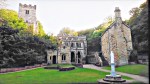
Saint Winifred’s Well at Holywell, North Wales.
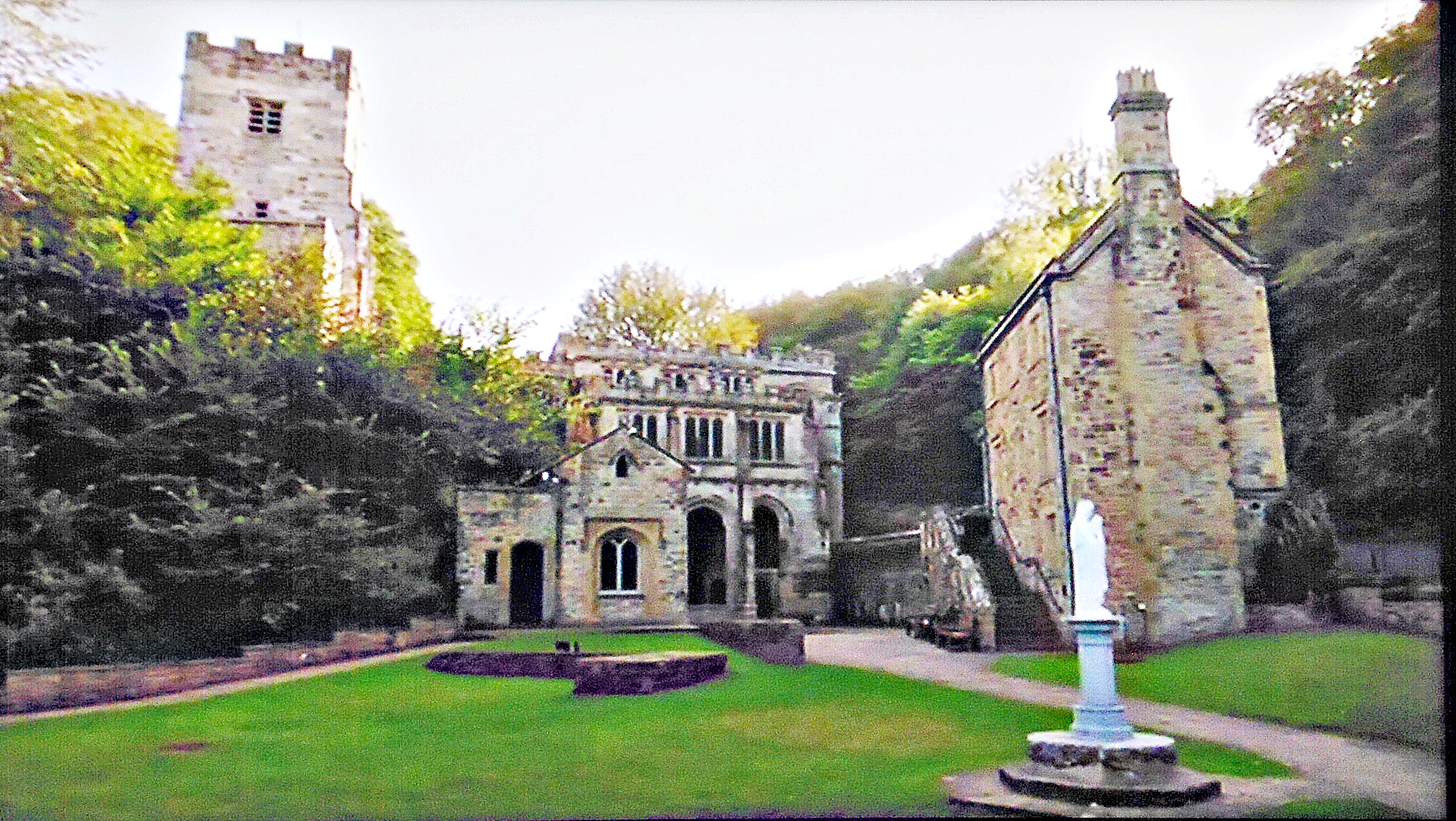
NGR: SJ 1854 7634. St Winifred’s Well (Ffynnon Gwenffrewi), a Roman Catholic and Orthodox shrine and pilgrimage centre is located on Greenfield Street in Holywell (Treffynnon), Flintshire (Sir y Fflint), North Wales. St Winifred was the daughter of Thenith ap Eylud and Gwenlo of Tegeingl. Legend says that in the early 7th century AD a spring of clear healing water gushed forth where St Winifred (Gwenfrewy) was martyred after she rejected the advances of Prince Caradoc ap Alyn of Penarlag (Hawarden), after which she was restored to life by her uncle, St Beuno. Sometime later Thenith and St Beuno sent Winifred to Gwytherin on the river Cledwin near Conway, to be educated by St Elerius, her cousin, and where eventually she would succeed St Theonia, mother of St Elerius, to become abbess of a nunnery. Many miraculous cures have taken place at the well, all of which have been ascribed to the healing water which still gushes forth from deep underground. Crutches were left behind at the well after pilgrims were healed of their infirmities. St Winifred was said to have died at Gwytherin in 650 and to have been buried in the churchyard there. St Winifred’s feast day is held on the 3rd of November. The relics of St Winifred were translated to Shrewsbury Abbey in the 12th century, but a fingerbone was given to a Roman Catholic convent in Holywell.
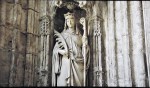
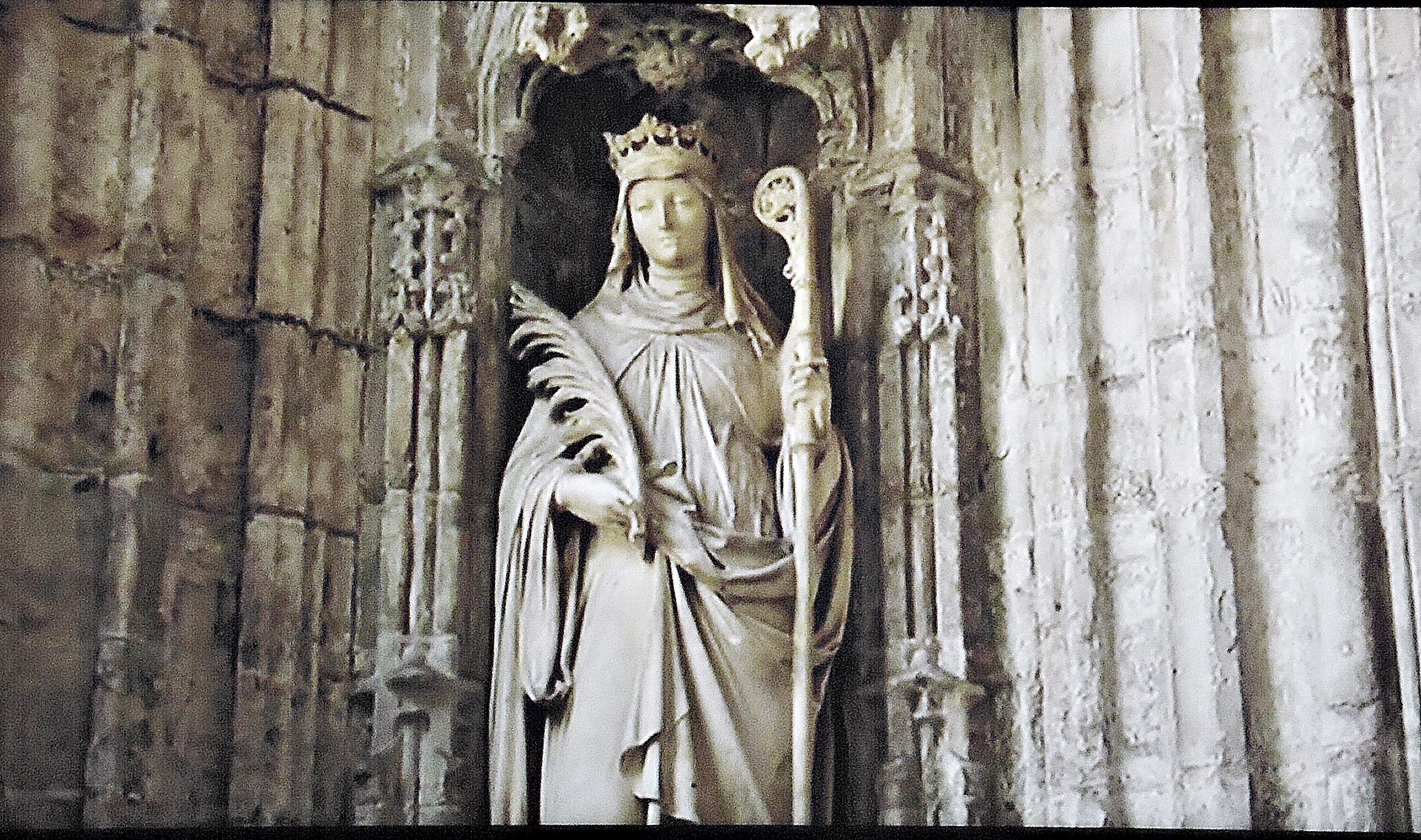
Statue of St Winifred at St Winifred’s Holy Well
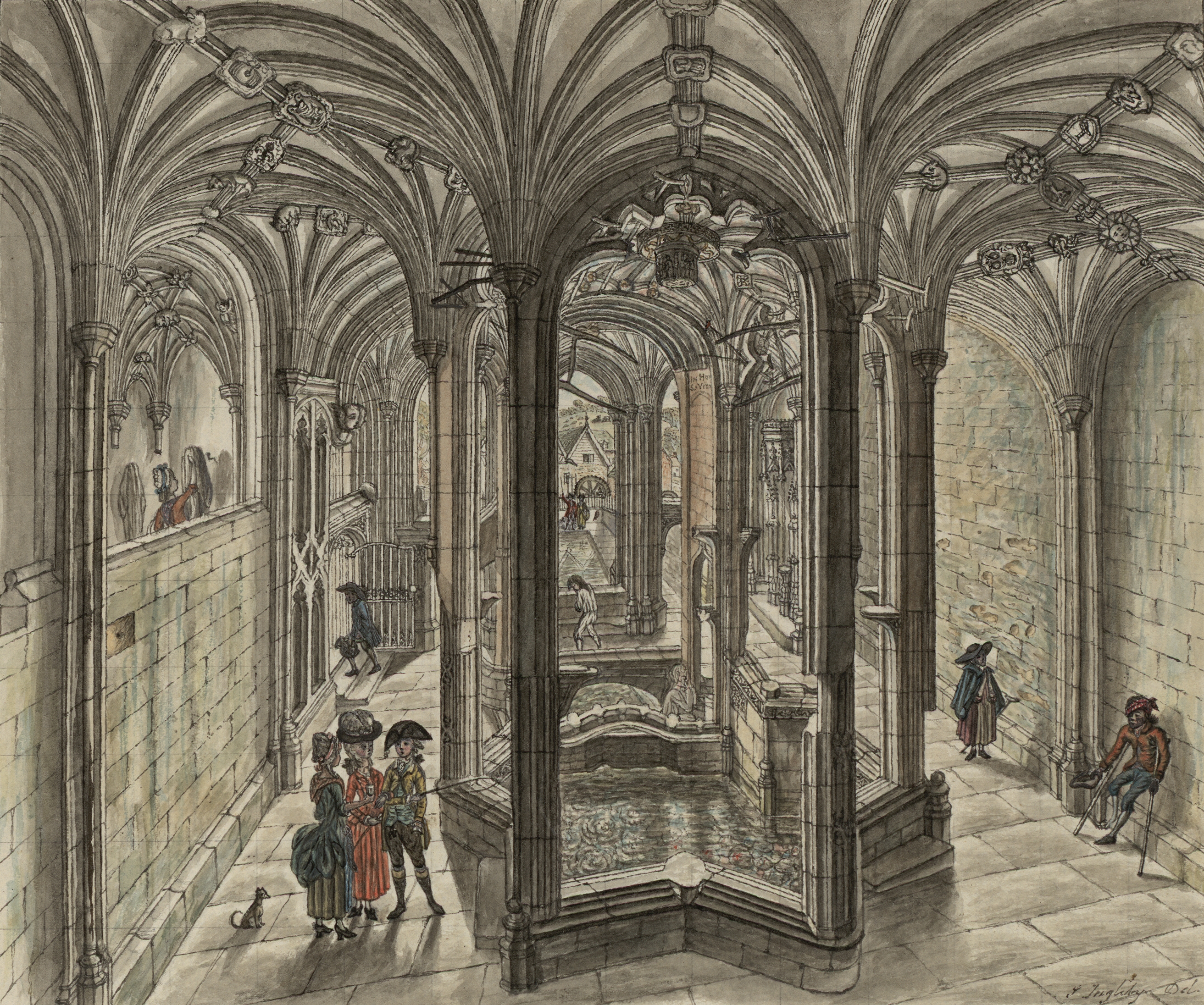
The holy well of St Winifred first became a place of pilgrimage in the 12th century, while the Perpendicular (Gothic) building and star-shaped well chamber with its vaulted ceiling and carvings on bosses dates back to the late 15th century. Depicted on the carved bosses on the fan-vaulted ceiling are St Beuno, Earl Stanley and Lady Margaret Beaufort along with other more comical figure carvings. The chapel that stands above the well was built by a royal beneficiary, Lady Margaret Beaufort, Countess of Richmond and Derby and mother of King Henry VII between 1486-1500. The saintly Lady Margaret (1443-1509) also built three other churches in northeast Wales. There is a very fine life-size statue of St Winifred at one side of the well building; she is depicted with a crown of martyrdom on her head and holding a palm branch in one hand (signifying martyrdom) and an abbesses crozier in her other hand. Today, the holy well is still a pilgrimage centre and shrine, with pilgrims starting their walk here at St Winifred’s Well and traversing the ‘Pilgrims’ Path’ across the rest of North Wales, taking in several other churches and holy wells, which are associated with the Welsh saints: Beuno, Celynnen, Cybi and Digain – amongst others.
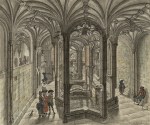
St Winifred’s Well crypt by J. Ingleby (Creative Commons).
Robin Melrose writing in 2016 tells us about St Winifred of Holywell. He says that:- “Wales’ most famous female was undoubtedly Gwenfrewi, better known as Winifred and associated with Holywell in Flintshire, northeast Wales. According to the 14th-century Life of St Beuno, which draws on material from Robert of Shrewsbury’s 12th-century life of St Winifred, Winifred was the only child of noble parents, and a virgin. One Sunday, whilst her parents were at church, the local ruler Caradog tried to rape her. Escaping, Winifred fled towards Beuno’s church: As she reached she reached the door of the church, he caught her up and struck off her head with his sword, which fell into the church while her body remained outside. Beuno and her mother and father saw what had happened, and Beuno stared into the face of the king and said “I ask God not to spare you and to respect you as little as you respected this good girl.” And in that moment the king melted away into a lake, and was seen no more in this world.
“However, Winifred miraculously survived this fatal blow: Beuno took the girl’s head and placed it back with the body, covering the body with his cloak and saying to her mother and father who were mourning for her: “Be quiet for a little while and leave her as she is until the Mass is over.” Then Beuno celebrated the sacrifice to God. When the Mass was finished, the girl rose up entirely healed and dried the sweat from her face; God and Beuno healed her. Where her blood fell to earth, a spring was formed, which even today still heals people and animals from their illnesses and injuries.
“The spring formed from the girl’s blood is St. Winefride’s well in Holywell, a popular center of pilgrimage in the Middle Ages, and still a center of pilgrimage today. The legend of Winefride is fantastical, but there was a real Winefride. She was related to the royal family of Powys: Beuno was actually her uncle; and St Tenoi, whom she succeeded as abbess of Gwytherin, her great-aunt. Most revealingly, she had a brother Owain, who killed Caradog in revenge: indicating that, whatever the exact truth of her death-and-resurrection legend, it does have a basis in historical fact. Winefride eventually became abbess at Gwytherin on the River Cledwen in Conwy, north Wales, where she died. Her grave there was a place of pilgrimage until her body was taken to Shrewsbury in 1138. Recently “a fragment of an eighth-century reliquary from Gwytherin, the Arch Gwenfrewi (Winifred’s Casket), was found, witnessing her status as a recognised saint almost from the moment of her death in c.650 – with the earliest such surviving evidence for any Welsh saint”. It is possible that Gwytherin was the original center of her cult – the first mention of Holywell was in 1093, and the holy well and chapel date from the 15th century.”
Janet & Colin Bord (1986) tell us more about the well and they say: “The people who visited holy wells in the hope of a cure clearly believed that the wells had the power to cure, and the long survival of holy wells demonstrates the strength of this belief. Successful cures reinforced the belief, being remembered, retold and sometimes recorded. The famous St Winefride’s Well at Holywell (Flint) has seen many cures. In 1606 Sir Roger Bodenham visited the well and obtained instant relief from a painful disease of the feet after every known medical remedy had been tried. In the nineteenth century a pamphlet was published entitled ’Authentic Documents relative to the Miraculous Cure of Winefred White, of Wolverhampton, at St Winefred’s Well, alias Holy well, in Flintshire, on 28th June, 1805, with Observations thereon’, describing how a paralysed servant girl was cured after a pilgrimage to the well. More recent cures are recorded in the Catholic press from time to time, as in 1916 when Scotsman John MacMullan’s cure of a chronic spinal disease was reported in the Catholic Times and Catholic Opinion. However, not all pilgrims to Holywell have left cured, the unfortunate Sir George Peckham having actually died at the well. According to an account of his life, he had ‘continued so long mumbling his paternosters and Sancta Winifreda ora pro me, that the cold struck into his body and after his coming forth of that well he never spoke more.”
Audrey Doughty wrote in 2001 about St Winifred’s Well and she says that: “Ffynnon Wenfrewi or St Winifred’s Well at Holywell is recorded in rhyme as one of the ‘Seven Wonders of Wales’ and the town, as both its Welsh and English names suggest, grew up because of it. It was widely known throughout Britain with pilgrimages reputedly being made here from as early as the 7th century. The well was in Norman hands for a century and a half or so, after the Countess of Chester granted it to the St Werburg Monastery in 1093 but, by 1240, Dafydd ap Llywelyn bestowed it upon Basingwerk Abbey in whose hands it remained until 1537.
“Many titled people made pilgrimages to St Winifred’s and it was sometimes favoured by the English monarchy. Richard I visited it in 1189; it seems probable that Henry V did so in 1416, and that Edward IV followed in both their steps. Financial assistance towards the cost of a priest was granted by Richard III and in the 15th century the Countess of Richmond built an ornate Gothic chapel over it. In 1686 James II and his queen went to the well to ask that a son be born to them and, wonder of wonders, a son was born in 1688.
“Known as the ‘Welsh Lourdes’ for its miraculous cures, the well inspired many a bard and painter, and sketches and engravings of it were popular throughout Britain. As has been said previously, the well of St Winifred even managed to survive the Reformation because the chapel was too famous and, more to the point, far too lucrative. The sum of ten pounds was received in offerings at the well in 1535 alone but, for a while at least, the Protestants gained little from it. The Catholics endeavoured to get their hands on the money by soliciting offerings in boxes that were then taken into the well chapel. The assembly was told that it was better to give the money to them rather than the king – a practice that the lessee, not unnaturally, did his best to stop. As Protestants and Catholics congregated in their thousands, the powers that be decided that, for the most part, it was better to turn a blind eye to the religious rituals and sit back and take the money. However, ‘big brother’ was always ‘watching’. A record was kept of the numbers and names of Catholics who turned up on St Winifred’s Day in 1629. The consequence was that the Chief Justice of Chester issued orders – which he attempted to enforce – to prevent any further pilgrimages. In 1637, the iron posts around the spring were removed and the image of St Winifred ‘spoiled’.
Chris Barber, writing in 1987, tells us that: “This is the most famous of all Welsh healing wells and according to tradition the waters have been flowing for nearly thirteen hundred years. During that time it has been visited by throngs of invalids. It may be claimed that the town of Holywell owes not only its name but its very existence to the well. In 1880 an American visitor, Wirt Sykes, wrote: “This well discharges twenty-one tons of water per minute, feeds an artificial lake, runs a mill and has cured unnumbered thousands of human beings of their ills for hundreds of years. It is surely one of the wonders of the world, to which even mystic legend can only add one marvel more.”
To be continued…………..
Sources/References and associated web links:-
Barber, Chris, Mysterious Wales, Paladin, London, 1987.
Bord, Janet & Colin, Sacred Waters, Paladin Books, London, 1986.
Doughty, Audrey, Spas And Springs Of Wales, Gwasg Carreg Gwalch, Llanrwst, Wales, 20012.
Melrose, Robin, From Sacred Waters and Pagan Goddesses to Holy Wells, PublishNation, 2016.
https://cadw.gov.wales/visit/places-to-visit/st-winefrides-chapel-and-well
https://en.wikipedia.org/wiki/St_Winefride%27s_Well
More info here: https://commons.wikimedia.org/wiki/File:St_Winifreds_Well_by_J_Ingleby.jpg
https://www.mythslegendsodditiesnorth-east-wales.co.uk/st-winefrides-well
Copyright © Ray Spencer, The Journal of Antiquities, 2025.



 The Journal Of Antiquities
_(14590965339).jpg)

_(14779372521).jpg)

