The Journal Of Antiquities

Ancient Sites In Great Britain & Southern Ireland


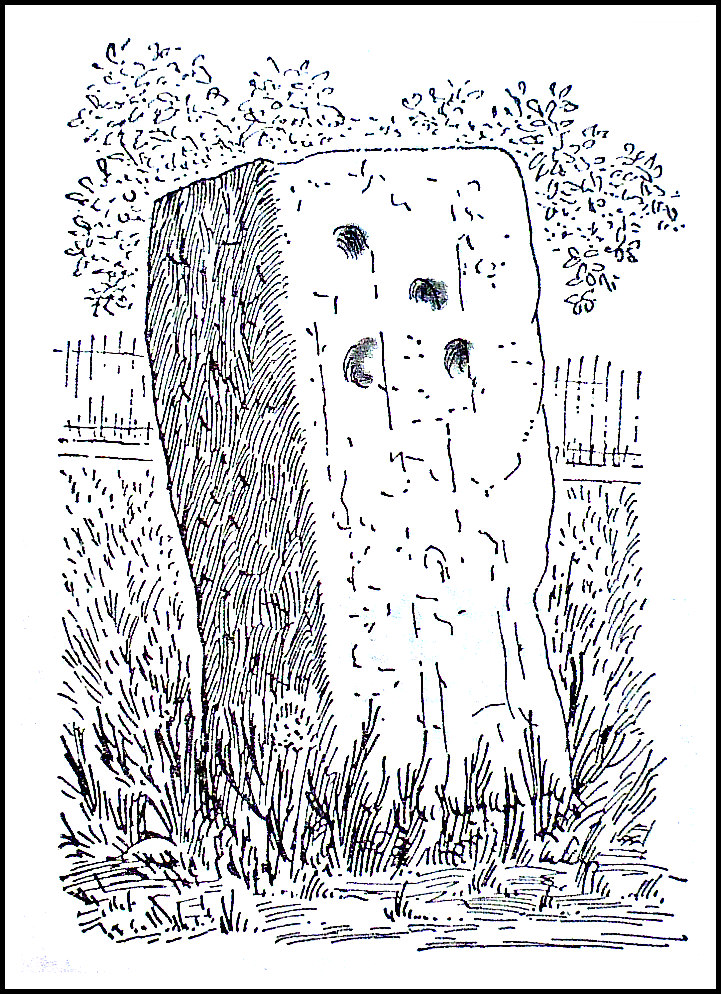
Torphichen Sanctuary Stone, West Lothian, Scotland

Torphichen Sanctuary Stone

   OS Grid Reference: NS 96842 72506. An ancient standing stone known as the ‘Torphichen Sanctuary Stone’ is to be found at the west-side of the kirkyard and preceptory of Torphichen parish church, 2¼ miles to the north of Bathgate in west Lothian, Scotland. The stone has five small prehistoric cup-marks, but also a Celtic-style carving from the Dark Ages when St Ninian lived here, while on the top of the stone there is a medieval incised cross and a small hollow.  It is the central-most stone of three – the other two being within a 1 mile radius of the preceptory. The thinking is that the santuary stone came from the ancient site of Cairnpapple Hill, about 1½ miles to the east. Torphichen’s medieval church and preceptory are located at the east-side of the village on The Bowyett, which runs off from the B792 road. You will find the little standing stone set amongst the gravestones at the west-side of the grassy kirkyard.

   The little standing stone was set up here in the 12th century by the Knights Hospitallers (Knights of St John) to mark out a place of sanctuary or refuge for local people and pilgrims from further afield who wished to seek ‘a place of safety here’, or more likely the stone was already here when the Knights founded their preceptory/hospital and church in 1168; an incised cross was carved on the top of the stone and the little hollow carved to either hold a cross or maybe holy water? But the stone was used at an earlier date by St Ninian, who had settled here in the 4th century and, in the 7th century St Fechin, an Irish monk and missionary from the monastery of Fore, County Westmeath, apparently also made use of this standing stone – the Celtic-style carving on the stone would date from this time. The five small cup-marks on the side of the stone date from the early Bronze Age when it stood on Cairnpapple Hill where there is a Neolithic henge monument and Bronze Age cairn. The pre-ceptory which was the Knight’s Hospitallers Scottish base, is now in ruins although the central tower, west tower-arch and transepts remain; the nave was rebuilt in the 17th century and now forms part of the present parish church. Some of the domestic buildings and parts of the hospital also still stand.

   There are two other associated sanctuary (refuge) stones (West and East) both of which stand about 1 mile distant from the central stone here in the Torphichen kirkyard. The W stone, which had a Maltese cross carved upon it, is located at Westfield farm (OS grid ref: NS 9437 7211) while the E stone is at Easter Gormyre farm near the hamlet of Gormyre (OS grid ref: 9806 7311), according to the Canmore website entries.

Sources of information and related websites:-

Ancient Monuments — Scotland, Volume VI, H. M. Stationery Office, Edinburgh, 1959.

Bottomley, Frank, The Abbey Explorer’s Guide, Kaye & Ward, London, 1981.

The AA, The Illustrated Road Book Of Scotland, The Automobile Association, London, 1963.

http://www.megalithic.co.uk/article.php?sid=30653

https://en.wikipedia.org/wiki/Torphichen_Preceptory

http://www.armadale.org.uk/torphichen.htm

https://canmore.org.uk/site/47929/torphichen-churchyard-refuge-stone

https://canmore.org.uk/site/48010/westfield-farm-refuge-stone

https://canmore.org.uk/site/47915/gormyre-refuge-stone

                                                                                     © Ray Spencer, The Journal Of Antiquities, 2017. 


1 Comment

The Blowing Stone, Kingstone Lisle, Berkshire (Oxfordshire)

Blowing Stone at Kingstone Lisle, Berks.

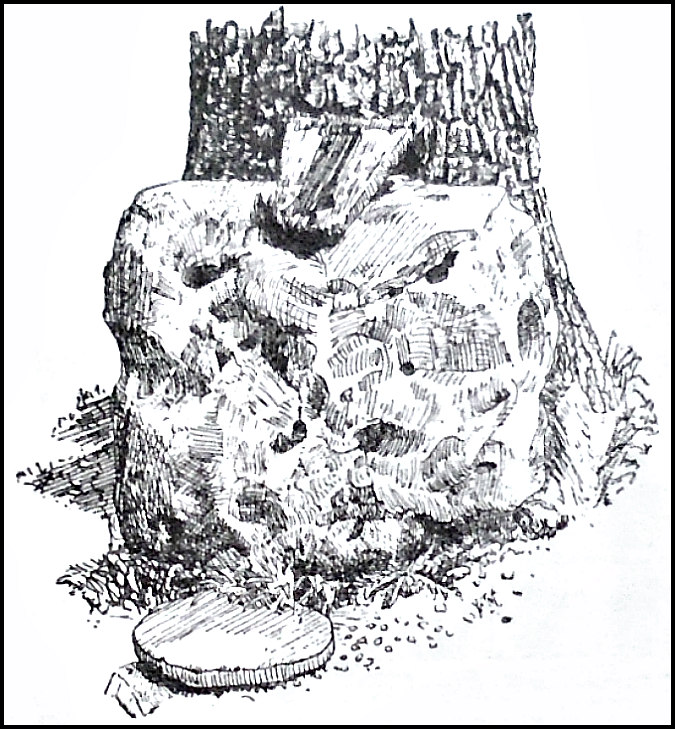
   OS Grid Reference: SU 32408 87078. A strange and curious stone standing inside a fenced-off area next to a row of quaint cottages on Blowingstone Hill, at Kingstone Lisle, formerly in Berkshire, now Oxfordshire, is the so-called ‘Blowing Stone’, a squat-shaped lump of ancient rock with deep holes in it that is ‘said’ to have originated on White Horse Hill nearby, when it was a perforated sarsen stone. It has a number of myths and legends attributed to it from the time that it was known as the King Stone; the village taking its name from this. The stone also figures in a well-known book that was read by many-a school-boy. This apparent ‘curiosity of geology’ is located just to the south of the village itself and the B4507 road, between the towns of Swinden and Wantage. Kingstone Lisle Park is over the road on the opposite side of the lane from where the stone is now a resident ancient monument, though it used to stand in the garden of the cottage close by, which used to be the village inn!

   The Blowing Stone, also known as King Stone, is in fact a sarsen stone that was originally to be found upon White Horse Hill, 3 miles to the southwest, but was moved to its present location in the mid-18th century. It is curious lump of stone with many geologically-formed perforations, maybe the result of fossilized plants or ancient tree branches falling out of the stone leaving holes; some quite large holes or perforations that go all the way through from one side to the other. But it is not a particularly large stone being just 3 feet in height and about the same in width.

   The stone featured in the famous novel of 1857, ‘Tom Brown’s School Days’ by Thomas Hughes (1822-1896) – when it was referred to as the ‘Blawing Stwun’. Local legend has it that by sounding a note through the largest hole, or by blowing and bellowing through the holes, the sound made by doing this is audible as an echo up to 3 miles away – and that King Alfred the Great summoned his Saxon army into battle against the Danes at nearby Ashdown by doing just that, in the form of a trumpet call! It is also claimed that anyone sounding a high-pitched note through the Blowing Stone (that can be heard on White Horse Hill to the southwest), will be, or would be, a future king of England, or so The Legend tells us. Something similar, perhaps, to the legend of King Arthur, although he supposedly pulled a sword out of a rock. 

Sources of information and related websites:-

Reader’s Digest, Folklore Myths and Legends of Britain, Second Edition, The Reader’s Digest Association Limited, 1977.

The AA, The Illustrated Road Book Of England & Wales, The Automobile Association, London, 1961.

https://en.wikipedia.org/wiki/Blowing_Stone

http://www.berkshirehistory.com/archaeology/blowing_stone.html

The Blowing Stone

http://www.megalithic.co.uk/article.php?sid=6963

                                                                                   © Ray Spencer, The Journal Of Antiquities, 2017.


Robin Hood’s Well, Helmshore, Lancashire

Robin Hood’s Well near Helmshore, Lancashire.

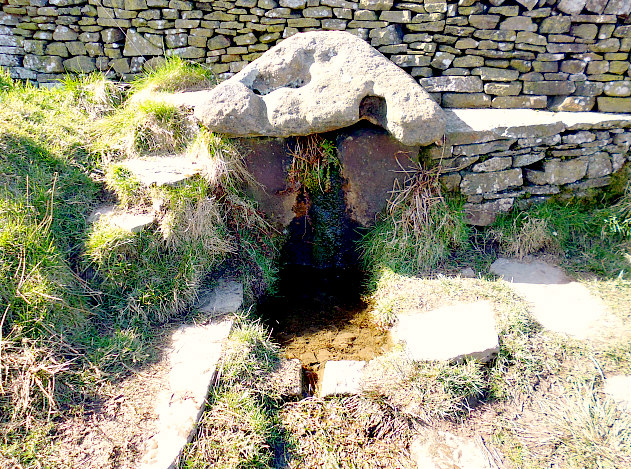
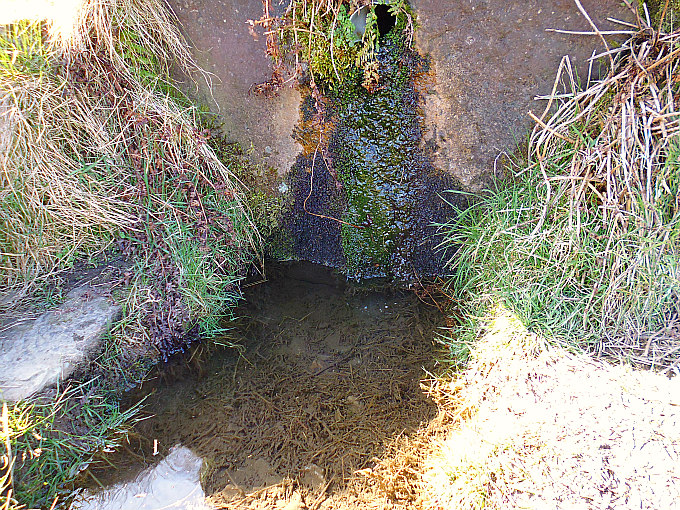
   OS Grid Reference: SD 77860 19544. At the north-eastern edge of Holcombe Moor and beside Moor Road, locally called Stake Lane, 1 mile south of Helmshore, Lancashire, is Robin Hood’s Well/Spring. The well is located at the side of the old pilgrim’s route that led to Whalley Abbey and which passes close to the medieval Pilgrim’s Cross, that is now nothing more than a stone-base on the moor. There are no records to say that Robin Hood’s Well ever had healing powers, or to it being a sacred spring, but it must have had some holiness attributed to it by the monks and pilgrims who visited it and drank of its waters back in the mists of time. And there is nothing that says Robin Hood the outlaw of Sherwood Forest ever visited the well, though there is a Robin Hood’s Inn down in Helmshore village. It may originally have been called Pilgrim’s Well.  To reach it walk south along Moor Lane for 1 mile from the village of Helmshore, or go up the footpath from the B6214 (Helmshore Road) near Pleasant View Farm. Follow the path across the farm track and up over the fields over the wall stiles to the rough track (Stake Lane) at the top. Go through the wooden gate on the right and the well is below the wall in front of you.

Robin Hood’s Well.

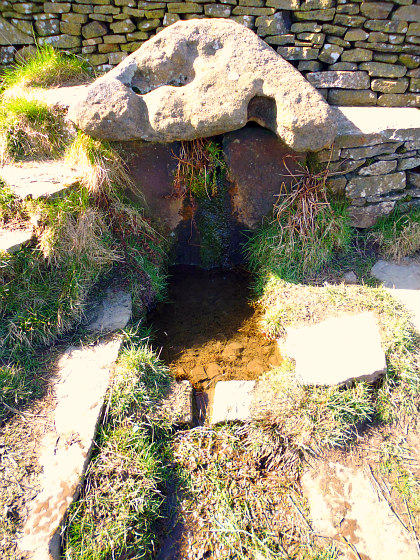
Close-up of the pool below the spring.

   The author John Crawshaw writing in Source – The Holy Wells Journal, gives us a fair bit of interesting information with regard to the well. He says that: “Situated near Helmshore, on the edge of the ancient  Forest of Rossendale in Lancashire is Robin Hood’s Well. This well is near an ancient pilgrim’s route which passes by the Pilgrim’s Cross (which was in existence in A.D. 1176), on Holcombe Moor, and goes through the town of Haslingdon on its way to Whalley. In Anglo Saxon times Whalley church was an important minster and the mother church of an enormous parish. Later, in the medieval period, several chapels-of-ease were attached to Whalley church for the “ease” of the scattered population providing access to the Mass and the sacraments

   “After the move made by the Cistercian monks of Stanlow to Whalley at the end of the thirteenth century, traffic would have increased along this route. About one mile to the north of Pilgrim’s Cross, near this pilgrimage route is Robin Hood’s Well.

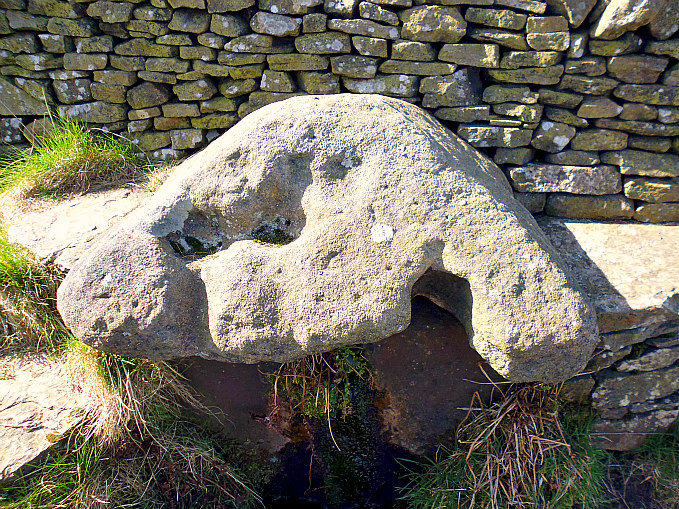
Pyramid-shaped stone above the well/spring.

   “The spring issues  out from beneath a large, worn stone capping: shaped rather like a flattened pyramid with a blunt apex. This is set against a drystone wall by the side of Stake Lane. The water falls from the well-head into a small pool and the whole arrangement of stones has the appearance of great age. The flattened pyramid-shaped piece of sandstone covering the well has several worn, carved indentations upon it, one of which, near the left-hand side at the front, is a wide groove. It is possible that this was made by the wearing down of the stone by a chain securing a drinking cup at its end. However, no trace of any chain or cup can now be discerned.”

   Mr Crawshaw goes on to say that: “Though it is reasonable to assume that this well was used by pilgrims on their way to Whalley church and later, the great Cistercian abbey there. I have not been able to discover any recorded references to its original dedication: nor does there seem to be any written record reciting any healing properties attributed to the water. It is possible of course that any such references are lost or were never recorded, or perhaps the well’s reputation  in the middle-ages was merely that of a providential source of drinking water on a pilgrim’s route, where prayers were said in gratitude for the slaking of the pilgrim’s thirst.

   “I have a theory that in fact the name of the well may have been brought into use following the 16th century religious reformation. I understand the term , “the play of  Robin Hood” was used by the 16th century Lancastrian religious reformers as a derogatory nick-name to describe the rituals and ceremonies of the old English Catholic Church. These reformers had no use for pilgrimages to holy sites such as the ancient parish churches, the shrines of saints or holy wells; indeed they denounced them as being of no spiritual value.

   “One of the most famous Lancastrian reformers, John Bradford, in his Christmas sermon delivered in Manchester in 1552, threatened the people that, if the town did not “readily embrace the Word of God, the Mass would be said again in that church, and the play of Robin Hood acted there”, ¹ which did indeed come to pass during the reign of Queen Mary. I believe that this ancient spring derives its name from this time, when the practice of visiting such wells was being denounced as “superstitious”.

   “The Elizabethan “settlement of religion”, having swept away the piety and traditional Catholic practices of the old Ecclesia Anglicana, had no use for pilgrimages which, in theory at least, it had outlawed. So, following the dissolution of Whalley Abbey and the official prohibition of the old Faith, this spring on an ancient pilgrim’s route appears to have fallen into being regarded merely as a source of water by the side of a little-used moorland lane.” 

Sources of information and related websites:-

Crawshaw, John, (Robin Hood’s Well), Source—The Holy Wells Journal,  New Series No 6—Summer 1998, Pen-y-Bont, Bont Newydd, Cefn, St Asaph, Clwyd, 1998.

¹ Haigh, Christopher, Reformation and Resistance in Tudor Lancashire, 1975, Cambridge University Press, Ch.11, 168.

http://www.pastscape.org.uk/hob.aspx?hob_id=44289

https://en.wikipedia.org/wiki/Helmshore

https://haslingdens.blogspot.co.uk/2016/01/historic-water-troughs-and-spring-fed.html

                                                                                  © Ray Spencer, The Journal Of Antiquities, 2017.


1 Comment

Wind Hill Cairn, Cheesden, Near Rochdale, Greater Manchester

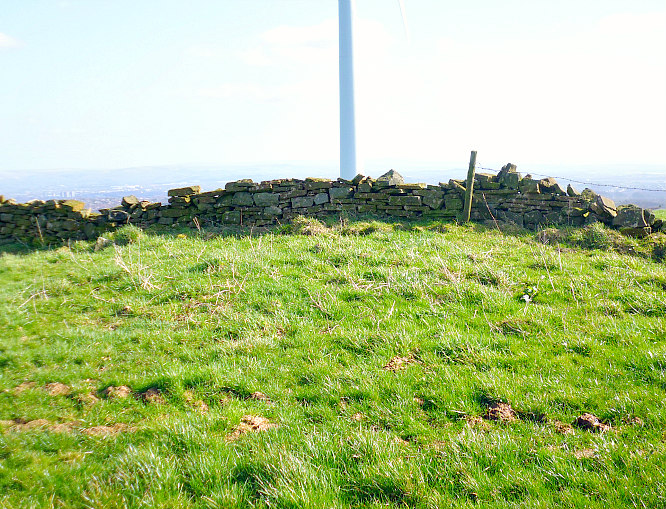
Wind Hill Cairn at Cheesden, near Roch- dale (the north-side).

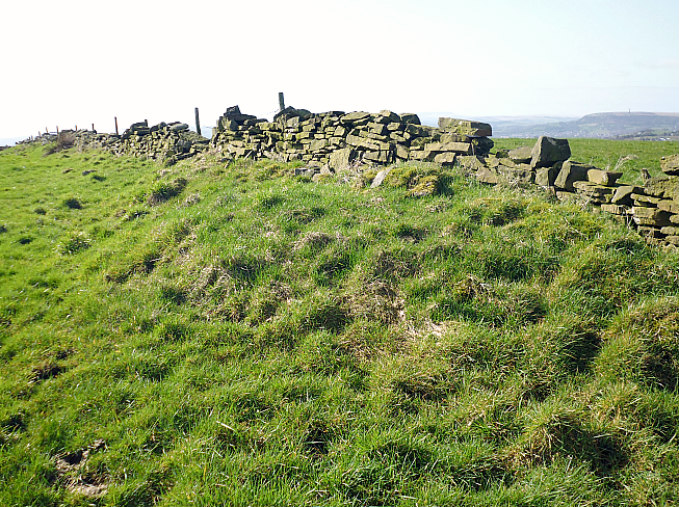
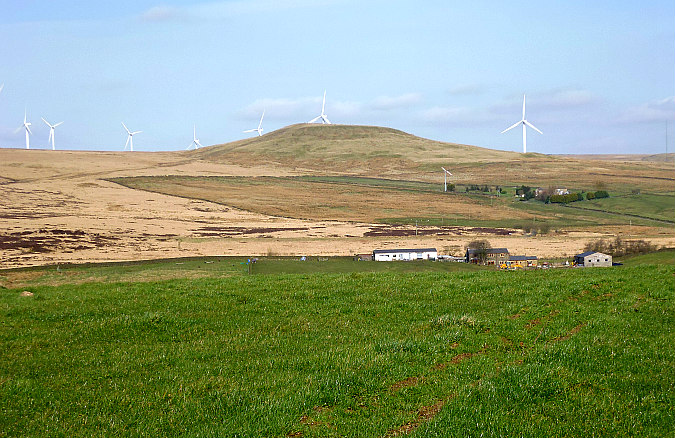
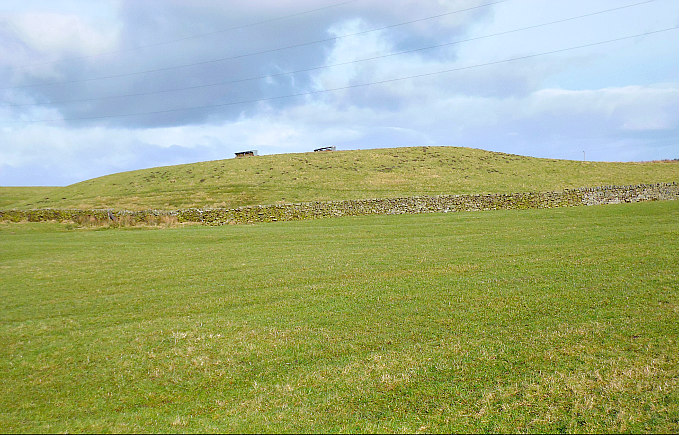
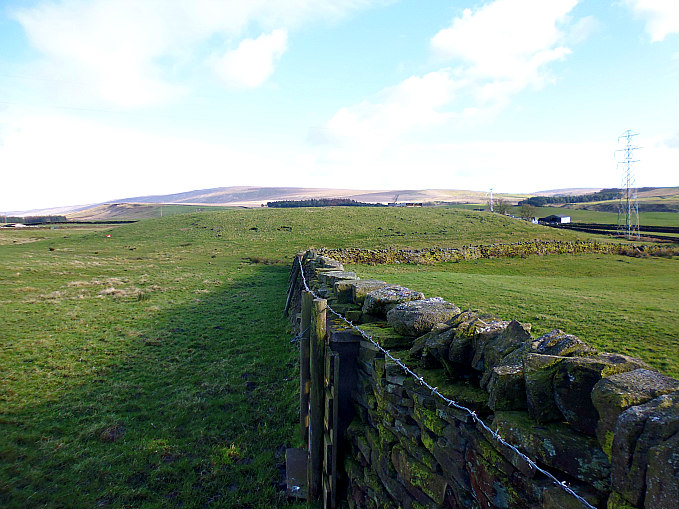
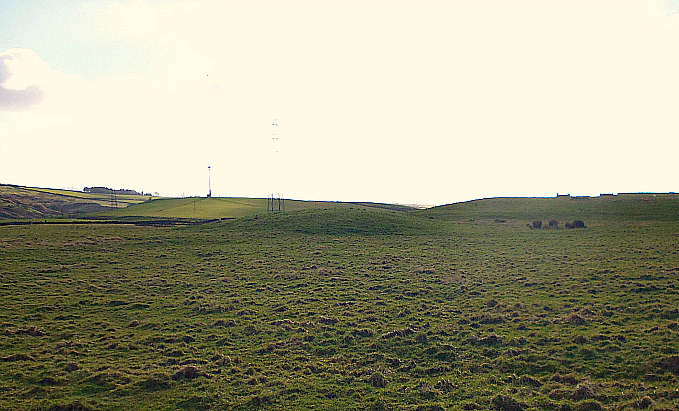
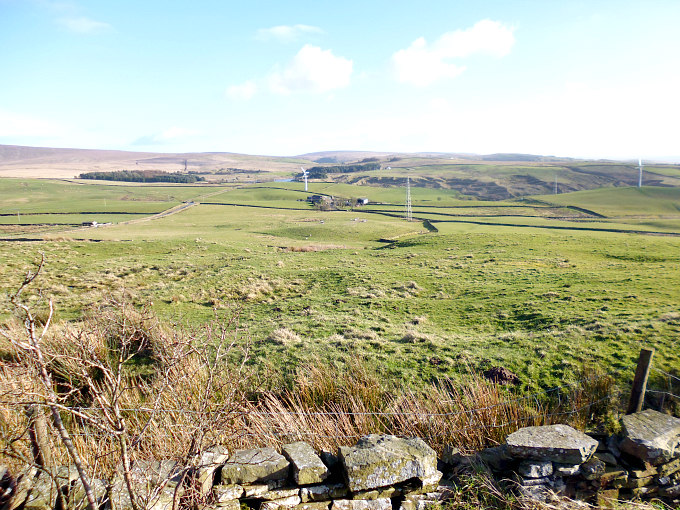
   OS Grid Reference: SD 83262 14945. In a farmer’s field at the side of Ashworth road, Cheesden, near Rochdale, Greater Manchester, is Wind Hill Cairn, dating from the Beaker Period of the Bronze Age. Now it is nothing more than a low, grassy mound at either side of the more recent drystone wall. The cairn stands at the north side of Wind Hill, 298m above sea-level and overlooking Knowl Moor, with Knowl Hill itself rising over to the east beyond Edenfield road. A little further down the lane is Ashworth Moor Reservoir and, on the opposite side of Edenfield Road, is the famous Owd Betts public house. The cairn is in a damaged condition due partly, at its north-side, to farming, but on its south-side there is less damage and has, therefore, kept its circular identity. There is a footpath heading east across Wind Hill from Ashworth road, just above Wind Hill farm and the wind turbine, but the cairn is partly on private land (at its northern-side) where there is a locked metal gate next to the wall – beside Ashworth road.

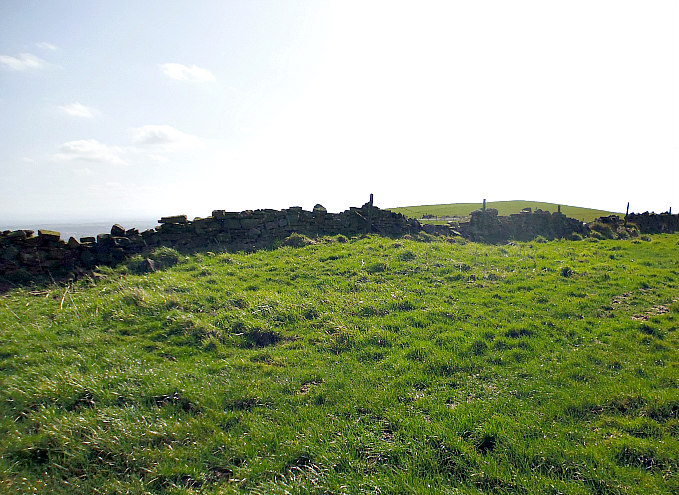
Wind Hill Cairn, Cheesden (at the northeastern side).

Wind Hill Cairn at Cheesden near Roch- dale (the south-side).

   Originally Wind Hill Bronze Age cairn had a diameter of 10.45m (34 feet) and a height of 0.75m (2-3 feet) but it is now less than that due to destruction at its N side. According to the ‘Lancashire Archaeological Bulletin’ (1984) with the primary reference: Tyson, N (1972) at the end of the excavations by Bury Archaeological Group between 1968-72: this is a ruined cairn with a kerb of horizontal slabs. There was an opening to the E which was 6 feet wide with a subrectangular area outside that was defined by inward-leaning slabs that are further enclosed by a “satellite kerb”. Both of these kerbs were finally concealed. No grave pits were found, but at the cairn’s centre a flint knife, pebble hammer and a V-bored ‘jet’ button were discovered. Further to this information: there was a cist of sand-stones at the E side. The central and W parts of the cairn were denuded; the E and S sides were in a better condition and still visible. The dry-stone wall running in a straight-line through the middle of the mound ‘was’ dug deep into the structure, causing further destruction, and some of the stonework from the cist may have ended up in the wall itself, or could still be in ‘situ’ in the mound? There looks to be another “possible” tumulus at SD 83461 15136, some 290m to the east.

Knowl Moor & Knowl Hill seen from Ashworth Road, Cheesden.

   In 1905 a Late Bronze Age socketed axe (palstave) was dug up by workmen building the Ash-worth Moor Reservoir, just along the road from Wind Hill cairn. There have also been a number of archaeological finds on Knowl Moor and on Knowl Hill itself including arrowheads in a variety of shapes: lozenge, leaf, stemmed and barbed, and many flints in varying sizes and a thumbstone. It would seem, though, that these finds have not originated from ‘settlements’, but from pre-historic man simply roaming the higher ground above the forested areas beside the river Roch – where today we see the highly populated towns of Rochdale, Heywood and Bury. On Hamer Hill (Rooley Moor) above the town of Rochdale – some recumbent stones were recently discovered which has led archaeologists to consider the distinct possibility that they form a stone circle, and on nearby Hunger Hill there are possible burial mounds. There have also been a number of coin finds from the Roman period in the Rochdale and Heywood areas.

Sources of information and related websites:-

Lancashire Archaeological Bulletin, Vol 10, No. 2/3, May & July, 1984.

Tyson, N., A Bronze Age Cairn at Wind Hill, Heywood, Lancs. Bury Archaeological Group, 1972.

http://www.buryarchaeologicalgroup.co.uk/windhill.html

http://heywoodmonkey.blogspot.co.uk/2012/04/bronze-age-heywood-beaker-th-moss.html

Recent Archaeological Discoveries in South East Lancashire

https://en.wikipedia.org/wiki/Cheesden_Valley

http://www.megalithic.co.uk/article.php?sid=18858

                                                                                  © Ray Spencer, The Journal Of Antiquities, 2017.


1 Comment

The Knave Hill Burial Mounds, Near Nelson, Lancashire

Knave Hill long barrow near Nelson, Lancashire

   OS Grid Reference: SD 89636 36991. On the lower slope of Knave Hill between Walton Spire and Float Bridge Farm, 2 miles east of Nelson, Lancashire, there are two burial mounds, one of which is quite a large, well defined long barrow, while the other one close-by is a smaller mound but is also probably a long barrow. They are thought to have originally been built in the early Bronze Age, but then in the 10th century AD to have been re-used for the burial of Viking warriors who had died in the slaughter of the Battle of Brunanburh (937 AD) which may have been fought in the vicinity of Knave Hill, or a few miles away in the Burnley area near the river Brun. There are 2 or 3 other small mounds in the vicinity, one of which is just visible at the northwest side of Knave Hill. The hill itself is sometimes spelt “Nave Hill.” To reach the site from Nelson town centre head up Netherfield road and then to the top of Barkerhouse road. Then turn left, then right, and follow Delves Lane (with Walton Spire on your left side). At the junction of four lanes go straight ahead and down the hill. On the left is a farm track (footpath) to Knave Hill farm. The mounds lie a short distance to the east of the modern barns.

Knave Hill long barrow.

   In a most excellent article for ‘Pendle & Burnley’ Magazine by the local historian by Mr H. Hindle (1987) we learn that “Knave Hill farm, only two fields below the ancient monolith (Walton Spire) probably derives its name from the Nave Hill burial, a long barrow measuring approximately 2oo feet long by 120 feet wide, and 14 feet high, close to which are two smaller round barrows. Collins New English Dictionary explains ‘Nave’ as the middle or body of a Church, so called because of its resemblance in shape to an inverted ship. Another indication to the antiquity of mans presence in the area is the nearby Ringstone Hill and the countless number of cairns and burial mounds.”

Knave Hill near Walton Spire (smaller mound).

   The other mound lies just a little to the east of the larger, long barrow, but is much smaller in overall size. This mound measures roughly 126 feet long, 90 feet wide, and is about 7 feet in height. It could be that this smaller mound is also a long barrow, with its origins in the early Bronze Age but re-used in the 10th century AD. However, these two mounds or barrows are not recorded on any OS maps as far as I can tell, but we do have three or so sources of information with regard to their history – those sources being H. Hindle, Thomas T. Wilkinson (19th century antiquarian of Burnley Grammar School) and John A. Clayton, who mentions these burial mounds in his works of 2006 and 2014. There is another burial mound (possibly even two mounds) at the northwest side of Knave Hill, close to Shelfield lane which skirts the hill upon which is Walton Spire (see link below), a Victorian cross that sits on top of an ancient battle-stone that may have its origins in the 10th century AD, or maybe even earlier. Knave, in place-name form, was probably originally Cnebba or Cnabha (Hill of Cnebba). There is also Jeppe Knaves Grave, a Bronze Age cairn, near Sabden in Lancashire (see link below). And there is a Knave Hill near Todmorden, west Yorkshire.

Knave Hill burial mounds (at centre) and other “possible” mounds, from Shelfield Lane.

   The Battle of Brunanburh in 937 AD was fought by a collection of rag-tag armies of Celts, Saxons, Norsemen and some others. King Athelstan and the Saxons ‘were’ victorious in the said battle. But where was the Battle of Brunanburh fought? Mr Hindle offers a local place-name: he suggests Emmot in the Forest of Trawden being a strong possibility. But Thomas T. Wilkinson writing in the mid-19th century offers several other possibilities: Saxifield and Daneshouse near the River Brun in Burnley, or between Warcock Hill, near the Long Causeway at Stipernden, and another Warcock Hill at the north side of Thursden Valley. Mereclough near Burnley is another contender for the battle site as there is an area there called “Battlefield”. Bonfire Hill between Briercliffe and Swinden is another strong possibility. Or could it have taken place on the moors above Bacup, Lancashire, or even at Bromborough on the Wirral? We will probably never know.

Sources and other related websites:-

Hindle, H., Colne & Surrounding Areas (article in Pendle & Burnley) Magazine No. 4 (Christmas Issue), Valley Press, Ramsbottom, Bury, Lancs., 1987.

Clayton, John A., Valley of The Drawn Sword, Barrowford Press, 2006. 

Clayton, John A., Burnley And Pendle Archaeology – Part One – Ice Age to Early Bronze Age, Barrowford Press, 2914.

Walton Spire, Nelson, Lancashire

Jeppe Knaves Grave, Sabden, Lancashire

http://www.barrowford.org/page123.html

http://placenames.org.uk/browse/mads/epns-deep-32-d-mappedname-003089

                                                                             © Ray Spencer, The Journal Of Antiquities, 2017.


1 Comment

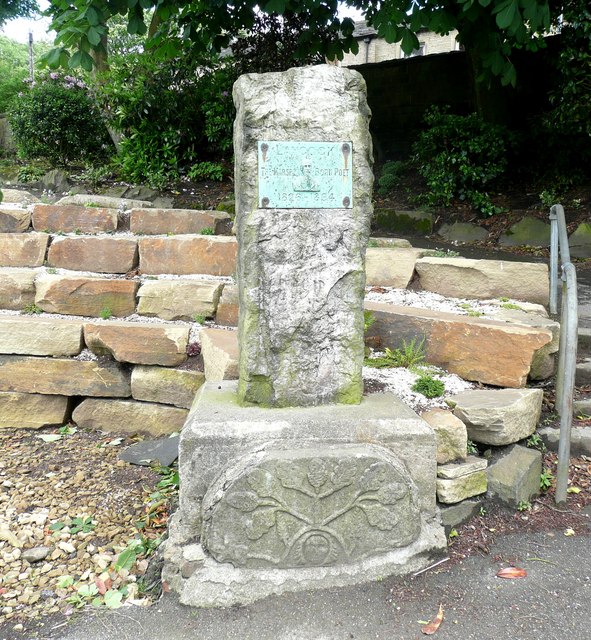
Medieval Stone Carving In Marsden Park, Marsden, West Yorkshire

The Laycock Memorial in Marsden Park by Humphrey Bolton (Wikimedia)

   OS Grid Reference: SE 05080 11474. At the base of a memorial to the Lancashire poet Samuel Laycock in Marsden Park at Marsden, 8 miles southwest of Huddersfield, west Yorkshire, there is  a curious carved stone, which has been called  ‘Celtic’  by local historians down the years. It is strangely carved with elements of nature that do indeed seem to be “Celtic” in origin. However, the stone is more likely to be late medieval. But where did this curious carved stone come from? No one seems to know. Maybe it came from some Medieval church or priory (though there is no record of that), or from some sacred grove beside a riverbank. The monument was actually set up to commemorate the Lancashire dialect poet Samuel Laycock (1826-93) who was born in Marsden, but his poetry was mostly about Lancashire and the ‘hardships’ of the Cotton Industry. Laycock died in Blackpool, Lancashire. The monument with its curious carved stone stand close by the bandstand in Marsden Park near Carrs Road. So just head for the bandstand and the monument is on the other side – just opposite the war memorial – dedicated to local men who died in the Great War.

Celtic Stone in Marsden Park, at Marsden, west Yorkshire.

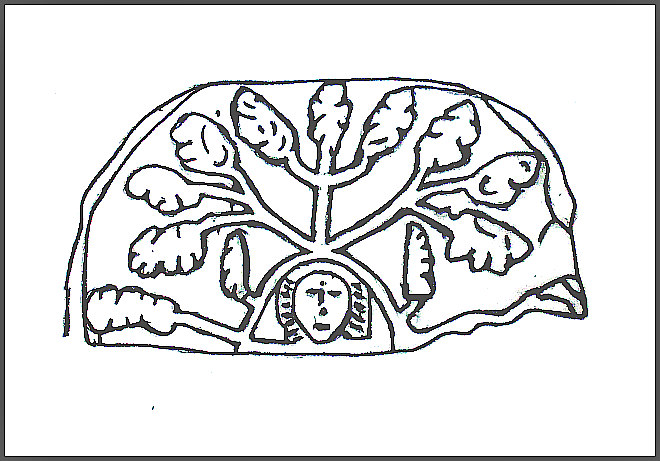
   Apparantly the curious carved stone was found at Marsden in the late 19th century and then in 1911 it was seen fit to place it at the base of Samuel Laycock’s memorial in Marsden Park. But why? Maybe it was seen as ‘a fitting tribute’ to such a great poetic genius for Samuel Laycock was just that. The stone is thought to be Late Medieval and to date probably from somewhere be-tween the 14th-16th centuries, but could it be much earlier? A few local historians have con-sidered it to be Celtic in origin! Well at least the carvings look to be Celtic! And also carved on the stone is what looks to be the head of a Celtic sun god with sunrays radiating from it. Or is this carving a depiction of ‘The Tree of Life’- maybe. Another theory being that the oval-shaped face is that of a Celtic saint complete with a halo; the crown of oak leaves being associated with saints of the Old British Church both in folklore and literature.

   In an article called Reading the Environment by David Fletcher & David Ellis in the ‘Pennine’ magazine (1980) we are told about this curious Celtic stone in Marsden Park. They say that: “At the base of this modest monument is a mysterious stone carved in low relief depicting an oval-shaped face with a garland or crown of oak leaves, acorns and flowers. This stone was found somewhere in Marsden  during the last century, no-one seems to know exactly where, but the local worthies realizing its antiquity placed it at the feet of the local bard when his memorial was erected in 1911. Nothing could be more appropriate because it is my opinion that this mysterious stone can introduce us to a people who inhabited the Pennines for perhaps a thousand years—the Celts.”

   Fletcher and Ellis go on to say that: “The symbolic head with an oval face, and the crown of oak leaves suggest to me that this was part of a pagan shrine and who knows, perhaps it was the focus of worship in a sacred grove by the river Colne.”

Sources and other related websites:-

Fletcher, David & Ellis, David, (Reading the Environment article), Pennine magazine (No 5), Pennine Heritage Ltd., Pennine Development Trust, Hebden Bridge, West Yorks, June/July 1980.

https://commons.wikimedia.org/wiki/Category:Marsden,_West_Yorkshire#/media/File:The_Laycock

http://northernantiquarian.forumotion.net/t350-stone-in-marsden-park-marsden-west-yorkshire

https://en.wikipedia.org/wiki/Marsden,_West_Yorkshire

https://en.wikipedia.org/wiki/Samuel_Laycock

A Marsden Poetry Trail

                                                                                  © Ray Spencer, The Journal Of Antiquities, 2017.


1 Comment

Caerwent Roman Town, Monmouthshire, South Wales, Part 2.

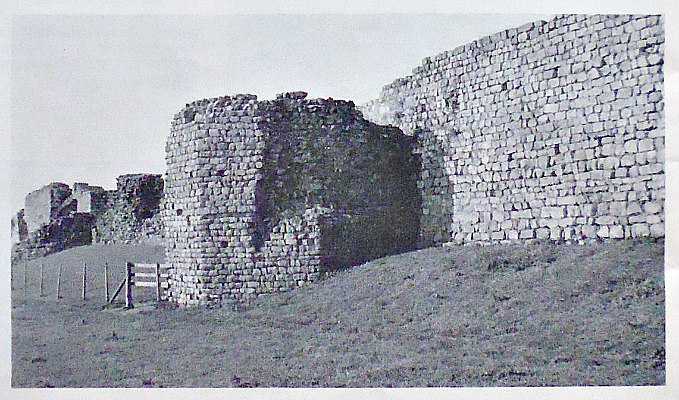
Caerwent Roman Town Walls, South Wales,

Caerwent Roman Town Walls, South Wales.

OS Grid Reference: ST 4692 9062. The Roman town of Venta Silurium, founded by the Romans in 75 AD, is now the modern village of Caerwent in Monmouthshire, and is located just to the south of the A48 road and just west of the M48. It is 5 miles west of Chepstow and 11 miles east of Newport. The modern village is built around the Roman ruins, which are some of the best preserved in Europe. Large sections of the Roman town walls are still in place, according to Wikipedia. The River Severn is a couple of miles to the south. In the village is the medieval church of Saints Stephen and Tathan, an ancient foundation which may date back to the early 6th century AD? Housed in the church porch are two Roman inscribed stones. The Roman legionary fortress of Caerleon is 8 miles to the west.

Continued from part 1:-

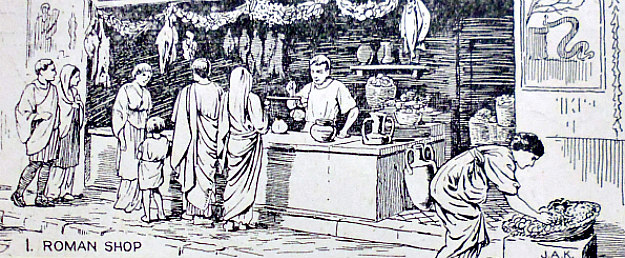
Typical Roman shop (illustration).

A typical Roman shop (illustration).

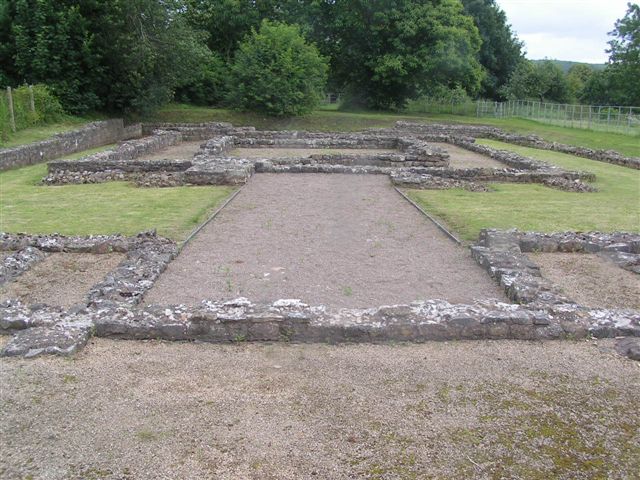
Pound Lane Shops And Houses. Shops:- The remains of these buildings were excavated in 1947-8, part of insulae VII. As is typical of these buildings the commercial part of the property occupies the front and the residential the back. Several phases of construction and re-development are also noticeable. Two narrow-strip buildings occupied the plot in the mid-2nd century separated by a passage. Each had a large work space/shop at the front and 4 or 5 residential rooms at the back. The buildings were single storey. It is uncertain but possible that the upper parts were of timber. The floors of the living areas were of concrete and the roofs were tiled while the walls were plastered and painted. The shop to the west was probably a blacksmith, the one to the east is unknown. At the beginning of the 3rd century both buildings were joined as one with some alterations. Again, it appears to be the blacksmith who had prospered. Towards the middle of the 4th century further alterations show that the blacksmith family who lived here became even more prosperous. The rooms were enlarged, two had mosaic floors, even the roof tiles were re-placed by stone slabs, and columns added a decorative feel to the front of the building, with a courtyard replacing the front of what had been the second shop. This once again illustrates that by the mid 4th century Britain was still a prosperous place to live. The building took on the feel of a very smart townhouse. The house was still occupied by the beginning of the 5th century, but evidence of industrial activity in some of the rooms suggests that its status had declined dramatically in-line with the waning of Roman influence and fortunes.

The Courtyard House: The remains of this building lie to the rear of the shops occupying the northwest corner of insulae VII. Two wings of the house have been excavated. The plan is of standard courtyard design and dating from the fist half of the 4th Century AD. Before this date the area appears to have been just an open space. The West Wing fronts onto a side street today known as Pound Lane. A Total of 13 rooms of varying size with only the lowest courses and foundations surviving are visible. The south wing had 5 rooms as did the west wing but all smaller than the south wing so perhaps they were bedrooms. Most were found to have floors of yellow concrete but one had a mosaic laid on stone-slabs beneath which was found a hypocaust system. The Romans not only invented concrete but also central heating. During the excavation traces of painted wall-plaster were found. It is quite possible that the house had an upper storey, as there was some evidence of a staircase. In keeping with its 4th century origins the house was roofed with stone-slabs. Part of the courtyard surrounding the house was paved and an enclosure to the north suggests a small garden.

Time Team visited in 2008 – their remit to explore the areas that had not been investigated. Mick Aston had hoped to look for medieval remains as he did not like the Roman’s, but was told by the dig’s lead archaeologist that they did not have time. They did ‘goephys’ and dug trenches in Insulae XIV opposite the Romano-Celtic Temple where they found more shops and, Insulae 1, where they found a large town-house with private bathing facilities similar to others found in the suburbs of the town. The best find had to be the penknife handle with two gladiators – someone’s once prize possession and one of only two found in the UK.

Later History: After the Roman occupation ended Caerwent became the administrative centre for the Kingdom of Gwent. The name Caerwent translates from the Welsh as ‘Fort of Gwent’. Post-Roman metalwork (broaches and fastening pins have been found, dating to between the 4th-7th centuries AD). The town is mentioned in the ‘Roman Cosmology’, a treatise written in the 7th century but based on an earlier account. It is then mentioned in the Life of Tatheus written in the first half of the 12th century. The saint came from Ireland and after performing a number of miracles was given the site of the Roman Town by the local king, Caradoc, to set up a monastic settlement. In 1910 a trench was dug just outside the East Gate where 30 skeletons were found within a cist of stone slabs of post roman date across the wall of a Roman building. A number of people thought the bones included those of St Tatheus. And in 1912, with due ceremony, the bones were interred in a coffin in the south aisle of St Stephen’s church. In favour of the reburial was a later discovery that a gift of 3 bones of St Tatheus had been made to Tewkesbury abbey in 1235 and that the note records that: St Tatheus is ‘buried at Caerwent’. Against is the fact that several other cist graves dating from the 4th-9th centuries AD have been found at Caerwent. All are of Christian origin. V.E Nash Williams’ interpretation of a structure built later over the west end of the Public Baths as an early Christian Church, has also now been disproved.

There was certainly some occupation in the Norman Period as a motte can be seen in the southeast corner of the site. The parish church of Sts Stephen & Tathan is also worth a visit for the Roman artefacts in the porch. St Tathan (Tatheus) was the son of the Irish king, Tathalius. He left his father’s court to become a Christian missionary and, after receiving ‘a heavenly vision’, sailed up the Severn estuary, landing in south Wales (maybe at Portskewett) in the late 5th century. He is said to have founded a monastery at Llandathan (St Athan) in south Glamorgan – either soon after his arrival in south Wales or at a later date?

Then sometime after 500 AD Tathan founded a monastic school at Caerwent when the local king, Caradog, or maybe his son, Ynyr, gave him a ‘parcel of land’ there. St Cadoc is thought to have studied for the monastic life at this monastery. St Tathan was not made bishop of Caerwent as some historians have suggested, but he was apparently a renowned miracle-worker. The date of his death is uncertain but it was perhaps sometime after 524 AD and maybe as late as 560? His feast-day is 26th December, a day which coincides with that of St Stephen the proto-martyr. The supposed relics of Tathan lie beneath a large stone beneath the floor of the south aisle of the church. However, another legend claims that he was the son of Amwn Ddu and Anna of Glamorgan, which would make him a close relative of St Tewdric of Mathern. This alternative legend says that St Tathan’s relics were buried at Llandathan (St Athan) in the Vale of Glamorgan.

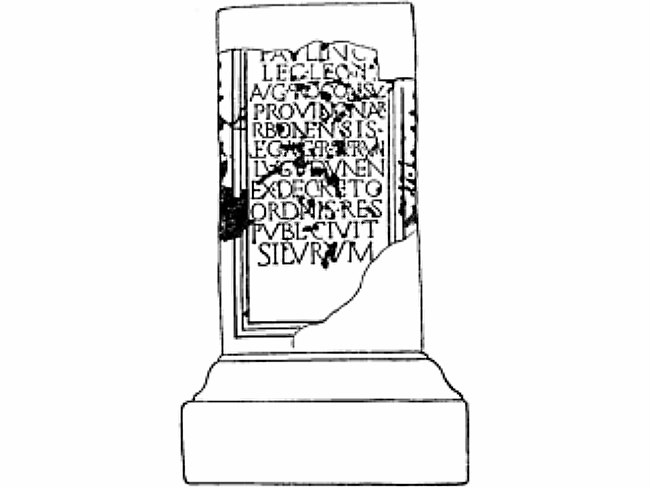
Roman Inscribed Stone. Drawing by R. G. C., (1924)

Roman Inscribed Stone. Drawing by R. G. Collingwood (1924)

The Paulinus Stone or The Civitas Silurum Stone: The large block of bath-stone is a statue base with a dedication to: Tiberius Claudius Paulinus, a commandant of the second Augustan legion about 214-17 AD. After this he held office in two Gallic provinces. In 220 he returned as Governor of Brittania Inferior (Britain had been divided into two provinces: inferior and superior at the beginning of the 3rd century by the Emperor Septimus Severus). As the inscription does not include this latter information the stone, which is a statue base (pedestal), probably predates this. Of singular importance, however, is the reference to the local civil administration: it tells us that the Silures were administered by a council. The dedication reads:-

To (Tiberius Claudius) Paulinus (once) commander of the second Augustan legion (next) proconsul of the province Gallia Narbonensis (now) Imperial Governor province of Lugdunensis by decree of the council of the community of the state of the Silures.                                                                                                                                                                                                 

The stone was found in 1903 having been re-used as part of a post-Roman construction of blocks in the centre of the village on which the war memorial now stands. It can now be seen just inside the church porch.

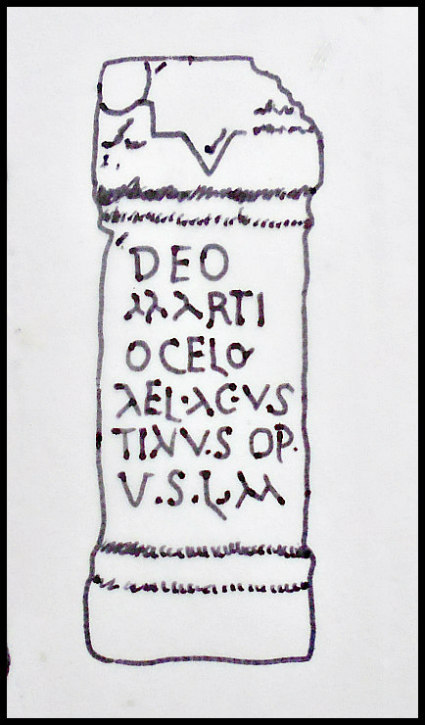
Roman altar stone.

Altar Stone.

A second Roman antiquity which also stands in the church porch is a stone made of yellow sandstone. This is an altar-stone dedicated to the god Mars (Ocelus). The inscription reads:-

To the God — Mars (Ocelus) — Aelius Augustinus — optio (a junior officer) — Paid his vow willingly and duly.


Caerwent’s earliest mention post-Rome and Medieval is in the works of John Leland (1540) by which time most of the internal buildings had been robbed out to create cottages and the church. In the late 18th and early 19th century the first tourists arrived leaving their impressions—the worst aspect of which, from our point of view, is that what was left of the limestone was being burned for lime!

Octavious Morgan was the first to conduct an archaeological dig in 1855 revealing a small bath-house together with another building in insulae XX. The extant ground plan of the town emerged during further excavations between 1899 and 1913 by the Clifton Antiquarian Club, funded by Lord Tredegar. Finds from this dig, which exposed 2/3% of the town, are now in the Newport Museum. Further digs in 1923 revealed the Public Bath House; in 1925 the walls on the SE side were excavated, while in 1946-7 the Pound Lane Shops and courtyard house; in 1973 the town cemetery outside the East Gate; in 1981 a large courtyard house in the NW corner, and then in 1992 the Forum Basilica was excavated.

Newport Museum and Art Gallery: The museum in John Frost Square is open Tuesday to Friday 9.30am to 5 pm, and Saturday 9.30 to 4pm. Entry is free. The museum houses many of the artefacts found at Caerwent over the years: a 2nd century broach in the form of a hare, a fragment of a painted wall depicting a girl’s face found in 1901, a statue of the mother goddess found near the temple precinct in 1908, a number of mosaic floors including the one found in the mansion, roof finials in the form of a lantern, a pine cone, locks and keys, a pewter bowl scratched with the Christian Chi Ro monogram, pots, coins and agricultural equipment. Other artefacts are housed in the National Museum of Wales, Cardiff.

Sources and other related websites:-

Barber, Chris, More Mysterious Wales, Paladin, London, 1987.

BBC Publication, Roman Britain, The British Broadcasting Corporation, London, 1966.

Brewer, Richard J., Caerwent Roman Town, Cadw Welsh Historic Monuments, 1993.

Evans, J. Barrie, The Parish Church Of St. Stephen & St. Tathan Caerwent – A Short Guide.

Spencer, Ray, A Guide to the Saints Of Wales and the West Country, Llanerch Enterprises, Felinfach, Lampeter, Dyfed, 1991.

Wilson, J. A., A Guide to the Roman Remains in Britain, 4th Edition, Constable, 2002.

https://romaninscriptionsofbritain.org/inscriptions/311

https://romaninscriptionsofbritain.org/about/terms-of-use

https://en.wikipedia.org/wiki/Caerwent

https://en.wikipedia.org/wiki/Caerwenthttps://en.wikipedia.org/wiki/Venta_Silurum

http://maryinmonmouth.blogspot.co.uk/2008/10/in-steps-oif-st-tatheus-of-caerwent.html

http://cadw.gov.wales/daysout/caerwent-roman-town/?lang=enhttps://museum.wales/1493/

https://museum.wales/1493/

                                                      © Ray Spencer, The Journal Of Antiquities, 2017.


Hollinshead Holy Well, Near Abbey Village, Lancashire

Well-House of Hollinshead Hall, Lancashire, by Margaret Clough (Wikipedia)

Well-House of Hollins-head Hall, by Margaret Clough (Geograph).

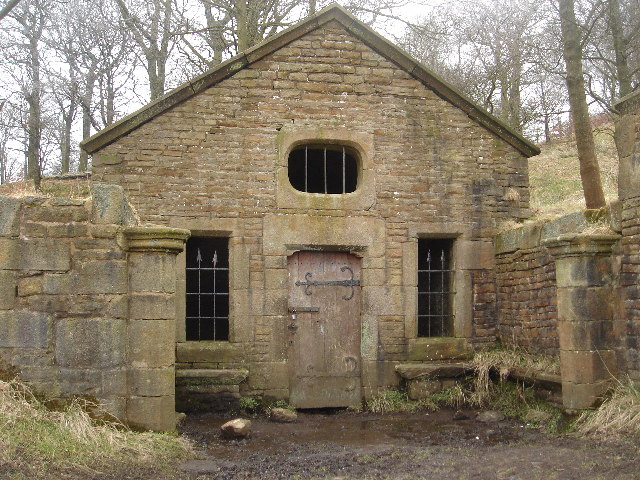
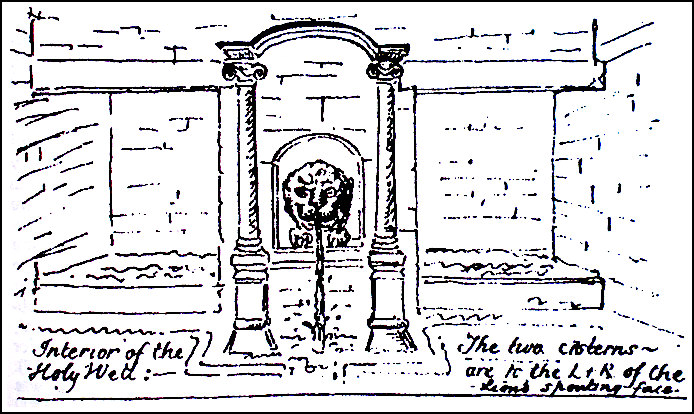
   OS Grid Reference SD 6637 1992. About a mile south-east of Abbey Village, near Blackburn, Lancashire, stand the scant ruins of Hollinshead Hall, a 14th century building that was actually a manor house and home to the famous Radcliffe family of Ordsall near Manchester. In the enclosed garden of the ruined hall is a well-house containing a holy well that used to have healing properties.The origins of the name Hollins-head probably derived from the Saxon place-name ‘Holy Head’ or even ‘Helig Weald’ which refers to a holy well or spring. Though the name ‘Holy Head’ might perhaps be derived from the well-head – the stone lion’s head in the well-house from the mouth of which the water issues. The well-house was probably a baptistery to which Roman Catholics resorted to during Penal times when priests were in hiding and any form of gathering in such a place was outlawed. Follow the Tockholes Road south out of Ryal Fold for about ½ a mile, then walk along the track on the right-hand side through the woods for 335 metres leading to the ruins of the hall, farmhouses, gardens and the medieval well-house.

   The author John Crawshaw writing in Source – The Holy Wells Journal, gives us a fair bit of interesting information with regard to the holy well. He says that: “The early history of the well is scanty, but it seems that a medieval well-house (with a superb vaulted stone roof) was ‘restored’ at some date during the 17th century.

   “This  restoration was probably carried out by the owners of the land on which the holy well stood, the powerfull recusant Radcliffe family of Ordsall Hall near Manchester.

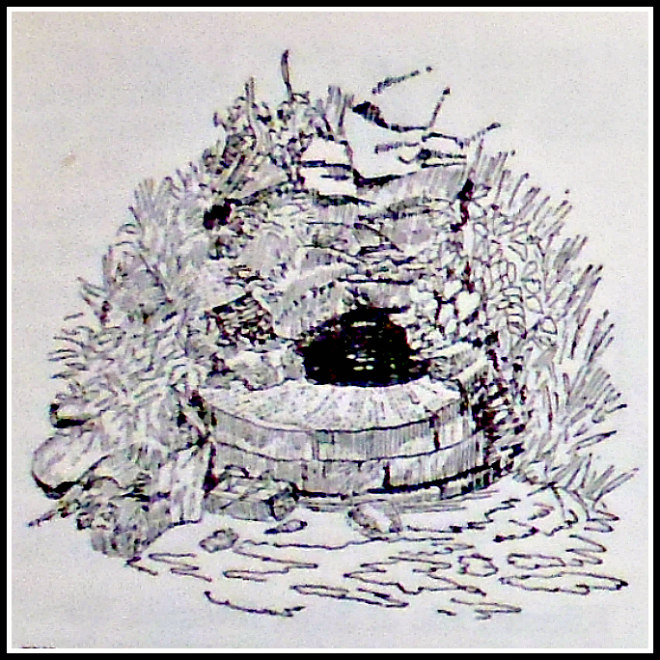
Hollinshead Holy Well (illustration by John Crawshaw).

Hollinshead Holy Well by John Crawshaw.

   Mr Crawshaw goes on to say that: “Unfortunately, though I have been researching its history for some years now, I have not been able to discover the holy wells’ dedication, which has been lost. Doubtless the site was very important, for the well-house itself is very grand indeed, and houses two baths in the form of rectangular cisterns, and there is also a fine retaining wall to the right of the compound, bearing traces of the Radcliffe coat-of arms. A member of the Radcliffe family lived in a house near the site, and it is highly probable that the well-house was a secret mass-centre and baptistery, a focus for recusant life in the area. I believe that there is sufficient evidence in the style of the building to show that is is a ‘disguised’ holy well house, perhaps built when persecution became a little easier during James the second’s reign: at any rate the style of the building is very much that of c. 1680s Lancastrian master masonry.

   “On the hillside, immediately behind and above the well-house, is a pool which probably represents the original holy well. It is a pretty big pool, oval-ish, and lined with ancient stones. The spring issues from the earth at the right-hand side, fills the pool, and from thence the water falls down into the two cisterns within the well-house itself.

   “Hollinshead Holy Well has a vague reputation of being haunted and also that its very pure water is good for eye troubles. Hollinshead Hall is referred to in Twycross’ Mansions of England (1846), where the well-house is mentioned, said to have been formerly called ‘The Holy Spring’, and visited by pilgrims who came for the water.

    Mr Crawshaw says of his visit to the well: “Visiting it on 18th October 1994, I was delighted to find that the holy well-house had not been vandalized, as I been informed recently. It is still in good order, except for some obscene graffiti and the fact that the door to the well-house is now locked with a large padlock, so that access……..is not now possible. However, the interior of the well-house can easily be seen through the two windows in the façade. The original pool behind the well-house is still full of water, and access to this pool is unrestricted.

   “The well is still referred to locally as a ‘Holy Well’, and I was present, back in late September 1988 at a well-dressing ceremony (the very first one to be held) at the Well. This was organized by the local Anglican priest, and very well con-ducted it was, too, says Mr Crawshaw.

   Author Richard Peace in ‘Lancashire Curiosities’, puts the question with regard to the holy well: Pagan or Catholic Spring? He says that: “Amidst the gardens of the ruined Hollinshead Hall lies a well-preserved outbuilding housing a stone carved lion’s head that emits a small spring of water. The spring falls into a central channel, surrounded by cisterns and benches on either side. This fascinating building is Hollinshead Well, whose original purpose is hotly debated. Its origin seems likely to be ancient. The vaulting inside may be from the 15th century whilst the covering is from the 18th century. Some believe it to be of pagan origin as it reportedly contains the water of five separate  springs, signaling the presence of the water-goddess. More recently its seems to have been used as a Catholic baptistery, with the two cisterns perhaps being used for male and female baptisms. Records show medieval pilgrims visited the well to try and cure ophthalmic complaints.”

   The author Edward J. Popham, writing in 1993, says this holy well used to be known as Ladyewell (Our Lady’s Well) and then locally called St Leonard’s Well. Presumably he is referring to the Hollinshead Well? It seems that he is.

Sources and other related websites:-

Crawshaw, John, (Hollinshead Hall Holy Well),  Source—The Holy Wells Journal, New Series No 2—Winter 1994, Pen-y-Bont, Bont Newydd, Cefn, St Asaph, Clwyd, 1994.

Peace, Richard, Lancashire Curiosities, The Dovecot Press Ltd., Stanbridge, Wimborne, Dorset, 1997.

Popham, Edward J., Where Shall We Go In The Ribble Valley? The Salford Catholic Truth Society, 1993.

    https://en.wikipedia.org/wiki/Hollinshead_Hall#/media/File:The_Well_House,_Hollinshead_Hall_ruins_-_geograph.org.uk_-_116184.jpg

http://people.bath.ac.uk/liskmj/living-spring/sourcearchive/ns2/ns2jc1.htm

https://en.wikipedia.org/wiki/Hollinshead_Hall

Holy Well, Hollinshead Hall, Tockholes, Lancashire

Hollinshead Hall ruins and Well House, near Tockholes

                                                                                © Ray Spencer, The Journal Of Antiquities, 2017.


2 Comments

Blackheath Circle, Near Todmorden, West Yorkshire

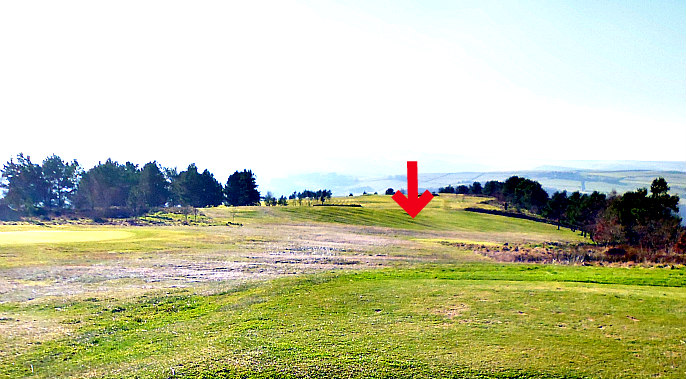
Blackheath Cairn Circle is only just visible in the middle distance marked by the red arrow.

OS Grid Reference: SD 94339 25434. About 1 mile north of Todmorden, west Yorkshire, near the southern side of Todmorden Golf Course there is a Bronze Age cairn circle, ring cairn or round barrow. This is usually referred to as Blackheath Circle, but locally it is called Frying Pan Circle, because of its circular shape. It also sometimes goes under the name ‘Blackheath Ringbank Cemetery’, while in the past it had been called ‘Roman Barrow’. This quite large circular feature is now part of the golf-course, but at ground-level it is hardly noticeable today apart from a slight raised bank at either side of the circle; the north side being very denuded. The grass is often a brownish colour where the cairn’s outer raised ring shows up after being mowed. Blackheath cairn circle is situated at over 900 feet above sea-level. When it was excavated nineteen burial cists were discovered along with a number of cremation urns, food vessels and grave-goods. Very sadly, though, this prehistoric cairn circle has been taken over by the golf-course – of all things! 

Blackheath Circle is best reached from Kebs Lane, Eastwood Road and then Hey Head Lane, which goes past the golf course. About halfway down the lane on the right-hand side there is a wall-stile and a footpath running west beside a wall at the northern edge of the course. The Bronze Age cairn circle is 350m along this path through the trees and, at the far end, just in front of the large gap in the wall running across.

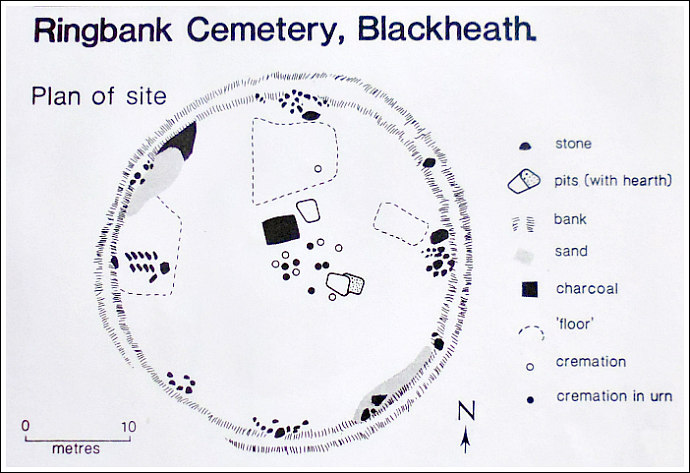
The following information is taken from ‘Life In Bronze Age Times – A Resource Book For Teachers’. It says of the site: “Blackheath is a Prehistoric cemetery situated at 940 feet (287) O.D., on a south facing slope. On excavation it was found to comprise a circular bank of earth 3 feet (1m) high in which large stones were regularly arranged. The circle was 100 feet (30m) in diameter. There was no obvious entrance. A circular area with a floor of beaten clay was enclosed by the bank.

“There were cairns both inside the circle and in the earth bank. These revealed pits and cists containing cremation burials. Nineteen were found in all. Some of the cremations were found in urns. The urns were all upright and buried just below the surface. A characteristic feature of the urned cremations was the use of a small inverted vessel placed upside down in the urn and serving as a lid.

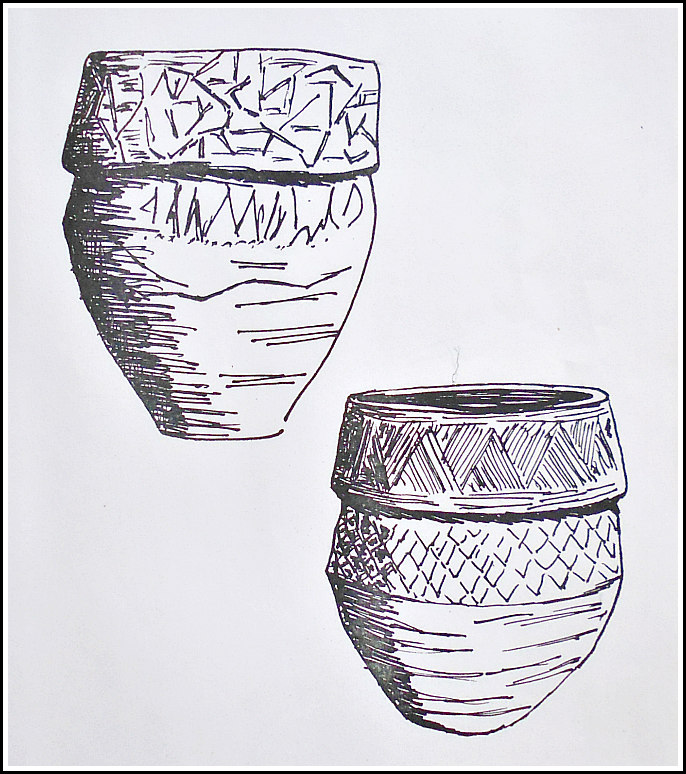
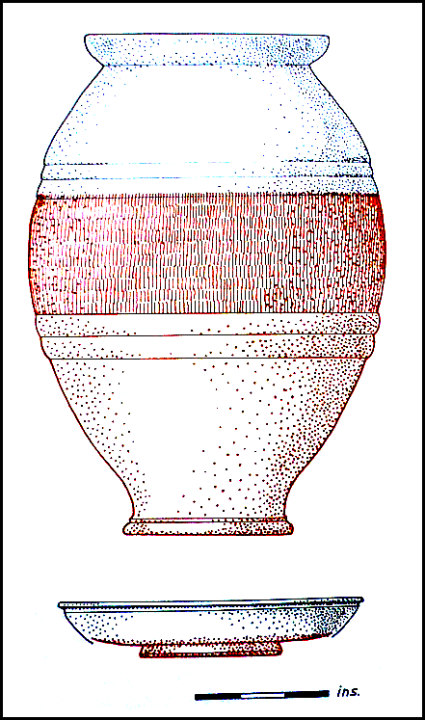
“The central urn is 11 inches (20 cm) high. The collar shows impressions made by twisted cord. As well as bones, the urn contained a small decorated pygmy vessel . In this vessel there was a bronze dagger, a bone pin and a bronze pin.

Plan of Blackheath Ringbank Cemeterey, near Todmorden.

Plan of Blackheath Ringbank Cemetery, near Todmorden.

Collared urns found at Blackheath Circle.

Collared urns found at Blackheath Circle.

Another urn also contained a pygmy vessel together with beads of faience, amber, jet and shale, two bone pins, flint flakes and a leaf shaped arrowhead. Two of the urns were covered by other vessels, one of which may have been a food vessel. With the exception of the two urns in the bank, all  the finds  were in the  eastern half  of the  circle. In the rest of the circle there were areas where the floor showed evidence of being baked by a great heat. These were covered with a layer of charcoal 1-2 inches thick. It was suggested that these may have been the areas where the bodies were cremated. Two deep pits were also found, possibly the holes where clay was dug out of the ground for making the pots. Areas of coarse sandstone were discovered. This could have been used for grinding down and mixing with the clay.  There was at least one (possibly four) kilns.  These were cist-like structures surrounded by baked floors where the pottery was fired.”

 Author Paul Bennett in his work ‘The Old Stones of Elmet”, says that: “The archaic West Yorkshire game of Knurr and Spell used to be played inside this circle. This is a game played with a wooden ball (the knurr) which is released by a spring from a small brass cup at the end of a tongue of steel (the spell). When the player touches the spring the ball flies in the air and is struck with a bat. Quite why they chose this place is unknown.”

Mr Bennett goes on to say with regard to Blackheath Circle that: “It was accurately described for the first time by Robert Law (1898) in  the Halifax Naturalist; but a most eloquent detail of the site was given several years later by J. Lawson Russell (1906) who, even then, told that it had been “”cut into again and again by deep plough ruts, marked out by tufts and hummocks of varying height.” 

“The first detailed excavation was done on July 7, 1898, when the site was examined in quadrants and turf cut accordingly. “”The diameter of the circle was 100ft (30.5m), ie. measuring ridge to ridge, from north to south, Russell told us.    ………There were a number of large stones set around the edge of the circle, some of which were still in situ in 1898. This led subsequent archaeologists to think the site was originally a stone circle. It may have been, but I’m sure the excavators of the period would have made such allusions.  Certainly they thought it had some ritual import.  How can we disagree!?”, says Mr Bennett. 

There is another “possible” circular feature just to the east of the large cairn circle at SD 94454 25507. However, this almost destroyed circle is smaller and very difficult to make out as it is now, sadly, incorporated into a raised golfing barrow, but the outer ring of this circle often shows up at one end as brownish grass in the summer months, especially where the golfing barrow slopes down to ground level.

Sources and other related websites:-

Bennett, Paul, The Old Stones of Elmet, Capall Bann Publishing, Milverton, Somerset, 2001.

Thomlinson, Sarah & O’ Donnell, John, Life In Bronze Age Times – A Resource Book For Teachers, Curriculum Development Centre, Burnley.

Blackheath Circle, Todmorden, West Yorkshire

http://www.pastscape.org.uk/hob.aspx?hob_id=46095

http://www.calderdale.gov.uk/v2/residents/leisure-and-culture/local-history-and-heritage/glimpse-past/archaeology

                                                                                   © Ray Spencer, The Journal Of Antiquities, 2017.


1 Comment

Caerwent Roman Town, Monmouthshire, South Wales, Part 1.

Caerwent Roman Town Walls, South Wales,

Caerwent Roman Town Walls, South Wales,

OS Grid Reference: ST 4692 9062. The Roman town of Venta Silurium, founded by the Romans in 75 AD, is now the modern village of Caerwent in Monmouthshire, and is located just to the south of the A48 road and just west of the M48. It is 5 miles west of Chepstow and 11 miles east of Newport. The modern village is built around the Roman ruins, which are some of the best preserved in Europe. Large sections of the Roman town walls are still in place, according to Wikipedia. The River Severn is a couple of miles to the south. In the village is the medieval church of Saints Stephen and Tathan, an ancient foundation which may date back to the early 6th century AD? Housed in the church porch are two Roman inscribed stones. The Roman legionary fortress of Caerleon is 8 miles to the west.

Under the Romans Caerwent was known as Venta Silurium (Silurum) or in translation ‘market of the Silures’. The Silures had been an Iron Age tribe occupying south-east Wales and had presented an irritation to the conquest for the Romans. In the early days of the invasion they had sheltered the Romans’ public-enemy-number-one, Caratacus, until he fled to what he thought was the safety of Cartimandua’s Brigantines. She handed him over to the Romans, a good will gesture the Romans would not forget. Gradually following the establish-ment of the legionary Fortress at Caerleon around AD 74 and a series of auxiliary forts across the south – the Silures were subdued. In accordance with Roman Policy of Pax Romana once subdued the Silures were encouraged to settle, although for a time they remained under military rule. The cost of military rule was enormous so it would not have been long before a civil administration would have been established. The administrative capital Venta Silurium was sited astride the mainroad from Gloucester to Caerleon. The town sits on a slight rise in the middle of a valley surrounded by good agricultural land in an area that had been occupied by the Romans since AD 50.

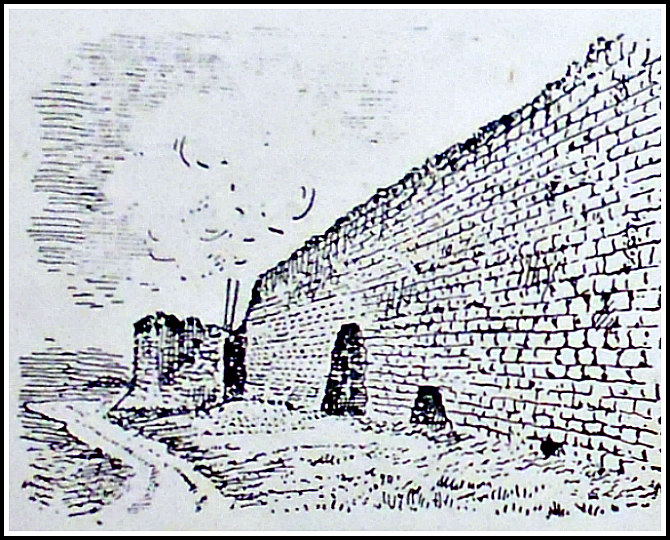
Caerwent Roman Town Walls (Illustration).

Caerwent Roman Town Walls (Illustration).

The Extant Remains:  The total circuit of the wall exceeds 1 mile en-closing an area of 4 acres divided into 20 plots (insulae). The walls are the best preserved of any Roman town in Britain. The internal and external roads would have been of rammed gravel with cambered sides to allow rainwater to run off; and the local civitas (administration) was responsible for repair and resurfacing. The early settlement appears to have had a sprawl of properties along the main road. But the layout we see today is later, possibly even as late as the early third century, which might account for certain oddities – the walls are not square – the insular somewhat jumbled. The actual population was probably about 3800 individuals at its height. Public buildings are of the standard Roman variety.  A Forum Basilica complex occupied the whole insulae VIII; the site of several temple complexes are known and one is visible to the east of the Forum Basilica, another has been excavated to the south in insulae XII, and a third is possible outside the east gate. Whilst the largest houses show evidence of private baths. Public baths have been excavated in insulae XIII.  A mansio which was a kind of inn frequen-ted by members of the Postal Service and other officials has been located in insulae XVIII to the left of the south gate. This was a courtyard building with a forecourt where the weary traveler would have dismounted. Several rooms had hypocausts, at least one having a mosaic floor. A latrine lay in a corner of the courtyard surrounded on three sides by a sewer, suggesting the building was not just a domestic building.

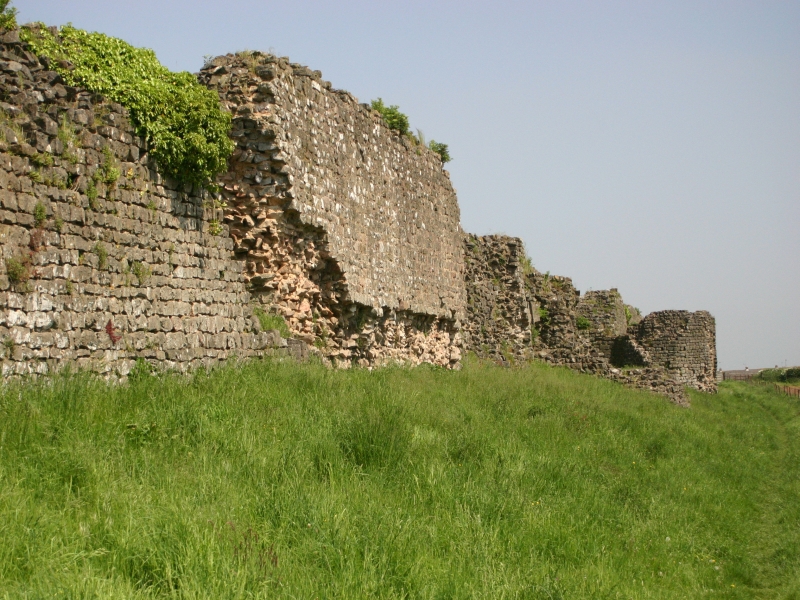
Caerwent Roman Town Wall (photo: Mortimer-Cat - Wikipedia).

Caerwent Roman Town Wall by MortimerCat – Wikipedia).

The Town Walls:  The town had 4 gates. The main ones were the West and East gates opening onto the town’s main thoroughfare. The West Gate originally had a double arched carriageway flanked on either side by a square tower projecting out in front of the wall. Little now survives except part of the south tower and its masonry floor. The west wall, however, built of limestone running from the west gate to the south-west corner survives in places to a remarkable 5 metres (17 feet) and is backed by an earthen bank. From these remains the wall is believed to have been about 7.5 metres in height (25 feet) with a walkway and parapet – none of which survives anywhere along the wall. The wall would also have been originally vertical on both sides. But the method of construction can be determined from this section of the wall. Rows of limestone were laid front and back and the core then filled in with more pieces of limestone and mortar leaving a distinctive herringbone pattern. The wall was clearly built in sections and by different gangs.

Unlike the West Wall the South Wall is not completely straight but bows outwards in its middle section. It also stands to a magnificent 5m (17 feet) in parts. Also, unlike the West Wall the remains of six hollow 5-sided towers (bastions) project from the walls but not bonded to the wall – meaning they are later additions probably 4th century. A new outer ditch had to be made to allow for the towers. The fourth tower from the west is the best-persevered standing to a height of 4m (13ft). Internal joist holes in this tower suggest there were originally two wooded floors beside the ground floor with a top platform also of wood. The South Gate consisted of a single arched carriageway. The piers survive and may originally have supported an overhead chamber. Both sides of the passage were originally recessed allowing the heavy doors to swing back. The carriageway was made up of stones and iron clinker with a slab-lined culvert. At a later date the carriageway was blocked.

The East Wall is also bowed. As with the West Wall there are no external towers. Sadly all that remains of the East Gate, which was constructed the same as the West Gate is the inner angle of the south tower. The East Wall is some 30m shorter than the west wall so avoiding a marshy area and taking advantage of higher ground.

The North Wall is the least well preserved of the four walls. Surviving to just 1.8m (6 feet) in height in parts but it is known that, like the South Wall, it had 5 towers of which little sur-vives. Like the South Gate the North Gate is not centrally placed though the plan is similar with a single carriageway. Sockets for the gates can still be seen. Again and probably in the late Roman Period the North Gate was blocked off – being filled in with rubble from other demolished buildings. The North West Tower of the gate survives to a height if 2.4 metres (8 feet).

Roman Temple at Caerwent by andy dolman (Geograph)

Roman Temple at Caerwent by andy dolman (Geograph)

The Romano-Celtic Temple: The remains of the temple lie to the east of the forum. Excavations were begun in 1908 and concluded between 1984 and 1991. No trace of the deity worshiped here was found. The construction was of traditional Romano-Celtic design. The extant remains show a square inner shrine (cella) with an unusual back projection surrounded by another separate room known as the ambulatory. This would have contained a statue of the deity. The entrance porch would originally have had steps, whilst the small projections at the entrance are probably the bases for pilasters (rectangular columns). The temple stands in its own courtyard surrounded by a boarder wall on 3 sides and an entrance hallway with a central doorway and a tessellated floor on the fourth side facing the main street. Few people actually entered the cella; most of the congregation would have been expected to gather in the courtyard between the hallway and the temple proper.

The Forum Basilica: A central feature of all main roman towns wherever you went in the Empire was the Forum Basilica essentially an administrative assembly hall and market place. The Caerwent example occupies the whole of insulae VIII. Building began in the early second century probably under the auspices of the 2nd Augustan Legion based at Caerleon, as the design is similar to that of the headquarters building there. It was largely rebuilt in the third century probably after structural problems were identified. It continued in use as a forum basilica until after 340 AD when it seems to have been converted into industrial units and was demolished at the end of the 4th Century. It was first excavated in 1907 and again between 1987-1992. The Basilica and the northern end of the forum remain uncovered for public view.

The basilica was 56m (182ft) by 80m (260ft) and would have towered over surrounding buildings but is small by other examples in Roman Britain. Access to the basilica was by steps some of which have survived. There was also access from the side streets. In plan the basilica comprises a great hall, and a rear range of rooms and chambers. On excavation the parts of the walls were found to have survived to 1.8m (6 ft) having been incorporated into early 19th Century farm buildings. The external walls were massive requiring foundations up to 1.8m (6ft) with Corinthian columns rising to a height of about 9.2m (30ft) rendered and painted off-white. It is believed the basilica was in excess of 20m (65ft) in height. The roof initially of tile was partly replaced by sandstone slabs at the end of the third century. The hall would have been used for public meetings and ceremonies. The chambers at each end would have served as tribunals for the local magistrates to hear cases. The rear ranges of rooms were offices for local administrators and their records, while the central room would have held a statue of the reigning Emperor, and the largest room known as the curia would have acted as a council chamber. The Forum is surrounded on 3 sides by a range of rooms entered on the fourth side from the main street through an archway. These rooms would have provided space for shops, taverns and offices, with a larger open front that would have been closed with wooden shutters. A second storey above would have provided yet more rooms.

To be continued………

Sources and related websites:-

BBC Publication, Roman Britain, The British Broadcasting Corporation, London, 1966.

Brewer, Richard J., Caerwent Roman Town, Cadw Welsh Historic Monuments, 1993.

Evans, J. Barrie, The Parish Church Of St. Stephen & St. Tathan Caerwent – A Short Guide.

Wilson, J. A., A Guide to the Roman Remains in Britain, 4th Edition, Constable, 2002.  Constable,

https://en.wikipedia.org/wiki/Caerwent

https://en.wikipedia.org/wiki/Venta_Silurum

Photo from Wikipedia website – Click below for further details:   https://en.wikipedia.org/wiki/Venta_Silurum#/media/File:CaerwentWall.jpg

Caerwent Roman Temple

http://cadw.gov.wales/daysout/caerwent-roman-town/?lang=en

https://museum.wales/1493/

                                                     © Ray Spencer, The Journal Of Antiquities, 2017.


Stanwick Iron Age Hillfort, North Yorkshire

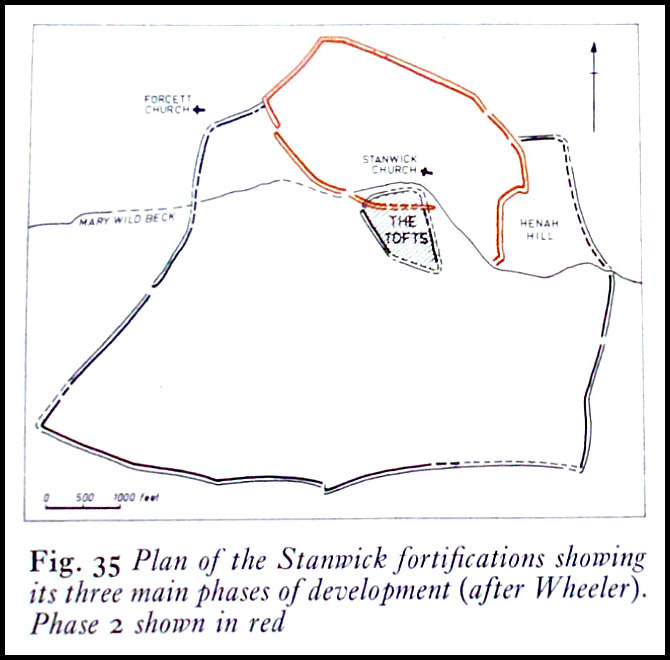
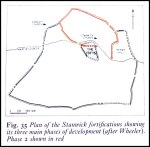
Plan of Stanwick Fortifications (after Wheeler)

Plan of the Stanwick Fortifications (after Wheeler)

   OS Grid Reference: NZ 1820 1161. The Stanwick “late” Iron Age hillfort, also known as Stanwick Camp, lies some 8 miles to the north of Richmond, north Yorkshire, covering a large area of more than 700 acres and up to 5 miles in length, north of the village of Stanwick St John, with the earthworks spreading out from the hillfort itself. The hillfort or oppidum was built by the Brigantes tribe of northern England in three different phases roughly between 47-72 AD, with the first phase of the fort being at Toft Hill. The Brigantian leader Venutius, husband of Queen Cartimandua, was “thought” to have been defeated and killed by Roman troops from York at Stanwick in 74 AD – at about the same time that parts of the fort were destroyed by fire, but the fire was ‘probably not started by the Romans’ – although Quintus Petillius Cerialis, who was Roman Governor of Britain (71–74 AD), might have had a hand in that destruction at some point. Cartimandua maybe settling in at her base of Castle Hill (Almondbury) after 69 AD? 
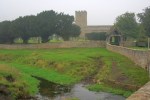
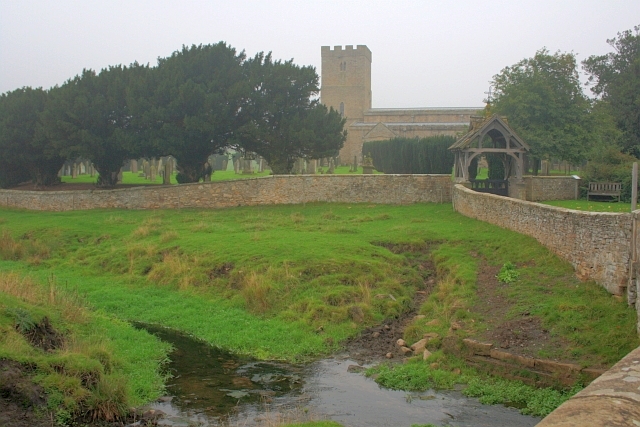
Mary Wild Beck and Stanwick Church by

Mary Wild Beck and Stanwick Church by Mick Garratt (Geograph).

   Stanwick hillfort and its associated earthworks officially start at the village of Forcett from where there are some well-defined footpaths taking in the ancient monument, traversing its impressive and quite formidable ramparts and ditches. But the medieval church of St John the Baptist at Stanwick St John is the place to head to, and just to the south-west lies the hillfort known as Toft Hill (the Tofts), although there are grassy earthworks all around here running for several miles. Locally these earthworks are called Jack-Dike Arches. And there are ancient burial mounds which perhaps date back the late Bronze Age and the late Iron Age. Stanwick hillfort and its associated earthworks were excavated by Sir Mortimer Wheeler in 1951-52. In more recent times 1981-86 excavations were carried out by Durham University. St John’s Church at Stanwick houses a number of antiquities including a 9th century Anglo Saxon cross-shaft.

   Harold Priestley in ‘The Observer’s Book of Ancient & Roman Britain’, says of the Stanwick site: “If not the most impressive to view, this fortified area is the largest and greatest engineering feat of the Iron Age tribes. It started as a 17-acre (6.9-ha) fort in the early 1st century AD, and was twice extended until the fortification enclosed no less than 747 acres (302 ha). It is believed to have been the rallying-point of the Brigantes under their king Venutius who revolted against the Emperor Vespasian in AD 69. His queen, Cartimandua, had taken the side of the Romans and may have set up her headquarters at the fort at Almondbury near Huddersfield.

   “In about AD 50-60 (after the Roman conquest of the S of Britain) another 130 acres (53 ha) to the N of the fort were enclosed by a bank and ditch except on the SE where a stream, the Mary Wild Beck, acted as a barrier. The fortifications between the old and new sections were demolished. Part of this bank and ditch have now been restored.
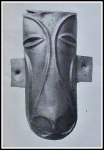
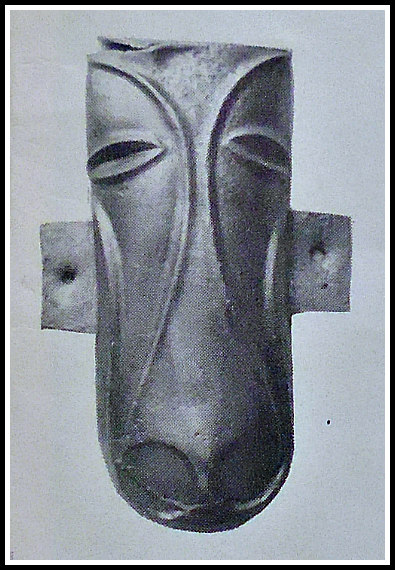
Horse's-head plaque, Stanwick, north Yorks.

Horse’s-head plaque, Stanwick

   “The final huge extension covering some 600 acres (243 ha) was made to the S of the Beck and brought into the fortified area a rough quadrilateral of land capable of accommodating an army and pasturing horses and cattle. It was enclosed within a bank and ditch with an in-turned entrance on the S. There are signs that the fortifications were attacked by the Roman commander Cerialis before this section was completed. Part of the ramparts then appear to have been deliberately destroyed. No account of this campaign has ever been found, but the fall of Stanwick opened the way to the N for the Roman armies.”

   Author Ian Longworth in his work ‘Regional Archaeologies – Yorkshire,’ says of the Stanwick fortifications: “The fortifications lie on a rolling piece of land between the modern villages of Aldburgh St John and Caldwell. The site was hardly chosen for its commanding position, for the ground here does not rise above 100 feet. Rather it was chosen as being near a good supply of water, the Mary Wild Beck. In their final form, discounting a later addition on the south side, the earthworks enclosed an area of over 700 acres, but the first fortification was a more modest affair enclosing 17. This more or less coincides with a rough field known  as ‘the Tofts’ south-west of Stanwick church. The defences were impressive, for a man standing on the bottom single ditch would look up to a rampart rising to a height of 24 feet. Naturally access had to be provided across the rampart and a gateway left at the western angle. To strengthen this point the flanks of the gateway were revetted with dry-stone walling.
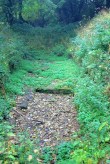
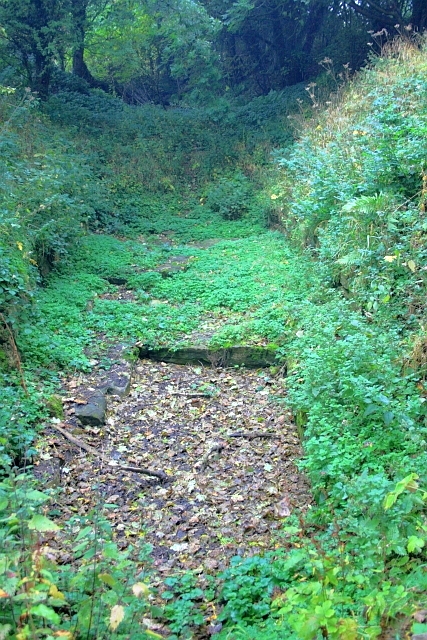
Stanwick Iron Age Fortifications by Mick Garatt (Geograph).

Stanwick Iron Age Fortifications by Mick Garratt (for Geograph).

   “Although only a small portion of the area was examined, a series of drainage ditches were found inside the enclosure together with the remains of a round timber hut with an entrance facing east. This was set within a circular drainage ditch, which would have taken the water dripping from the conical roof. An interesting feature which emerged from the excavations at Stanwick was that only a quarter of the pottery recovered was home-made and these were mainly rough cooking-pots. The remainder of the pottery had all been imported. These imported wares included Butt Beakers from south-east England and fine red Samian Ware made towards the end of the first century A.D. in Gaul. The builders of the fortifications then had wide trading contacts with other tribes living farther south. This first fortification was probably built as a centre for anti-Roman resistance in northern Brigantia, shortly after the Roman invasion of A.D. 43.

   “At a later date the fortifications were greatly enlarged. An enclosure of 130 acres was built to the north to supplement the first fortifications. This new enclosure cut off the northern end of the earlier work and, where this lay within the new  enclosure, the old ramparts were flattened. The new enclosure was deliberately built to include some 300 yards of the Mary Wild Beck and, along this stretch, the brook and its marshy borders formed the only defence. Towards the western angle the new rampart was side-stepped to provide an entrance. This new rampart, which had originally been marked out with a small bank and ditch, was revetted in front by vertical dry-stone walling to a height of about 15 feet. Between the rampart and the ditch lay a berm—a flat space about 1 foot wide. The vertical height from the bottom of the ditch to the top of the rampart when first erected must have been something like 28 feet.

   “Near the entrance a pool of muddy water had collected in the bottom of the ditch. This had helped to preserve the organic objects that had either fallen or been thrown in. An oak dish was found and fragments of basketry, as well as an iron sword in a bronze-bound scabbard made of ash wood. Near the sword lay a skull showing very definite signs that its owner had met with a violent death. The skull had been slashed twice across the eye and a third blow had sliced of a piece of frontal bone which lay nearby. The head had been severed from the body between the fourth and fifth vertebrae. The victim was perhaps a criminal or prisoner and may well have suffered the fate of having  his head stuck on a pole at the gate.

   “The final stage of the construction was marked by a huge extension to the enclosure with a bank-berm-and-ditch defensive system to the previous fortification. The new fortifications  enclosed some 600 acres and provided ample pasturage for horses and cattle. The entrance lay in the middle of the south rampart in the form of a Z-shaped breach, but no gates were found. This final reconstruction was never completed. The causeway across the ditch opposite the gate had been roughly hacked through and blocks lay where they had been hurriedly levered up. The occupants had clearly had no time to finish their work before being called upon to defend themselves.

   “It was probably Venutius who extended the fortifications at Stanwick and then extended them again in and after A.D. 69 when he was gathering his allies for a final stand against the Romans. The unfinished state of the last phase of the defences shows that the final battle came before the Brigantes were completely ready, and the deliberate destruction of part of the ramparts shows only too clearly the ultimate result of the conflict. The actual struggle is not documented by the historians, but the Roma victory must have been complete, for by A.D. 80 Agricola was campaigning in Scotland. A Scottish campaign would have been out of the question if the Brigantes were still menacing the supply routes to the south.”

   The great Mr Arthur Raistrick in his work ‘The Pennine Dales’, tells us more about Stanwick. He tells us that: “At Stanwick, a prominent point, Toft Hill, had been converted into a defensive hill-fort, and one of the leaders of the fort builders was buried there, his body accompanied by his chariot. Many ornaments of bronze, some with stylized horse-head motifs, buried with him, were from the harness and chariot trappings.” Could this burial mound have contained the remains of Venutius, leader of the Brigantes, whom it was believed was killed by the Romans in 74 AD?
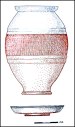
Butt beaker and Samian bowl from Stanwick (After Wheeler).

Butt beaker & Samian bowl, Stan-wick (After Wheeler).

   Author Jaquetta Hawkes writing in 1975 says that: ‘The history of the Stanwick earthworks are revealed by Sir Mortimer Wheeler’s digging leads into the Roman conquest of Britain at a point where the pro-tagonists are known by name, thanks largely to the writings of Tacitus. Having conquered the lowlands, the Roman army was now thrusting into the highland zone. At this point the [Brigantes], probably the largest of all the British tribes and occupying much of northern England, were ruled over by Venutius and his queen, Cartimandua. Friendly policy towards the Romans had brought them the status of a client kingdom. In 51 AD Caractacus, the heroic leader of British resistance, asked for asylum at the court of Queen Cartimandua. She then handed him to the Romans in chains. The Brigantes were now in turmoil, with the pro-Roman policy still maintained by the queen, but now opposed by her husband and the elite of his warriors. Venutius and Cartimandua separated in violent hostility. Venutius then succeeded Caractacus as leader of the resistance, while the queen took his squire Vellocatus as her consort for bed and throne.

   Hawkes goes on to say that: ‘With Roman support Cartimandua was able to hold out in the old Brigantian capital (possibly Almondbury), but the Brigantes and others rallied to Venutius. He later attacked Cartimandua with great success and she had to be rescued by Rome. As Tacitus put it on behalf of Rome ‘The Throne was left to Venutius, the war to us.’ But he was not allowed long to enjoy his victory. The Ninth legion came from York and ended the great Brigantian resistance for good.” 

I would like to thank the late John Dixon, and family, for their bringing about of this site page through books and literature greatly received.

Sources of information and related websites:-

Barringer, J. C., The Yorkshire Dales, The Dalesman Publishing Company Ltd., Clapham, 1982.

BBC Publication, Roman Britain, The British Broadcasting Corporation, London, 1966.

Hawkes, Jacquetta, A Guide To The Prehistoric And Roman Monuments In England And Wales, Cardinal (Sphere Books Ltd), London, 1975.

Longworth, Ian H.,  Regional Archaeologies: Yorkshire, Heinemann Educational Books  Ltd., London, 1969. 

Priestley, Harold, The Observer’s Book of Ancient & Roman Britain, Frederick Warne & Co Ltd., London, 1976.

Raistrick, Arthur, The Pennine Dales, Arrow Books Ltd., London, 1972.

Ramm, Herman, Roman York – From A.D. 71, Yorkshire Architectural and York Archaeological Society, York, 1979.
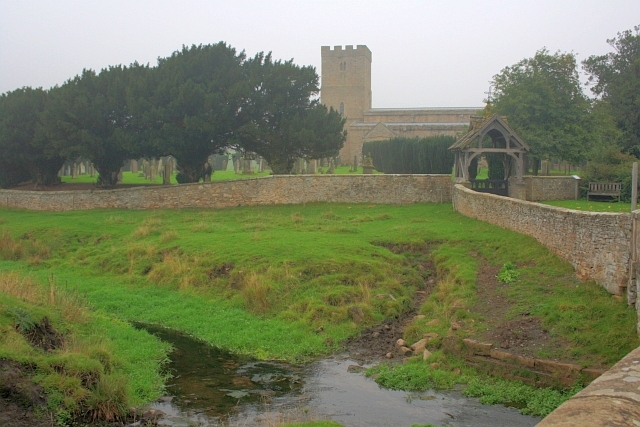
Mary Wild Beck and Stanwick Church

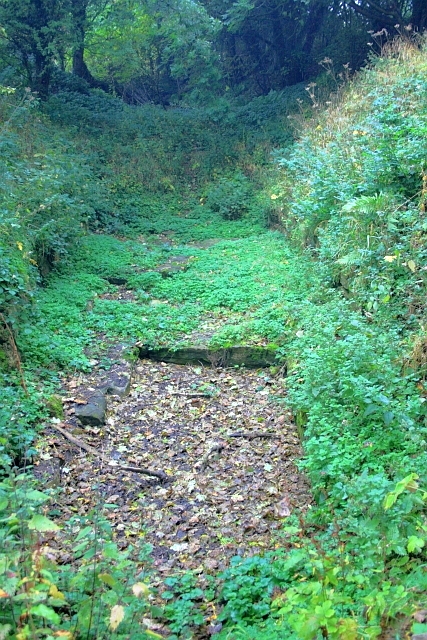
Stanwick Iron Age Fortifications

Stanwick Hill Fort, Forcett, North Yorkshire

https://en.wikipedia.org/wiki/Stanwick_Iron_Age_Fortifications

Stanwick Fortifications, North Yorkshire

http://www.academia.edu/4032642/New_Geophysics_Results_at_Stanwick_Oppidum_North_Yorkshire

http://www.english-heritage.org.uk/visit/places/stanwick-iron-age-fortifications/

                                                                           © Ray Spencer, The Journal Of Antiquities, 2017.

2 Comments

Tintagel Head Celtic Monastery, Cornwall

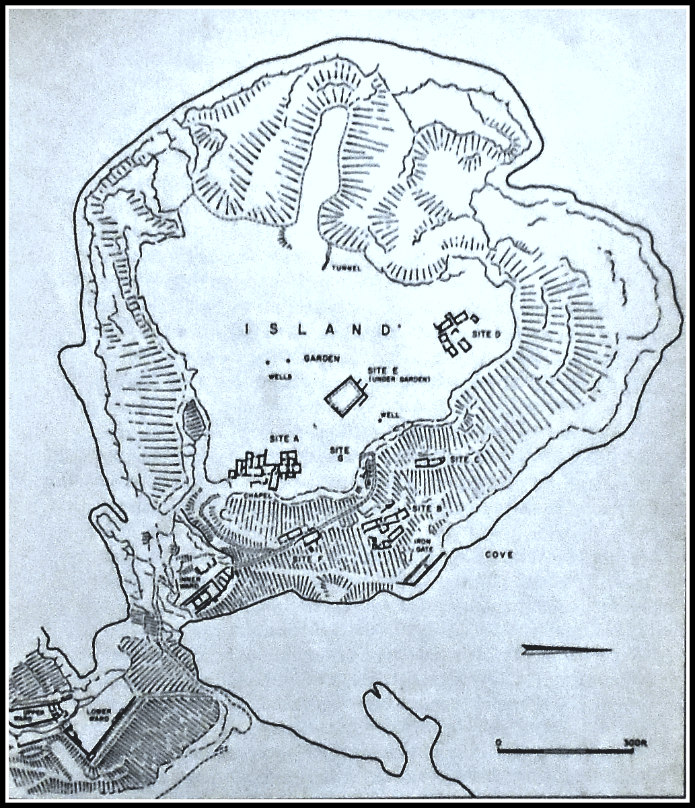
Map of Tintagel Island in Cornwall.

Map of Tintagel Island in Cornwall.

   OS Grid Reference: SX 05003 89064. On the rocky, windlashed headland of Tintagel-Head, in Cornwall, near the ruins of Tintagel Castle which was built in c 1145, are the scant foundations of what was considered to be a Celtic monastery, dating from the beginning of the 6th century AD. This was probably a high-status Dark Age monastery with royal connections. There are also the walls of a 12th-century chapel of St Julitta which is attached to the monastic buildings. It has always been assumed that the monastery here on Tintagel Head was founded in 500 AD by St Juliot, Julitta, or Julianta, a princess who hailed from south Wales, and might be one and the same as St Uletta. Tintagel Castle has long had “romantic” associations with King Arthur and Merlin the Magician. Today the monastic remains lie on Tintagel Island, which is all but cut-off from the rest of the headland where the castle ruins are situated. There is limited access from the castle to Tintagel Island through a deep chasm in the headlands via a footpath and bridge, but its very precarious and great care “should” be taken, especially if weather conditions are against you.

   The monastic site here at the south side of Tintagel Island, with its rectangular-shaped buildings all joined together, was excavated in the 1920s and 30s by C. A. Raleagh Radford (1900-1999) – at which time it was thought to be a high status Celtic monastery, but more recently a few historians have opted for the possibility that it might have been a trading centre due, perhaps, to the large amounts of pottery (known as Tintagel Pottery) found at the site, says Geoffrey Ashe ‘A Guidebook to Arthurian Britain’. Another large building (site E) that was a part of the monastery lies beneath a garden, while other little clusters of buildings (sites B.C. and F) lie to the S and SE of the main monastic site, which is known as site A. These clusters of buildings were probably the monastery’s farm and stables. By the 9th century it seems the monastery here at Tintagel was abandoned, its buildings left to go back to nature and the mists of time, but to be re-invigorated again in the 1920s by an archaeological dig! 

   There is a lot of very good field information on the Celtic monastery at Tintagel in the work ‘The Quest for Arthur’s Britain’, edited by Geoffrey Ash. It says that with regard to excavations on the island: “These excavations showed that the headland of Tintagel had been the site of an extensive Celtic monastery. Four different phases identified in one of the buildings indicated a long period of occupation. Imported pottery from the east Mediterranean established an initial date in the fifth or early sixth century. A silver penny of King Alfred (871-99)—the latest artifact antedating the castle—may represent no more than the loss by a pilgrim to a deserted oratory which was no longer the centre of a living community. Pottery of the twelfth century and later, though relatively common on this site, was never found in the layers associated with the monastery.

   “The Celtic monastery of Tintagel was bounded on the landward side by an earthen bank, now crowned by the thirteenth-century curtain, and by a broad, flat-bottomed ditch. The upper part of the existing bank is a twelfth-century heightening, but the base, some 30 feet across and 8 feet high, dates from the fifth or sixth century. Like its medieval successor, the monastic bank ran from the edge of the scarp overlooking the eastern valley to within a short  distance of the protruding boss of rock, leaving the same narrow entry. Early texts often speak of the monastic vallum, a term indicating the enclosure which fenced in the cashel or settlement occupied by the community. It seems always to have been a physical barrier, an earthen bank, a rampart of turf or a hedge. But it also had a spiritual meaning, separating the city of God from the world outside.

   “Within the enclosure the monastery consisted of groups of buildings, each with its special function. Eight such groups were located, of which six were explored and planned; the other two had been too far destroyed by the medieval castle. Two further sites were noted in folds of the cliff, and others probably await identification.

Plan of Celtic monastery at Tintagel, Cornwall.

Plan of Celtic monastery at Tintagel, Cornwall.

   “The first and largest site examined lay on the eastern edge of the plateau; it was centred on the twelfth-century chapel. The Celtic site consisted of a long range of buildings facing east on to a court which was bounded on the far side by the cliff, here forming the edge of the plateau. The range was approached from the south by a path running along the edge of the plateau; this is now reached by a modern zigzag approach rising up from the inner ward of the castle. The original way is likely to have been along the plateau, which has here been destroyed by the encroachment of the sea. At the south end of the range of buildings, a small square room thrust forward from the general line, together with the stub of a wall, suggest a gate with a lodge providing access to the court. With the court, a much-ruined stretch of walling immediately south of the later chapel is probably part of an older oratory. Beside it is the base of a square block of masonry, a tomb shrine or leacht. These tomb shrines are a normal feature in Celtic cemeteries; they housed the relics of saints or founders.

   “On the far side of the chapel a number of graves have been discovered. The oratory with the tomb of the saint would be the primary objective of visiting pilgrims. In its immediate vicinity one would expect to find the various buildings catering for their needs. There would be a treasury containing other relics, perhaps possessions of the saint. There would also be a sacristy, where the vessels needed for the service of the oratory would be stored. A guesthouse for the refreshment of pilgrims might also be found in this area, together with rooms needed by those members of the community charged with the care both of the pilgrims and of the lay community, of which the pastoral care was the responsibility of the monastery.

   “On this basis, it may tentatively be suggested that the southern end of the range, with a large central hall and smaller rooms grouped on one side and to the back, represents the guesthouse. The central part, now appearing as a single room, has been much damaged by the later chapel. Originally it may well have been subdivided, and here, in the vicinity of the oratory, one might expect the treasury and sacristy. This would leave the smaller rooms at the north end for the needs of those members of the community whose duties were with the lay world. This range had a long history. Four distinct building phases could be recognized. Normally the phases indicated adaption, while retaining the main structure of older date. Even so, a life of some three centuries is not likely to be too long for the existence of this community, and it could well have been in being for a far longer period.”

   And what about the founder/foundress of the Celtic monastery on Tintagel Head. Who was St Juliot or Julitta? The thinking is that the founder was St Uletta (Ilid). She was, according to legend, one of the many daughters of King Brychan Brycheaniog and was the founder of the first church at Llanilid in the Vale of Glamorgan in Wales, and is commemorated there with St Curig. In c 500 AD she went with other members of her family to Cornwall. We know that she was close, spiritually, to her sister St Morwenna and her brother St Nectan. It seems, however, that in Cornwall her original name was St Juliana (Iludiana) and over time the name became Juliot and Julitta; and soon after her arrival in Cornwall she established the monastic community at Tintagel.

   But St Juliot has been much confused with an early 4th-century Christian martyr called St Julitta, who was commemorated with her three-year-old son St Cyricus in the west country. Their cultus was brought to Cornwall in the Middle Ages. St Juliot, however, is perhaps the patroness of Luxulyan church, Cornwall, with a feastday on the sunday nearest 29th June, according to David Farmer ‘Oxford Dictionary Of Saints’.  In Cornwall St Juliot (Julitta) is sometimes referred to as a “martyr” due to confusion, again, with the 4th-century saint of the same name. St Juliot is also commemorated at Lanteglos-by-Camelford, Cornwall, where a holy well is named for her. And St Juliot in the Valency Valley, north-east Cornwall, is named after the saint. A few historians have suggested that St Juliot was, in fact, a male saint! St Julitta’s feastday at Llanilid church in Mid Glamorgan, Wales, is given as 30th June.

Sources and related websites:

Ashe, Geoffrey,  A Guidebook to Arthurian Britain, Longman Group Limited, London, 1980.

Farmer, David, Oxford Dictionary Of Saints, Oxford University Press, 2004.

https://en.wikipedia.org/wiki/Saint_Ilid

https://en.wikipedia.org/wiki/St_Juliot

http://www.thisisnorthcornwall.co.uk/king_arthur.html

Jones, Sally, Legends of Cornwall, Bossiney Books, St Teath, Bodmin, Cornwall, 1980. 

Spencer, Ray, A Guide to the Saints Of Wales and the West Country, Llanerch Enterprises, Felinfach, Lampeter, Dyfed, 1991.

The Quest for Arthur’s Britain, (Edited by Geoffrey Ashe), Paladin Frogmore, St Albans, Herts, 1976.

Westwood, Jennifer, Gothick Cornwall, Shire Publications Ltd., Princess Risborough, Bucks, 1992.

                                                                 © Ray Spencer, The Journal Of Antiquities, 2017.
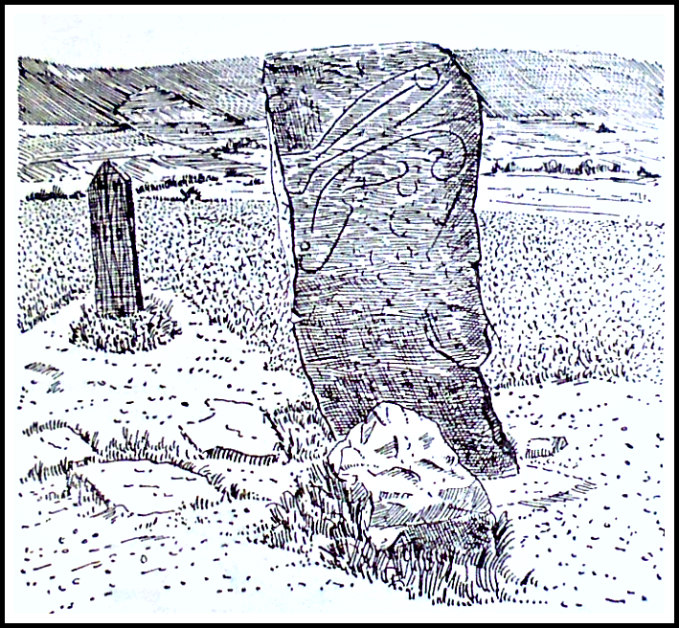

1 Comment

Cashtal-yn-Ard, Near Glen Mona, Isle Of Man

Cashtal-yn-Ard, Isle of Man (photo by Chris Gunns (Wikipedia)

Cashtal-yn-Ard (photo by Chris Gunns – Wikipedia)

   OS Grid Reference: SC 46222 89226. The ancient burial chamber known as ‘Cashtal-yn-Ard’ stands on the edge of a hill to the northeast of Glen Mona, just to the south of Cornaa in the parish of Maughold, and close to the eastern coastline of Isle of Man. It is said to date back some 4,000 years to the New Stone Age (the Neolithic). It is quite a large megalithic structure at 130 feet in length. The name ‘Cashtal-yn-Ard is thought to mean ‘The Castle of the Heights’. However, today this megalithic burial cairn is minus its conical mound of earth and stones, but it still looks very impressive. From the A2 Laxey to Ramsey road at Glen Mona village: take the country lane towards Cornaa for 1 mile. Halfway along, and just after and opposite the entrance to Rhenab Farm on the left-hand side, walk northwest up the footpath for 180m to the southern edge of the hill – there in front of you stands the chambered burial cairn of Cashtal-yn-Ard.

   Cashtal-yn-Ard is a large, oblong shaped chambered cairn dating from the late Neolithic Age – roughly between 1,800-2,000 BC. It covers a large area some 40m (131 ft) long and 14m (46 ft) wide, and still has its outer kerb stones, forecourt, entrance and 5 burial chambers (compartments). The side stones (or slabs) of these burial chambers are angled inwards and some have jagged edges, though sadly all but one of the roof-slabs have been lost, although this long flat-slab might not be the original one. Some of the large standing stones at the entrance have been re-erected or replaced. However, its large conical mound of earth and stones, probably more stones than earth, has gone – the stones now lost to local walls and maybe farm buildings? The monument is very well-preserved and is said to be the largest of its kind in Britain.

   Here at Cashtal-yn-Ard it is thought chieftains of the New Stone Age (the Neolithic) were buried maybe with members of their close families. Indeed during excavations back in 1932-35 funerey urns and other artefacts were found. It was also excavated more recently in 1999. At the E. side there is a small grassy mound consisting of earth and stones.  The orientation of this monu-ment is said to be almost W-E. There are two more Neolithic tombs on the island – similar in size to this one.

   In the publication ‘The Ancient And Historic Monuments of the Isle of Man’, there is more information on this site. It says that this is an: “Outstanding example of a megalithic chambered cairn, of ‘Clyde-Carlingford’ type, burial place of chieftains of the New Stone Age, about 2000 B.C. A semi-circular forecourt at the western end gives access, through a ‘portal’ of two standing stones, to a burial chamber of five compartments, originally slab-roofed. Here unburnt bones, pottery and flints were found. East of the the burial chambers is a mound of earth and stones reddened and fused by heat. The whole monument, apart from the forecourt, was originally covered by a massive oblong cairn 130 feet long.”

Sources and related websites:-

Hulme, Peter J., More Rambling In The Isle Of Man, The Manx Experience, Douglas, Isle of Man, 1993.

The Ancient And Historic Monuments – of the Isle of Man, (Fourth (Revised) Edition, The Manx Museum And National Trust, Douglas, 1973.

The Viking Heritage – Isle Of Man – Millennium Of Tynwald, Shearwater Press, Douglas, Isle of Man, 1979.

https://de.wikipedia.org/wiki/Cashtal_yn_Ard

http://www.megalithic.co.uk/article.php?sid=5944

http://www.iomguide.com/cashtalynard.php

http://www.isle-of-man.com/manxnotebook/history/arch/aj16n4.htm

                                                                                       © Ray Spencer, The Journal of Antiquities, 2016.


St Fillan’s Holy Well And Chapel, Kilallan, Renfrewshire, Scotland

St Fillan's Holy Well at Kilallan, Renfrewshire, Scotland.

St Fillan’s Holy Well at Kilallan, Renfrewshire, Scotland.

OS Grid Reference: NS 3840 6899. The healing well of St Fillan lies at the edge of a wooded area 140 metres to the east of the ruined and roofless chapel, also named for the saint, at the east-side of Kilallan Farm, and near the village of Kilmacolm in the parish of Houston, Renfrewshire. And 55 metres to the south of the holy well, beside Corsliehill Road, is the famous St Fillan’s Seat, a large rock shaped as such. St Fillan or Foelan was an 8th century saint from Munster in Ireland. The little hamlet of Kilallan (meaning the cell of Fillan) with its old ruined church of St Fillan and graveyard was a holy and sacred site and also a place of pilgrimage in the Middle Ages – as was the nearby holy well and rock-seat. The church was last used for services in the latter part of the 18th century. Although the church is without its roof it does still retain some interesting medieval features, and there used to be a 10th century stone here. The holy well, ruined chapel and stone seat lie just off Corsliehill Road in the vicinity of Kilallan Farm, some 2 miles to the south-east of Kilmacolm, near Houston.

The holy well of St Fillan was almost certainly a pre-Christian spring that was used by the saint himself in the 8th century for baptismal purposes. It’s water flowed from beneath a rock in the ground and into a round-shaped brick and stone basin. Long ago the holy water apparently miraculously cured children of rickets when they were bathed there; pieces of cloth and rags being hung on trees beside the well as votive offerings, although this ceased at the end of the 17th century when the local priest filled the well with stones. The water was also used for baptisms in the nearby church of St Fillan, which now stands roofless beside Kilallan farm. The well gets a brief mention in Janet & Colin Bord’s work ‘Sacred Waters’.

St Fillan’s Old Church at the east-side of Kilallan (Kilellan) Farm (NS 38268 68934) is now roofless but the walls you see here are still very sturdy and solid-looking. This building stands on the site of an older, medieval church, but there are still parts of this “older” building in the fabric of the walls. The doorway is said to date from 1635. In the churchyard wall there is a ancient baptismal font, or stoup, from the older church; and there used to be a 10th century stone standing inside the present edifice, but this seems to have been removed for safety reasons. In 1772 St Fillan’s was finally abandoned to the elemants. The British Listed Buildings site says of this: “Church ruin; roofless; walls and major part of gables remain; dated lintel “1635”. Later E gable, thick crowstepped W gable, with bipartite window at clerestory level. N wall with tomb of Fleming of Barochan family. Doorways in N and S walls. Moulded cornice to all but E. 3 doors to S blocked up. Stone stoup built into wall. Early gravestones in kirkyard.” Historic Scotland Building ID is:- no 12897. (See the link below*).
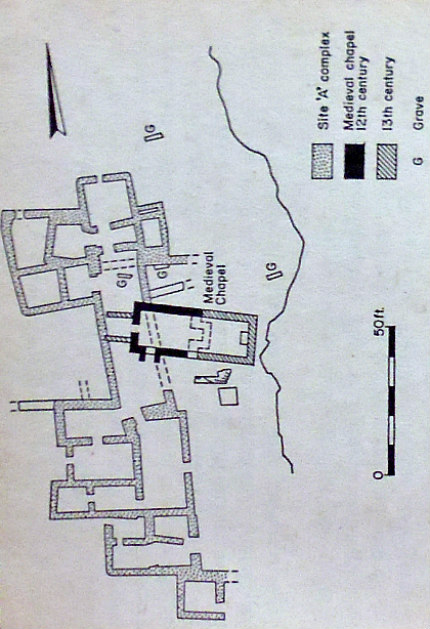
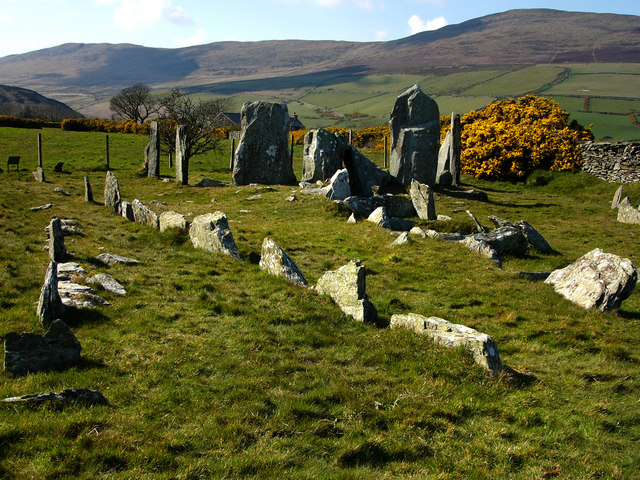
St Fillan's Seat beside Corsliehill Road, Kilallan, Renfrewshire

St Fillan’s Seat beside Corsliehill Road, Kilallan, Renfrewshire

A little further to the south-east of the ruined chapel, beside the road and opposite the farm building, is a large flat rock of ancient origins that is locally called St Fillan’s Seat or Chair at (NS 38419 68937). Legend records that the holy man sat here and baptized the local children. We don’t, however, know a great deal about the life of the saint other than he was born in (c703) and was a monk at Cluain Moescna, Co. Westmeath, but in his youth (c717 AD) sailed from Ireland to Scotland and was accompanied by his mother, St Kentigerna, and his uncle, St Comgan. We know that Fillan buried his uncle on the Island of Iona. His father was said to have been Feriach. There are though another 14 saints called Fillan, Foelan and Faelan. At least two of these came to Scotland between the 6th and 8th century AD. This has undoubtedly led to confusion, but St Fillan of Kilallan was abbot of Glendochart, Perthshire, and died in 776 AD. His feastday is generally 9th January but sometimes 19th Jan, whereas the other St Fillan was a disciple of St Columba – probably at Pittenweem – in Fife. He died in 593 AD  and is honoured on either 20th or 25th June.

The author Donald Attwater in his work ‘A Dictionary Of Saints’, adds more to the information but, perhaps, adds to that confusion regarding the 8th century St Fillan. He says that: “Fillan was abbot of a monastery near St Andrews; was a solitary in Perthshire, and was buried in Strathfillan, also in Perthshire.”

Sources and other related websites:-

Attwater, Donald, A Dictionary Of Saints, Burns & Oates, London, 1958.

Bord, Janet & Colin, Sacred Waters, Paladin, London, 1986.

MacKillop, James, Dictionary Of Celtic Mythology, Oxford University Press, Oxford, 1998.

The AA, Illustrated Road Book Of Scotland, The Automobile Association, London, 1963.

http://www.britishlistedbuildings.co.uk/sc-12897-killellan-kirk-and-churchyard-houston#.WE3p5C975jo

https://canmore.org.uk/site/42250/kilallan-st-fillans-church-and-churchyard

https://canmore.org.uk/site/42246/kilallan-st-fillans-well

https://en.wikipedia.org/wiki/Houston_and_Killellan

History

http://www.guard-archaeology.co.uk/news13/kilallanNews.html

                                                                                       © Ray Spencer, The Journal Of Antiquities, 2016.


1 Comment

Currer Woods Rock Carving, Steeton And Eastburn, West Yorkshire

Currer Woods Rock Carving, near Eastburn, West Yorkshire.

Currer Woods Rock Carving, near Eastburn, West Yorkshire.

   OS grid reference: SE 02514 43844. A very strange little rock carving almost hidden away in a secluded corner of a field at the southern edge of Currer Woods, at Steeton, west Yorkshire. This seems to be one on its own, and there don’t appear to be any other carvings at this location, although you never know. To reach the stone carving walk up the footpath on the opposite side of the B6265 road from Airedale Hospital in Steeton; the path runs south up to the western edge of Currer Woods. Or you can reach it via Redcar Lane and then Intake Lane: take that same foot-path from the stile beside the rough track; going down the slope for a while, then via off north-east along the edge of Currer Woods and through the field with rocks; the carving is in the next field along, close to the wall, in what is a secluded corner with trees over-hanging the site.

Close up of the Currer Woods Rock Carving, near Eastburn.

Close up of the Currer Woods Rock Carving, near Eastburn.

   This interesting little rock carving can be found on a cluster of gritstone rocks close to a wall and just out of the tree-line. It would seem that the rock upon which the carving is situated has suffered from damage by being broken off in two or three places at one end, but thankfully the carving, which consists of maybe two or three tiny cup-marks which are partially surrounded by half rings or arcs, has not been destroyed and seems to be intact. From a distance it has the appearance of a face with eyes and a nose – the nose being formed by a notch just below but whether this was part of the original carving – I don’t know. It might be part of the stone itself? Or maybe it was meant to be. It was discovered in 2009 by Paul Bennett of  ‘The Northern Antiquarian’, whilst taking shelter from heavy rain! But for the rain it might never have been spotted. (See the link below). There do not appear to be any more rock carvings here, but further to the west (220m) on the slope above Eastburn Crags there might be a few “possible” cup-markings but these look to be more recent in date, and others have probably been caused by erosion. I have not, as yet, investigated any of the large moss-covered rocks in Currer Woods itself.

Sources and other related websites:-

Currer Woods Stone, Steeton, West Yorkshire

https://en.wikipedia.org/wiki/Eastburn,_West_Yorkshire

https://en.wikipedia.org/wiki/Steeton_with_Eastburn

                                                                   © Ray Spencer, The Journal Of Antiquities, 2016.